
Choosing an engagement ring is one of the few purchases in life where the details genuinely change how the piece feels on the hand. Two rings with the same carat weight can read completely differently depending on the shape of the stone, the way the setting holds it, and the warmth of the metal around it. At Elora, every ring is built from IGI certified lab grown diamonds and made to order, which means the decisions you make are the decisions that ship.
Most buyers work through six decisions, and they fall into two groups. Diamond colour family, shape and carat weight settle the stone itself, which is where the majority of the budget goes. Setting, metal and ring size settle the ring that carries it. This guide follows that order, starting with the stone and finishing with the fit, so you are never comparing settings before you know what the stone looks like.

Step 1 · The stone
Diamond Colour Family
Colour is where personal taste matters most and where the rules matter least. A colourless diamond gives maximum brightness against white metal, while a warm or fancy coloured stone gives the ring a character that no white diamond can match. Elora carries white, champagne, pink, yellow, blue, and green lab grown diamonds, and the choice usually comes down to how the wearer dresses and what tone suits their skin.
It helps to separate colour family from colour grade. White, champagne, pink, yellow, blue, and green describe different colour families. For white diamonds, the D to Z grading scale measures the presence of yellow, with D being colourless. Coloured diamonds are evaluated differently, with the character and intensity of their colour playing a much larger role.
White and Colourless Diamonds
White diamonds are graded from D, which is colourless, down to Z, which shows light yellow. Stones in the D to F range look their whitest set in white gold or platinum, where a cool metal background does not draw warmth from the stone. Because white is the entry point for lab grown pricing, it is also the family where a fixed budget reaches the largest carat weight. Browse White Diamond Engagement Rings and the White Diamond range.
Champagne and Warm Toned Diamonds
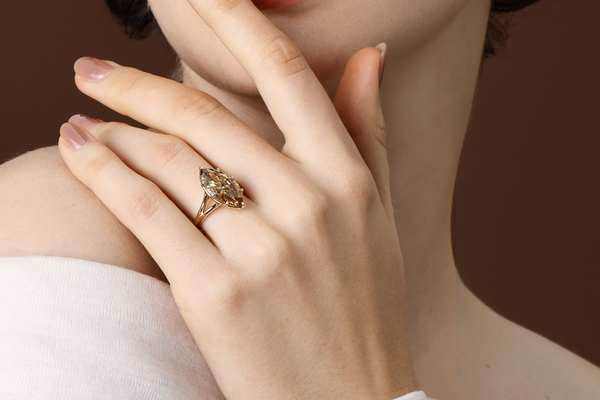
Champagne diamonds run from soft golden hues through to rich cognac browns, and they are one of our largest selections. The warmth makes them look particularly good in yellow gold, where the metal and the stone reinforce each other rather than compete. Because champagne stones vary so much from one to the next, the individual stone often matters more than the category itself. Browse Champagne Diamond Engagement Rings, and read our Champagne Diamond Buying Guide and Guide to Champagne and Warm Toned Diamonds for how to judge tone in person.
Pink, Yellow, Blue and Green Diamonds
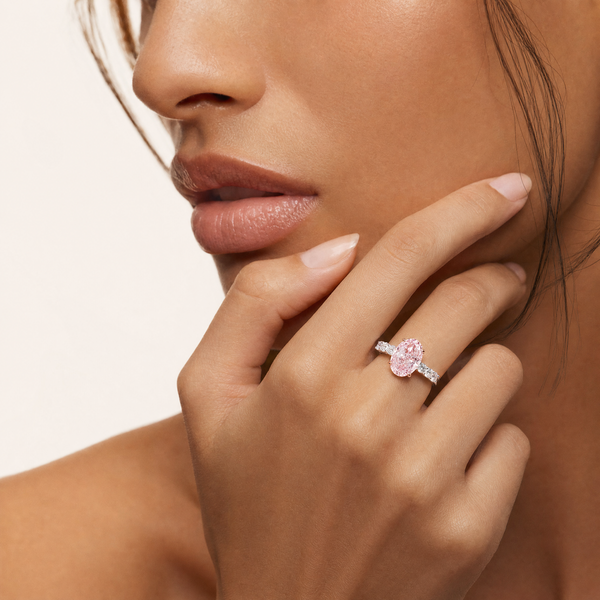
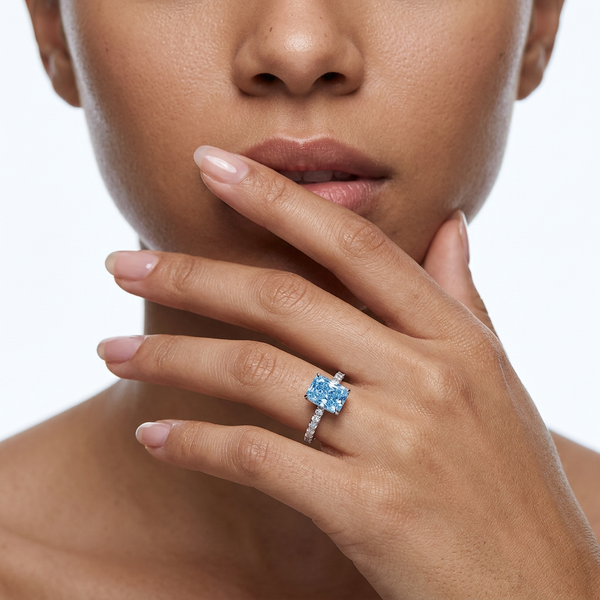
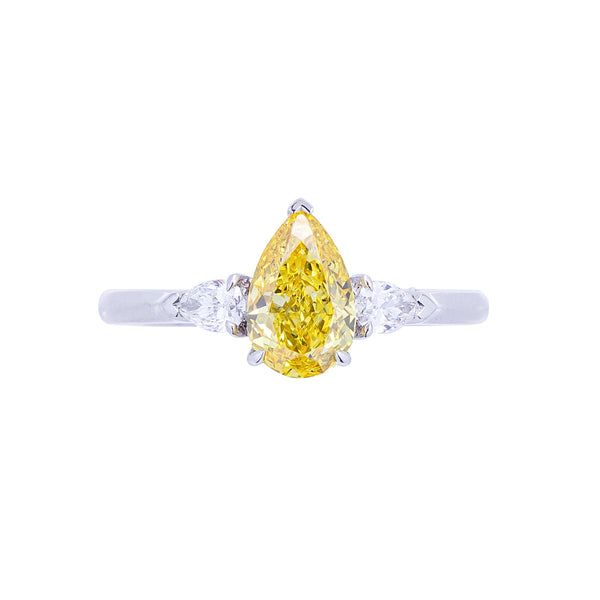
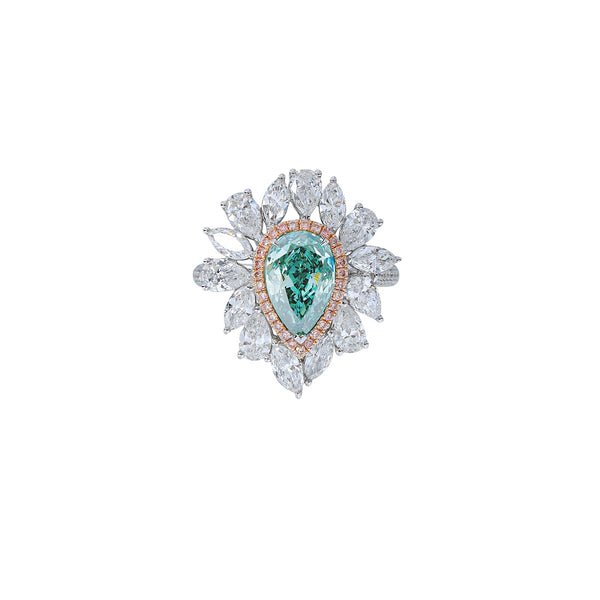
Fancy coloured diamonds make a statement that no white stone matches, and lab grown technology has made colours available that were previously extremely rare. Pink reads romantic and works especially well in a bezel or halo, while yellow reads warm and confident and pairs naturally with yellow gold. Blue and green are the rarest options in our range. Explore Pink Diamond Engagement Rings, Yellow Diamond Engagement Rings, Blue Diamond Engagement Rings and Green Diamond, then read our overview on Colored Diamond Engagement Rings.
Step 2 · The stone
Diamond Shape
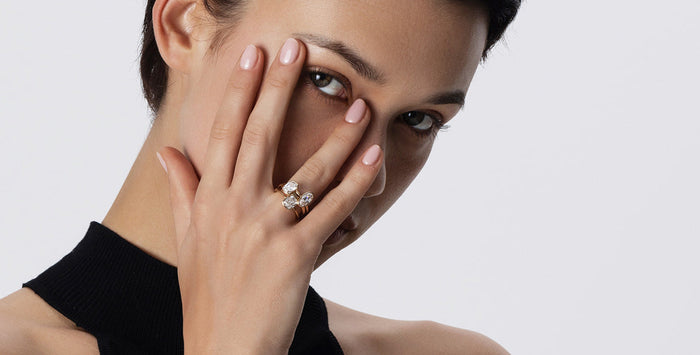
Shape does most of the visual work, and it is the decision people notice first. A one carat oval covers more finger than a one carat round, and a marquise stretches further still. Once you have settled on a shape, browsing becomes far faster because you can filter to a single cut, and the Lab Grown Diamond Engagement Rings collection is organised by shape for exactly that reason. The guidance below reflects how each cut behaves on a real hand rather than how it photographs.
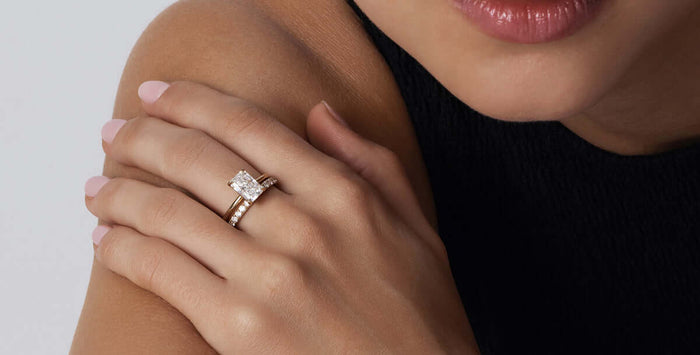
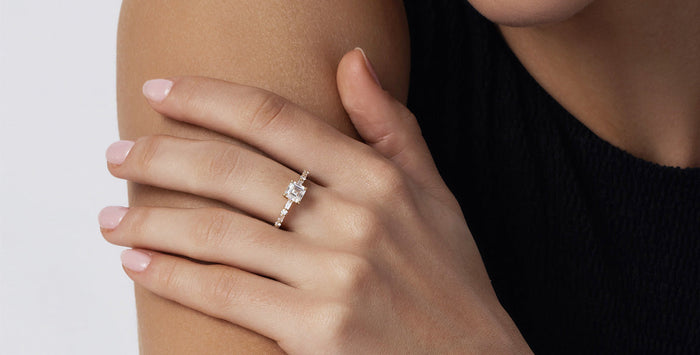
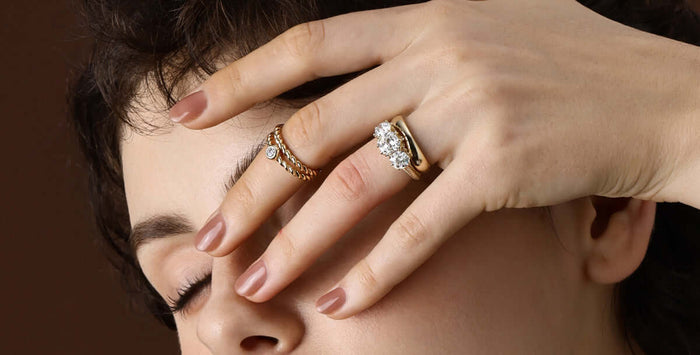
Round Cut
The round brilliant is the shape most buyers research first, and it remains the default recommendation in almost every buying guide because its 57 or 58 facets return light from every angle. Round stones do hide inclusions better than step cuts, so a slightly lower clarity grade still looks clean to the eye, and the cut suits anyone who does not want to think about proportions at all. Our Round Cut Diamond range includes antique variations, and the Lea Old European Cut Diamond Ring shows how a round reads with older facet geometry and a sculpted prong setting.
Oval Cut
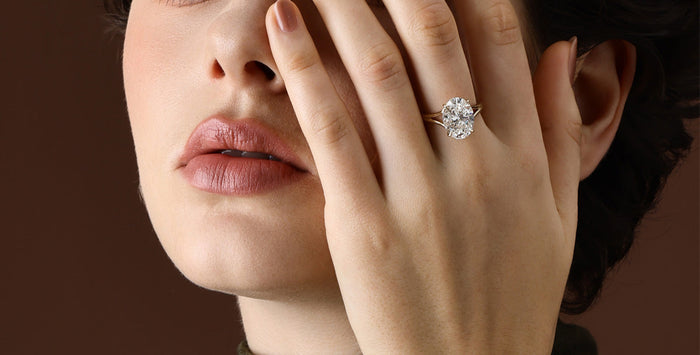
An oval gives you roughly the visual footprint of a larger round stone because the length spreads across the finger, and that elongation is also slimming. It is a frequent choice for anyone who wants the diamond to appear more generous without moving up in weight. The main thing to watch is the ratio between length and width, since a very long oval reads differently from a near-round one. Our Oval Cut Diamond range covers both proportions, and the Luna Oval Cut Lab Grown Diamond Ring is a good reference point for a balanced oval.
Cushion Cut
Cushion cuts sit between a round and a square, with rounded corners and a softer style of sparkle, and there are two distinct versions that look very different in person. Modern brilliant cushions use the same facet arrangement as a round brilliant, which makes them the brighter and more contemporary of the two, and the Ellie Cushion Cut Semi-Bezel Ring is a clear example. Old mine cushions have fewer and larger facets with a higher crown, which gives a quieter and more antique appearance, as shown in the Claire Old Mine Cushion Cut Ring with Milgrain Frame. Because cushions also vary in how square or elongated they are, it helps to compare several side by side in our Cushion Cut Diamond range.
Pear Cut
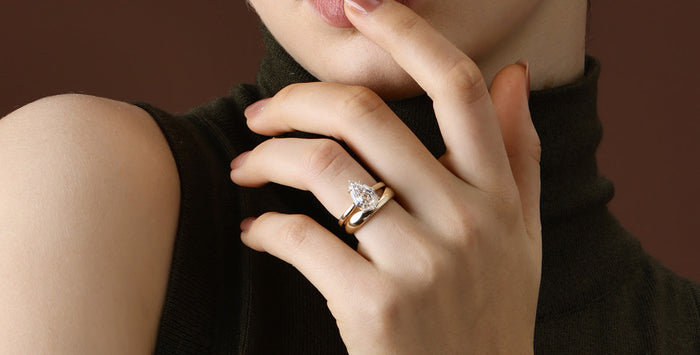
A pear, also called a teardrop, combines a rounded end with a point, which means it needs a well designed prong layout to protect the tip. In exchange you get a shape that flatters almost every hand and reads large for its carat weight. Pears are popular for three stone designs because the point can be oriented toward the wearer for a slimming effect. See Pear Cut Diamond for the full range, or the Hannah Pear Cut Lab Grown Diamond Engagement Ring for a simple entry.
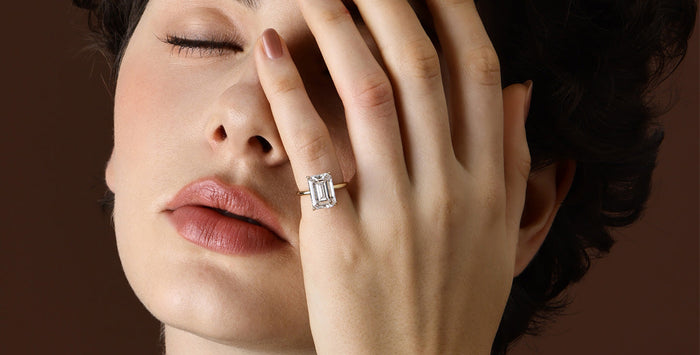
Emerald Cut
The emerald cut is a step cut, meaning its facets run in parallel lines rather than radiating outward. The result is a hall of mirrors effect that looks architectural rather than fiery, and it rewards higher clarity because step cuts leave nowhere for inclusions to hide. Emerald cuts suit anyone drawn to clean geometry over maximum sparkle. Our Emerald Cut Diamond collection is the place to compare proportions, and we cover the trade off against brilliant cuts in our guide to Emerald Cut Lab Grown Diamond Rings. The Jude Emerald Cut Lab Grown Diamond Engagement Ring is a good starting point.
Marquise Cut
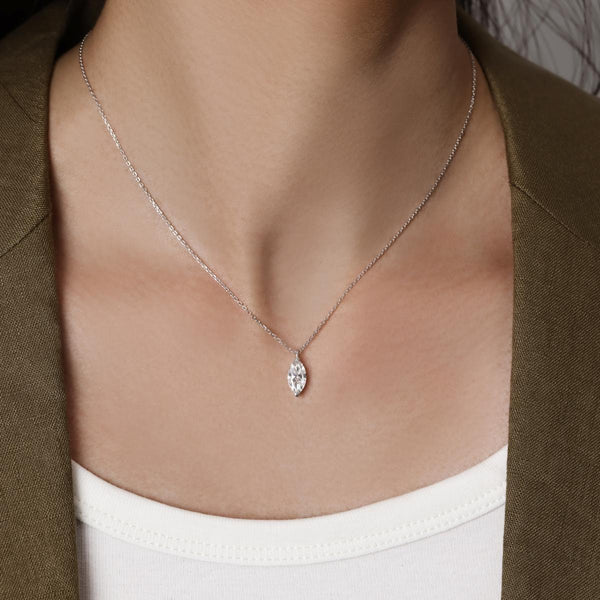
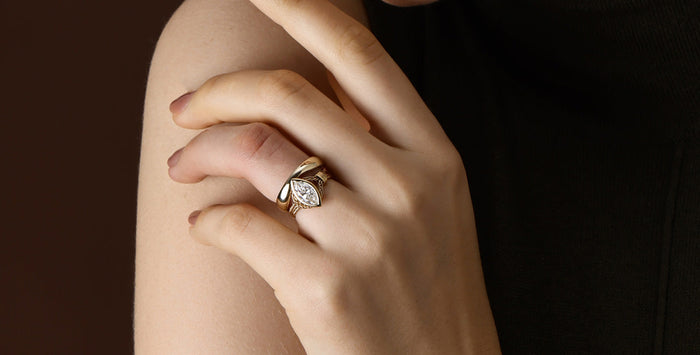
A marquise is an elongated shape with points at both ends, and it covers more finger than any other cut at the same weight. It reads dramatic in a solitaire, where nothing competes with the outline, and prong placement matters more here than on almost any other shape because both ends taper to a point. Compare options in Marquise Cut Diamond or start with the Elena Marquise Cut Lab Grown Diamond Engagement Ring.
Radiant, Princess and Asscher Cuts
These three share a squared or rectangular outline but differ sharply in character. Radiant cuts are brilliant style with trimmed corners, so they sparkle like a round while keeping a square silhouette. Princess cuts are fully square with sharp corners and a busy facet pattern. Asscher cuts are step cut squares, calmer and more geometric. Our Radiant Cut Diamond, Princess Cut Diamond and Asscher Cut Diamond collections let you compare all three directly, and the Nora Radiant Cut Lab Grown Diamond Ring shows how a radiant reads in a simple band.
Antique and Rare Cuts
Some of the most distinctive stones we work with are not standard modern cuts at all. Old Mine Cuts, Old European Cuts, Rose Cuts and antique cushions have larger facets and softer brilliance, and they carry a warmth that modern brilliants do not. These are also the hardest stones to find through traditional jewellers, which is why we specialise in sourcing and creating them. Explore Antique Cut Diamond for the full range, and read our Antique Cut Diamonds Guide plus Old European Cut vs Round Brilliant for the differences in plain terms.
| Shape | How It Reads | Best For | Explore |
|---|---|---|---|
| Round | Brightest sparkle, classic | Anyone who wants a timeless, low risk choice | Round Cut Diamond |
| Oval | Large and elongating | Making the stone read bigger on the finger | Oval Cut Diamond |
| Cushion | Soft, warm, substantial | Antique leaning taste with modern sparkle | Cushion Cut Diamond |
| Pear | Flattering, teardrop | Three stone designs and slimming lines | Pear Cut Diamond |
| Emerald | Architectural, calm | Clean geometry and higher clarity stones | Emerald Cut Diamond |
| Marquise | Dramatic, stretched | Maximum finger coverage per carat | Marquise Cut Diamond |
| Radiant | Square with brilliant fire | Square outline without losing sparkle | Radiant Cut Diamond |
| Asscher | Geometric step cut | Vintage architecture in a square form | Asscher Cut Diamond |
| Antique | Soft, characterful | Buyers who want a stone nobody else has | Antique Cut Diamond |
Step 3 · The stone
Carat Weight and Budget
Carat weight is the single biggest driver of price, and it is also the decision most likely to be adjusted once you see real rings in person. A useful way to think about it is in bands rather than exact numbers, because the price steps between them are large enough to matter and the visual difference between adjacent half carats is often smaller than expected. The figures below come from our current catalogue.

How the Catalogue Is Distributed
Elora spans roughly 100 dollars to just under 20,000 dollars, with the median piece sitting around 1,700 dollars, and engagement rings specifically run from 499 dollars to 7,799 dollars. Around fourteen percent of the catalogue falls between 500 and 1,000 dollars, fifty two percent between 1,000 and 2,500 dollars, twenty one percent between 2,500 and 5,000 dollars, and twelve percent above 5,000 dollars. The concentration between 1,000 and 2,500 dollars is where a well cut stone in a solid setting becomes genuinely achievable without compromise on the basics.
Where the Value Sits
If you want a larger stone for a fixed budget, there are three levers that do not hurt the finished look much. Shape is the first, since oval, pear and marquise all read larger than round at the same weight. Metal is the second, since 14K gives you the same appearance as 18K while costing less and wearing harder. Setting is the third, because a solitaire puts more of the budget into the centre stone than a halo or pavé design does. The lever to avoid is cut, since a poorly cut stone of a given weight looks duller and smaller than a well cut stone of the same weight.
Browsing by Budget Band
Filtering by band is the fastest way to see what a figure actually buys, and it avoids the trap of comparing stones that sit in different price tiers. Browse 500 to 1,000, 1,000 to 2,500, 2,500 to 5,000 and 5,000 and above. We cover the carat versus price trade off in more depth in our guide to 3 Carat Diamond Ring Cost.
| Budget Band | Share of Catalogue | What It Typically Buys |
|---|---|---|
| Under 500 dollars | About 1 percent | Entry pieces, smaller stones, simple bands |
| 500 to 1,000 dollars | About 14 percent | Solitaires in oval or pear, clean 14K settings |
| 1,000 to 2,500 dollars | About 52 percent | The core range, good size with strong cut |
| 2,500 to 5,000 dollars | About 21 percent | Larger centres, halos, three stone designs |
| 5,000 dollars and above | About 12 percent | Statement stones, rare cuts, platinum |
Step 4 · The ring
Setting
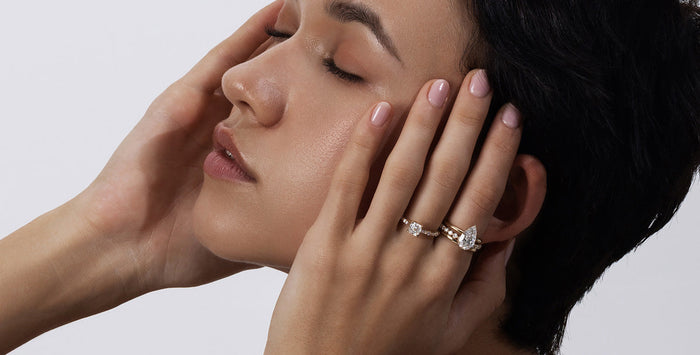
The setting decides how much of the diamond you actually see, how protected it is in daily wear, and how the ring sits against a wedding band later. It is worth treating this as a real decision rather than a detail, because changing a setting on a finished ring is effectively making a new ring. Browse the full range of Solitaire, Halo, Bezel and Pavé styles to see how much the same stone can change.
Two settings exist mainly for structural reasons. A bezel wraps metal around the entire girdle of the stone, which is the most secure option and works especially well for anyone with an active job or lifestyle. A six prong head holds a round or oval stone with more metal than a four prong version, which matters on larger stones. We go into that trade off in detail in our guide on 4 Prongs or 6 Prongs.
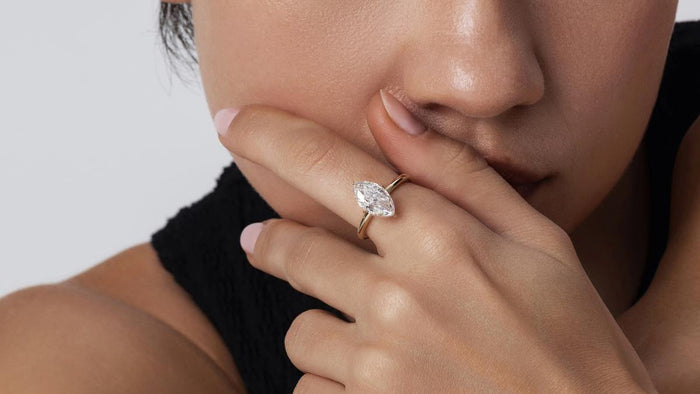
Solitaire
A solitaire holds a single stone with nothing else competing for attention, and it remains the cleanest way to show off a well cut diamond. Because there are no side stones, more of your budget goes into the centre stone itself, which usually means a larger or higher quality diamond for the same money. This is also the most forgiving setting over time, since there is very little to go wrong. See Solitaire for the range, and the Amara Emerald Cut Lab Grown Diamond Engagement Ring for how a step cut reads in a plain solitaire.
Halo
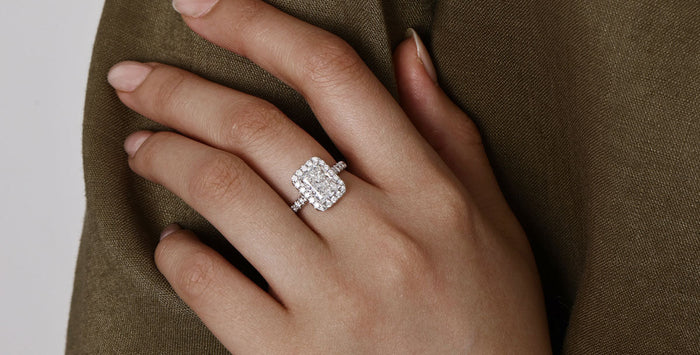
A halo surrounds the centre stone with a ring of smaller diamonds, which makes the overall cluster read noticeably larger than the centre stone alone. There are two versions and the difference is worth knowing before you choose. A traditional halo sits around the crown of the stone, above the girdle, so it adds visible diameter when the ring is viewed from above. A hidden halo, sometimes called a gallery halo, sits below the girdle underneath the stone, which leaves the top view unchanged and adds sparkle only from the side. The first is a size decision, the second is a detail that shows in profile. Browse Halo and Halo Rings, or look at the Briella Radiant Cut Lab Grown Diamond Ring.
Bezel
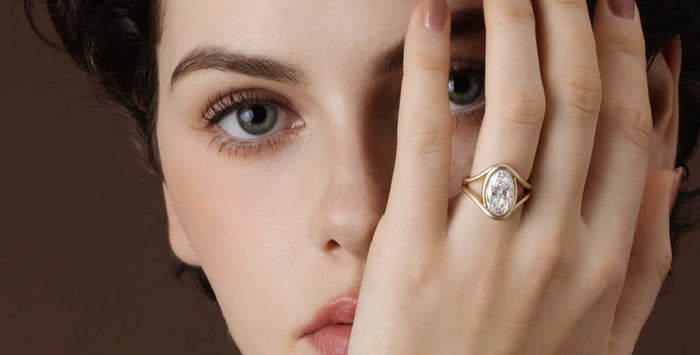
In a bezel setting a rim of metal encircles the diamond rather than holding it with prongs. It is the most protective option we offer, and it also creates a smooth modern line that snags less on clothing and hair. Bezels suit round, oval and cushion stones particularly well because those outlines sit naturally inside a continuous rim. This is our largest single style grouping, with Bezel covering more than fifty designs, including the Nova Oval Cut Lab Grown Diamond Ring.
Pavé
Pavé sets many small diamonds along the band so the metal almost disappears under a continuous line of sparkle. It photographs beautifully and adds brightness to the sides of the ring, which is what people notice when the hand moves. The trade off is that pavé bands need slightly more care over the years, since small stones can loosen with heavy wear. Explore Pavé and Pavé Rings, and read our guide to Pavé Diamond Rings for how the setting is constructed.
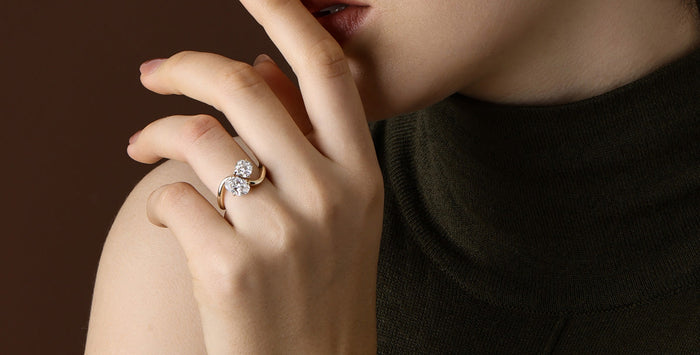
Three Stone and Toi et Moi
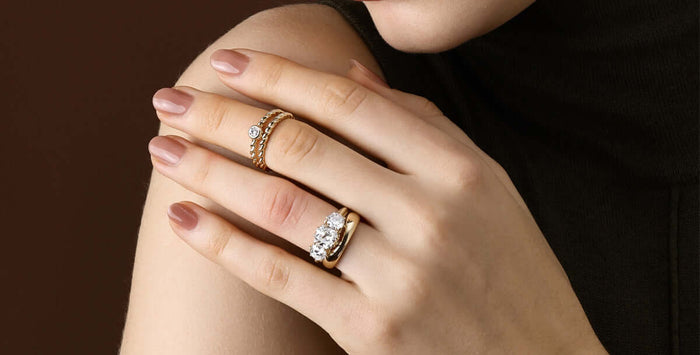
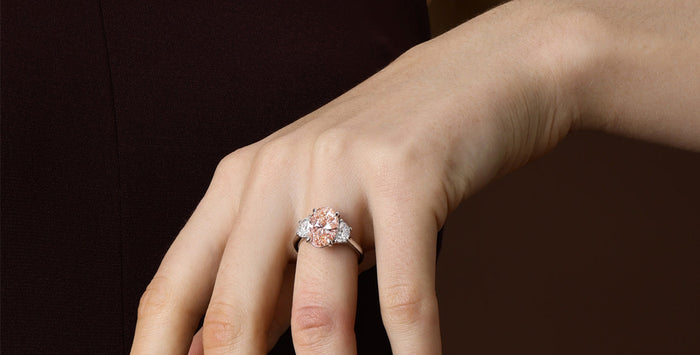
Three stone rings place a centre diamond between two smaller stones, traditionally read as past, present and future. Toi et Moi takes a different approach, setting two stones side by side with no centre stone at all, which gives the ring a distinctly modern and personal feel. Both designs give you more visual width across the finger without a single very large stone. Compare Three Stone and Three Stone Rings against Toi et Moi and Toi et Moi Rings.
East West and Chain Ring Designs
An East West setting turns an elongated stone sideways, so a marquise or oval runs across the finger rather than up and down. It is a small change that makes a familiar shape feel entirely different, and it works especially well in pendants and modern engagement designs. Chain ring designs take a lighter approach again, with a fine chain forming part of the band. See East West and Chain Ring for both.
| Setting | Stone Visibility | Protection | Best Paired With |
|---|---|---|---|
| Solitaire | Highest, nothing competes | Moderate, prong dependent | Round, oval, marquise |
| Halo | High, reads larger | Moderate | Round, cushion, radiant |
| Bezel | Slightly reduced at edges | Highest | Oval, round, cushion |
| Pavé | High, band sparkles too | Moderate on centre stone | Any shape |
| Three Stone | Wide, three focal points | Moderate | Emerald, oval, round |
| Toi et Moi | Two equal focal points | Moderate | Pear, oval, marquise |
| East West | Emphasises length sideways | Setting dependent | Marquise, oval, emerald |
Step 5 · The ring
Metal
Metal sets the overall temperature of the ring and determines how it wears over the next several decades. Elora works with 14K and 18K yellow gold, rose gold, white gold and platinum, and each behaves differently in daily use. Our full breakdown of composition, colour and wear is in the Elora Jewelry Metal Guide.
The practical question is usually not which metal is best in the abstract, but which suits the way you actually live. Someone who wears rings through gym sessions and household chores has different needs from someone who takes jewellery off at the door. Both are fine choices, and the right answer depends on the habits rather than the metal itself.

14K or 18K Gold
The difference between 14K and 18K is gold content and therefore hardness. 14K yellow gold is 58.5 percent pure gold mixed with alloy metals, which makes it stronger and better at holding its shape through daily wear. 18K gold contains 75 percent pure gold, giving it a deeper and richer colour but a softer surface that scratches more readily. In the United States, 14K is the most common choice for engagement rings, and it is what we recommend for anyone who wears their ring continuously. Choose 18K when colour depth matters more than scratch resistance.
Yellow Gold
Yellow gold is warm, classic, and the most forgiving of the gold options because scratches blend into the colour rather than standing out. It also flatters warm toned diamonds beautifully, which is why it pairs so naturally with champagne and antique cuts. Browse Yellow Gold Engagement Rings to see how the metal changes the mood of the same stone.
White Gold
White gold gives a cool, bright backdrop that makes colourless diamonds look their whitest. Because white gold is an alloy rather than a naturally white metal, it is rhodium plated to achieve that finish. The plating wears over time and can be refreshed, so plan for occasional maintenance if you wear the ring constantly. See White Gold Engagement Rings for the range, and our comparison of white gold versus platinum for how the two age differently.
Rose Gold
Rose gold is yellow gold alloyed with copper, which produces a soft pink tone that flatters most skin tones and feels slightly vintage. It is popular for three stone and antique inspired designs because the warmth in the metal echoes the warmth in the stone. Explore Rose Gold Wedding Bands for the matching side of the set.
Platinum
Platinum is denser and naturally white, so it needs no plating and holds its colour permanently. It develops a soft matte patina over time that many people prefer to a mirror polish, and it is the most durable option for someone who wants a ring to look the same in ten years as it does on the first day. It is also heavier in the hand, which some wearers notice immediately. Explore Platinum Engagement Rings.
Black Gold
Black gold is a rhodium treated gold that produces a distinctly modern, high contrast look. It reads best in design led pieces where the dark metal is part of the concept rather than a neutral backdrop, and it works particularly well with white diamonds for maximum separation. See Black Gold Engagement Rings and Black Gold Wedding Bands.
| Metal | Composition | Colour | Everyday Durability | Best For |
|---|---|---|---|---|
| 14K Yellow Gold | 58.5 percent pure gold | Warm, light gold | Strong, holds shape well | Daily wear and active lifestyles |
| 18K Yellow Gold | 75 percent pure gold | Deeper, richer gold | Softer, scratches more | Colour depth and dress wear |
| White Gold | Gold plus rhodium plating | Bright and cool | Plating needs refreshing | Making white diamonds look whiter |
| Rose Gold | Gold alloyed with copper | Soft pink warmth | Similar to yellow gold | Vintage and warm toned stones |
| Platinum | Naturally white metal | Cool white, permanent | Most durable, patinas over time | A lifetime of constant wear |
| Black Gold | Rhodium treated gold | Deep black contrast | Wear depends on treatment | Modern and high contrast designs |
Step 6 · The ring
Ring Size
Sizing is the last decision and the one most likely to be rushed. A ring that is half a size off will feel wrong every day, and resizing a finished ring is always better avoided when it can be measured properly in advance. Our Size Guide carries the full conversion chart, and the two methods below cover almost every situation. We also publish a walkthrough on how to measure your ring size at home.

Measuring at Home
Wrap a flexible measuring tape or a length of string around the finger the ring will be worn on. If you are planning a stack, measure where the engagement ring itself will sit rather than the base of the finger. Mark where the ends meet, lay the string flat, and measure the length against the chart. If you land between two sizes, choose the larger one, since a ring that is slightly loose can be worn comfortably while one that is tight cannot.
Measuring an Existing Ring
Choose a ring that already fits the intended finger well and measure its interior diameter in millimetres. Match that measurement against the chart to find the closest size. This method works especially well for a surprise purchase, because it only requires access to a ring they already own. Measure the interior across the widest point and align with the outer edge of the circle for an accurate reading.
Reading the Chart
The chart below converts between Elora sizing, the inside diameter in millimetres, and the equivalent UK, Australian and Italian sizes. The inside diameter is the most reliable column to work from, because it is a direct physical measurement rather than a convention that varies between countries.
| Elora Size (US) | Inside Diameter (mm) | UK / AUS | Italy |
|---|---|---|---|
| 3 | 44.2 | F | 4 |
| 3.5 | 45.5 | G.5 | 5.5 |
| 4 | 46.8 | H.5 | 6.75 |
| 4.5 | 48.0 | I.5 | 8 |
| 5 | 49.3 | J.5 | 9.25 |
| 5.5 | 50.6 | L | 10.5 |
| 6 | 51.9 | M | 12 |
| 6.5 | 53.1 | N | 13 |
| 7 | 54.4 | O | 14.5 |
| 7.5 | 55.7 | P | 16 |
| 8 | 57.0 | Q | 17 |
| 8.5 | 58.3 | R | 18.5 |
| 9 | 59.5 | S | 19.75 |
| 9.5 | 62.1 | T | 21 |
Before you buy
Understand the IGI Certificate Before You Buy
Every certified diamond of one carat and above from Elora ships with an IGI grading report, and that document is the single most useful piece of paper in the entire purchase. It tells you what you are actually buying rather than what the listing claims, and it lets you verify the stone independently of the seller. IGI, the International Gemological Institute, is a globally recognised laboratory with strict standards and expert gemologists, and because the report is issued by a third party rather than by us, it gives you an objective baseline you can compare across stones, sellers and countries. Our IGI Certified Lab Grown Diamonds page explains the report, and How to Read an IGI Certificate walks through each section line by line.

What the Report Covers
The report number is a unique identifier you can use to verify your specific diamond online, which is the detail that matters most if you ever resell or insure the piece. Measurements and shape confirm the exact proportions rather than a rounded description, and carat weight states the precise size. Colour is graded on the D to Z scale within the white family, while clarity indicates how free the stone is from internal imperfections. Cut grades how well the diamond reflects light, which is the factor most closely tied to how bright it looks in the hand.
Why Certification Matters More With Lab Grown Diamonds
Lab grown diamonds are chemically, physically and optically identical to mined diamonds, which means the visual difference cannot be judged by eye with any reliability. That makes an independent grading report more important rather than less, because it is the only consistent way to compare two stones that look similar in photographs. Without a report you are relying on the seller's description, and with one you are reading the same standard every other buyer reads.
Compare Lab Grown and Mined Diamonds
Lab grown diamonds have the same chemical composition, crystal structure, hardness and brilliance as mined diamonds. The difference is origin and price rather than appearance or durability, and that is worth understanding clearly before the conversation turns to value. Our Ethical Sustainable Lab-Grown Diamonds page covers the environmental side in full.
Cost and What It Means for Size
Because lab grown diamonds are produced rather than extracted, they cost significantly less than mined stones of equivalent grade. In practice that difference goes directly into the ring, which is why a lab grown centre stone of a given carat weight sits well below the mined equivalent and why the same budget can often reach a larger or better cut stone. For most buyers this is the single largest source of value in the entire purchase.
Origin and Environmental Impact
Mined diamonds carry an environmental footprint that is difficult to avoid. Open pit mines disturb large areas of land, toxic runoff can pollute rivers, forests are cleared, and the mining process consumes substantial water and energy while releasing carbon and dust. Communities near mines can also face unsafe working conditions. Lab grown diamonds avoid extraction entirely, and our lab partners use renewable energy to reduce the carbon footprint of production further.
Durability and Appearance Over Time
A lab grown diamond will not cloud, fade or lose brilliance with age, and it wears exactly as a mined diamond does because the material is the same. Both can chip if struck sharply at the girdle, which is why setting choice matters for either. Neither option makes a structural difference to the ring over decades of wear.
| Factor | Lab Grown | Mined |
|---|---|---|
| Chemical and physical properties | Identical to mined | Identical to lab grown |
| Hardness (Mohs) | 10 | 10 |
| Typical cost for equivalent grade | Significantly lower | Significantly higher |
| Colourless vs coloured pricing | Colourless is the least expensive family | Coloured stones carry a large premium |
| Environmental impact | No mining, renewable energy in production | Land disturbance, water use, emissions |
| Supply and conflict risk | Traceable and conflict free | Varies by origin |
| Everyday durability | No difference | No difference |
| Resale market | Still developing | Established |
Choose a Ready to Ship Design or Go Fully Custom
There are two paths through Elora and both are legitimate. Ready to ship pieces are already made and can move quickly, which suits anyone working against a deadline. Custom pieces are built around your stone and your design, which suits anyone who has not found exactly what they want in the existing range. Browse Ready to Ship Lab Grown Diamond Rings first, because you may find the answer immediately.
Our Custom Jewelry service covers the full spectrum, from a sketch or a screenshot through to sourcing or cutting a diamond specifically for the piece. You can see finished custom work in the Elora Bespoke Gallery, which includes real projects with their specifications.

The Custom Process Step by Step
You send a sketch, a reference image or simply a description, and a consultant guides you through the decisions. Diamond review comes first, where you receive video of the specific stone rather than a stock image, so you can judge how it behaves in motion before committing. CAD approval comes next, so you can picture the design on the hand before anything is cut. You receive progress updates through production, and nothing ships until you give final confirmation. The process requires a 50 percent deposit, which allows diamond sourcing, custom cutting where needed, CAD design and production planning to begin.
Timelines and What Is Included
Standard made to order designs take approximately 7 to 28 business days for production, followed by DHL Express delivery in 2 to 7 business days after dispatch. Antique and champagne diamond projects sit at approximately 14 to 28 business days, within the same standard production window, and custom cut projects or projects built around a diamond you already own typically fall within 7 to 28 business days. CAD revisions are unlimited and continue until you are satisfied with the design, and nothing goes into production until you approve it.
Where Custom Adds the Most
Custom is most valuable when you want something that does not exist off the shelf. Antique cuts such as Old Mine, Old European and Rose Cuts are one clear example, because they are rarely stocked by traditional jewellers. Matching a ring and a wedding band as a single set is another, since a contour band can be designed to sit against the engagement ring rather than alongside it awkwardly. If you simply want a standard solitaire in a standard size, ready to ship is the faster answer and there is no quality advantage in going custom. Start with the Custom Questionnaire if you want to begin.
Plan the Wedding Band Alongside the Ring
Buying the wedding band at the same time as the engagement ring is genuinely easier, because the two pieces can be designed to sit together rather than forced to coexist. A band that is too tall or too wide will sit against the engagement ring at an angle and wear against it over time. Matching the set is a design decision, not just a purchase decision. Explore Lab Grown Diamond Wedding Bands for the full range.

Eternity Bands
An eternity band carries diamonds around the full circumference, which gives continuous sparkle from every angle. It is the most traditional pairing for a solitaire because the band adds brightness without competing with the centre stone. Diamonds running all the way around also mean the band cannot be resized as easily, so sizing accuracy matters more here than anywhere else. See Eternity Band and the Orla Oval Cut Diamond Eternity Band.
Contour and Stacking Bands
A contour band curves to sit neatly against the base of an engagement ring, which solves the gap problem that shows up when a straight band meets a raised setting. Stacking bands are designed to be worn in multiples, which lets you build the set over time rather than committing to one look at the start. Both are popular with bezel and low profile rings. Browse Contour Band and Stacking Band, or look at the Harper Contour Pavé Diamond Open Band Ring.
Diamond, Gold and Men's Bands
If you want the simplest possible pairing, a plain gold or diamond band lets the engagement ring do all the talking. Men's bands are usually wider and use a different set of proportions, and they are worth planning at the same time so the two rings feel like a pair rather than two separate purchases. See Gold Band, Diamond Band and Men's Wedding Bands.
Try Rings On Before You Commit
Photographs and videos are useful, but nothing replaces seeing a stone on a hand at the right scale. Shapes that look identical in a listing can feel completely different in person, and carat weight in particular is difficult to judge from an image because there is no reference for scale. If you can try rings on, do it before you finalise the design. Book through our Customer Services page.

The Brea Showroom
Our showroom at 1009 E. Imperial Hwy., Ste. B1, Brea, CA 92821 offers one on one consultations where you can compare diamond shapes and sizes side by side and discuss custom design options directly with the team. Appointments run Tuesday through Saturday and are recommended so that you have dedicated time rather than sharing attention. This is the fastest way to settle a decision you have been going back and forth on.
If You Cannot Visit in Person
Distance is not a barrier. Our consultants send diamond videos and CAD renderings so you can review the actual stone and the design before production begins, and every custom project includes approval steps precisely so that nothing is made until it matches what you expected. You can reach the team on WhatsApp at +852 6049 6558, by email at customer@eloralab.com, or through Instagram at @elora_finejewelry.
Care for the Ring So It Lasts
A well made ring will stay beautiful for decades with very little effort, but the habits matter more than the products. Lab grown diamonds are as durable as mined diamonds, though they can chip if knocked sharply at the edge, and the metals have their own characteristics. Our Jewelry Care page covers each material in detail.

Daily Habits That Protect the Ring
Wear your jewellery last, after skincare and perfume, and remove it before sleep. Keep it away from bleach, chlorine, acetone and abrasive cleansers, all of which can affect metal finishes and settings over time. Take rings off before sports, swimming, heavy lifting and household chores, since these are the situations where impact damage and scratching actually happen. These habits take seconds and prevent almost everything that goes wrong with fine jewellery.
Cleaning and Storage
Clean your ring with a soft brush and mild soapy water, then dry it with a lint free cloth. Store pieces separately in a soft pouch or lined box so they do not scratch each other, because diamond will scratch gold and gold will scratch platinum. Platinum develops a natural matte patina over time which many wearers prefer, and white gold may need its rhodium plating refreshed periodically depending on wear. If you ever notice a stone feeling loose, stop wearing the ring and contact us rather than waiting, since small movements are easy to fix early and expensive to fix late.
Your Decision Checklist
Work through the list below in the same order as the guide, and you will have a complete specification by the end. The first three settle the stone and the next three settle the ring, which keeps the budget conversation in one place rather than spread across the whole purchase. If you would rather have a consultant walk you through it, the Custom Questionnaire is the fastest way to start the conversation.
| Step | Decision | Group | Your Note |
|---|---|---|---|
| 1 | Diamond colour family | Stone | |
| 2 | Diamond shape | Stone | |
| 3 | Carat weight and budget band | Stone | |
| 4 | Setting style | Ring | |
| 5 | Metal and karat | Ring | |
| 6 | Ring size, measured or converted | Ring | |
| 7 | Ready to ship or custom | Order | |
| 8 | Wedding band pairing | Order | |
| 9 | Engraving or personalisation if wanted | Order | |
| 10 | Delivery date and destination | Order |
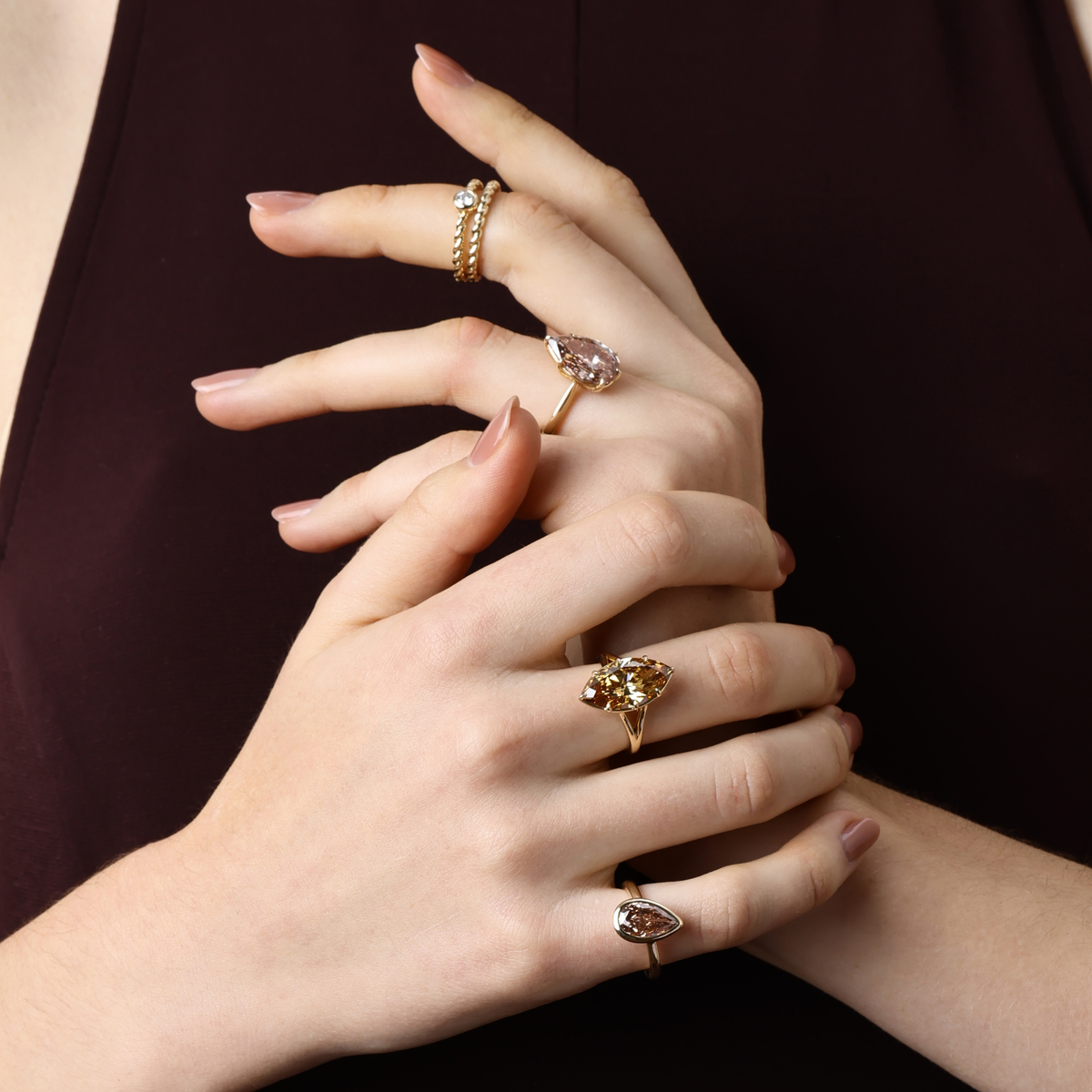
When you are ready, the next step is simply to look at real rings in the colour family and shape you are considering. Start with the full Lab Grown Diamond Engagement Rings collection, or go straight to Ready to Ship if you are working to a date. If nothing in the range matches the picture in your head, send us what you have through Custom Jewelry and a consultant will take it from there. Either way, you are choosing from IGI certified stones with a design built around the decisions you just made.