Beyond White: Why Colored Diamond Engagement Rings Are Becoming the New Classic


Opening
For decades, the "perfect" engagement ring meant one thing: a colorless diamond. The closer it came to pure white, the more desirable it was considered.
Today, that definition is quietly changing.
Once reserved for collectors, royalty, and the world's most exceptional jewelry houses, colored diamonds are becoming the new classic. They offer something many modern couples are looking for: the luxury of a diamond combined with the freedom to express individual style.
More people are looking beyond the traditional white diamond, choosing pink, blue, yellow, and green diamonds for the different character each color brings to a ring.
Advances in lab-grown technology have also made these once-unreachable colors more accessible than ever, opening up new possibilities for engagement rings.
Whether you're drawn to the soft romance of a pink diamond, the quiet confidence of blue, the warmth of yellow, or the fresh character of green, each color creates a different impression.
This guide explores why colored diamond engagement rings are becoming increasingly popular, how fancy color diamonds compare with traditional white diamonds, and how to choose the color that best reflects your style.
Why Colored Diamond Engagement Rings Are Becoming More Popular
The growing interest in colored diamond engagement rings reflects a broader shift in modern bridal jewelry.
For years, engagement rings followed a fairly consistent formula: a white diamond, a solitaire setting, and the highest color grade your budget allowed. While those classics remain popular, today's buyers are often looking for something that feels more personal than predictable.
Quiet luxury has played a role in that change. Many couples are paying closer attention to their own taste rather than following tradition by default. Craftsmanship and thoughtful design now carry just as much weight as the diamond itself.
At the same time, long-standing ideas about what an engagement ring "should" look like carry less weight. The question is no longer always which diamond is considered the best on paper, but which one actually suits the person wearing it.
Colored diamonds fit naturally into this movement. A fancy color diamond stands out, but not because it is louder or more elaborate. Color itself becomes the point of distinction, creating visual interest without relying on a larger center stone or an elaborate setting.
Social media has also broadened people's expectations of what an engagement ring can look like. Vintage-inspired settings, antique cuts, east-west designs, and colored center stones appear alongside traditional solitaires, giving buyers more confidence to explore styles beyond the conventional white diamond.
Perhaps the biggest change, though, is how people think about color itself.
For decades, the jewelry industry treated the absence of color as the ideal. Today, many buyers see color differently. Instead of asking how to remove it, they are asking how it can become part of the design.
The future of engagement rings is not becoming less timeless. It is simply becoming more expressive.

What Is a Fancy Color Diamond?
Most white diamonds are valued for what they lack: visible color. The closer a diamond is to colorless, the higher it is traditionally graded on the standard D to Z color scale.
Fancy color diamonds follow a different set of rules.
Rather than being appreciated for the absence of color, they are valued because of it. Their defining feature is visible color, including shades of pink, blue, yellow, green, and other less common hues.
Not all colored diamonds are the same. Three factors influence how a fancy color diamond appears:
- Hue refers to the actual color, such as pink, blue, or yellow.
- Tone describes how light or dark the color appears.
- Saturation measures the intensity or richness of the color.
Together, these characteristics create an enormous variety of appearances. Two pink diamonds, for example, can look noticeably different depending on the strength and depth of their color.
Today, fancy color diamonds are available in both natural and lab-grown forms. Natural colored diamonds remain among the rarest gemstones in the world, while modern lab-grown technology has made many beautiful colors more accessible without changing the physical, chemical, or optical properties that make a diamond a diamond.
In a fancy color diamond, color is not a secondary detail. It is one of the first things you notice.
The Most Popular Fancy Color Diamonds
Color can change the entire direction of a ring, even when the diamond shape and setting stay the same. Pink, blue, yellow, and green each bring a very different look to an engagement ring. Here is how the most popular fancy diamond colors compare.
Pink Diamond Rings
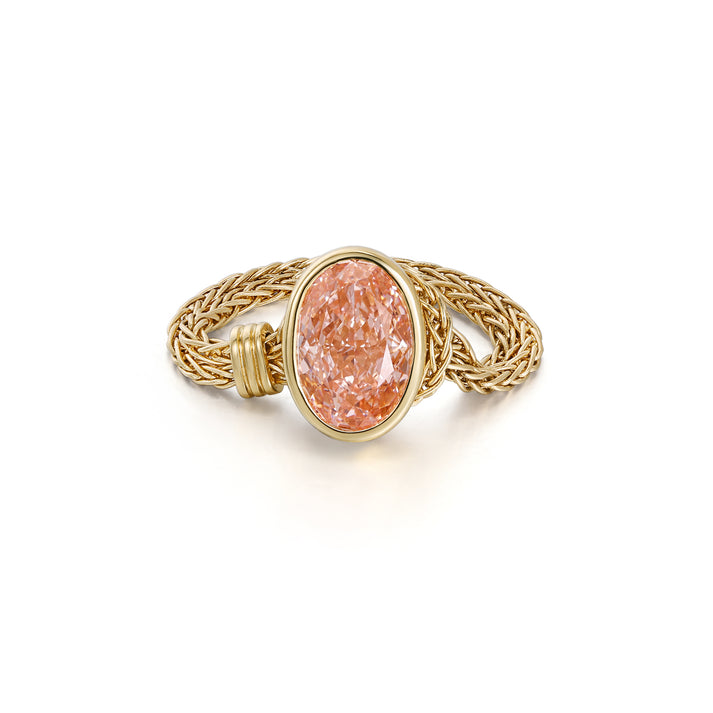
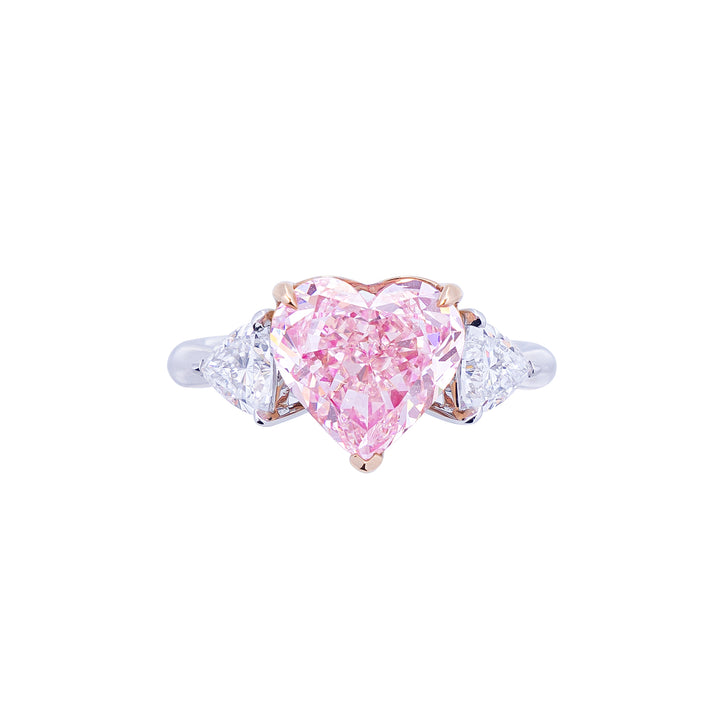
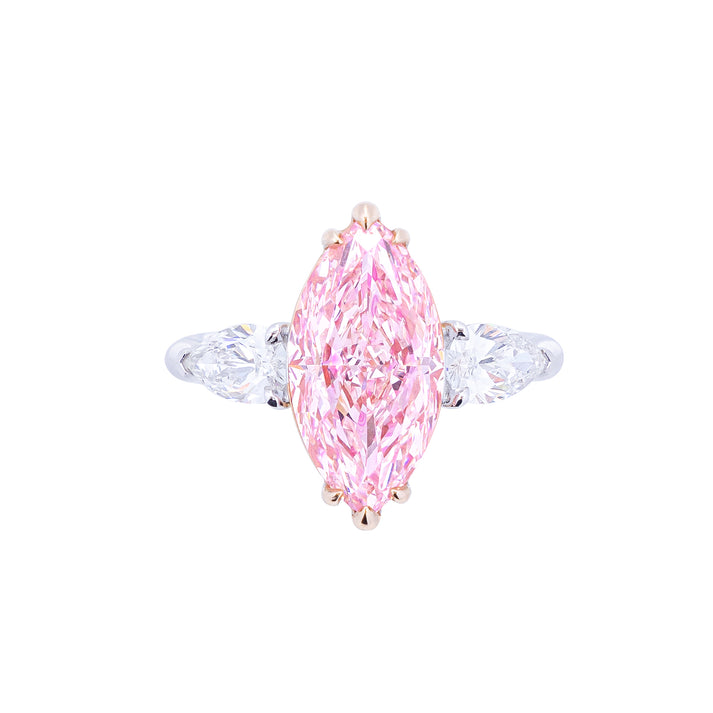
Pink diamonds have become one of the most recognizable choices for colored diamond engagement rings. Pink diamonds sit somewhere between classic romance and modern bridal design. Even a subtle blush tone is enough to change the overall look of a ring.
Soft blush tones create an understated elegance, while more saturated pinks become the clear focal point of a ring. Pink diamonds pair beautifully with rose gold for a seamless, monochromatic look, but they also create striking contrast in platinum or white gold settings.
Pink diamond rings are especially popular with buyers who like softer color but still want the center stone to feel clearly different from a traditional white diamond.
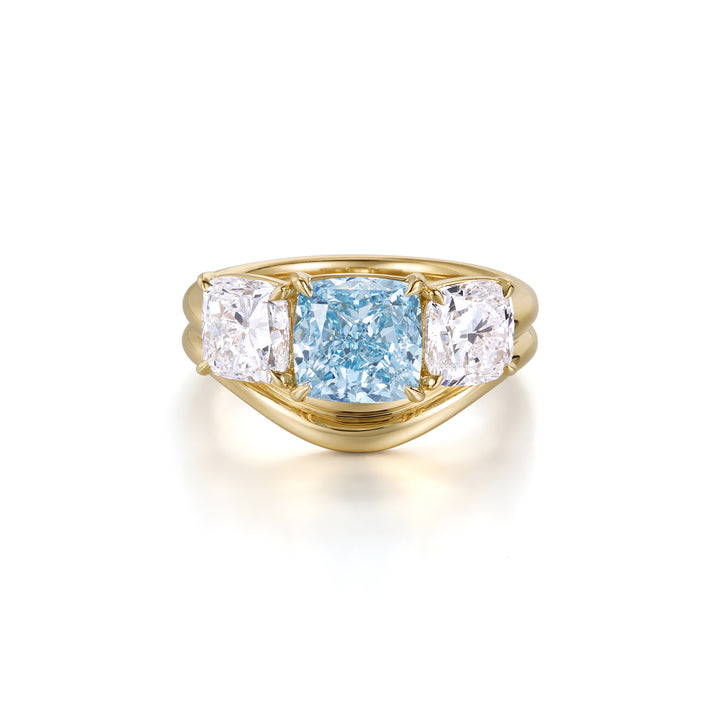
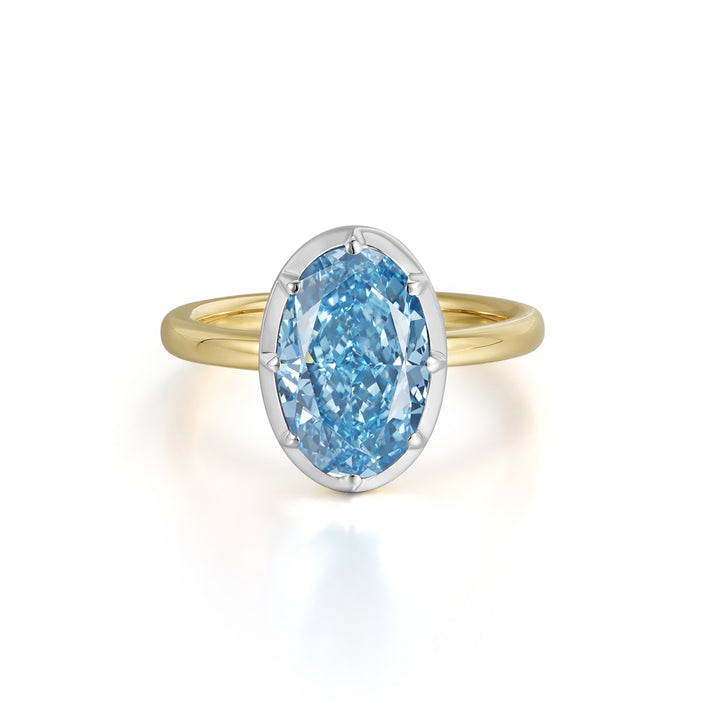
Blue Diamond Rings
Blue diamonds create a completely different impression.
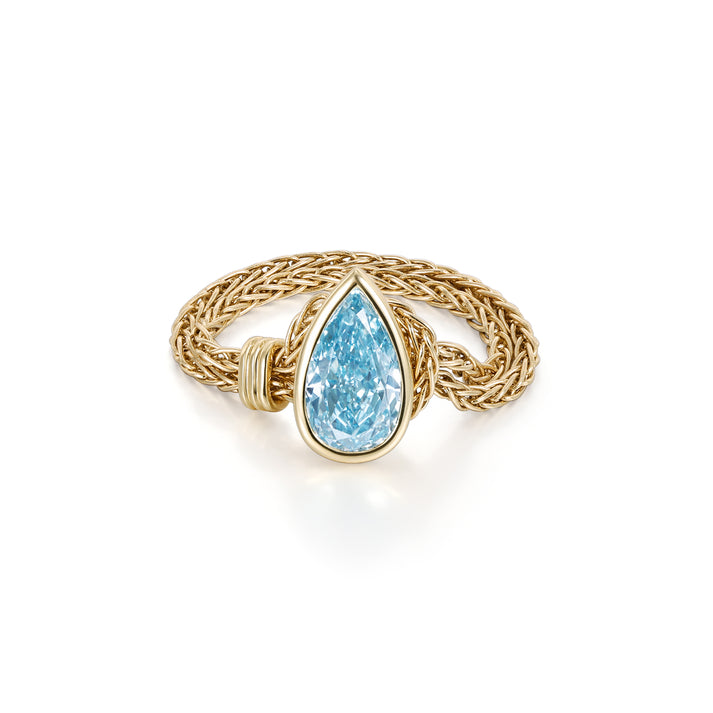
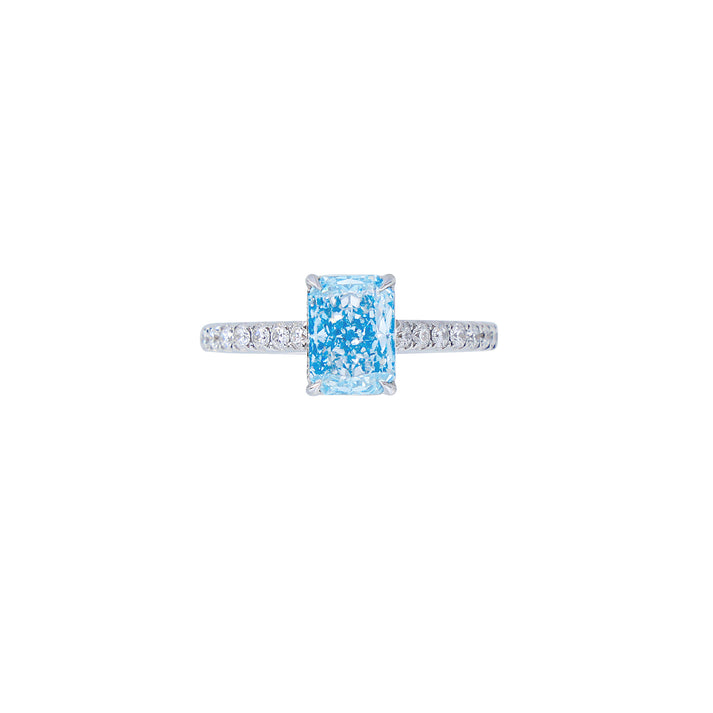
Cooler in tone, blue diamonds have a crisp, composed look. Pale blue can appear subtle from a distance, while stronger saturation gives the stone a much more dramatic presence.
Blue diamonds work especially well in white gold and platinum settings, where the cooler metal enhances the crispness of the color. Simple solitaire designs often allow the diamond itself to remain the center of attention.
For those looking for something distinctive without being overly decorative, blue diamonds offer a unique balance between classic luxury and contemporary style.
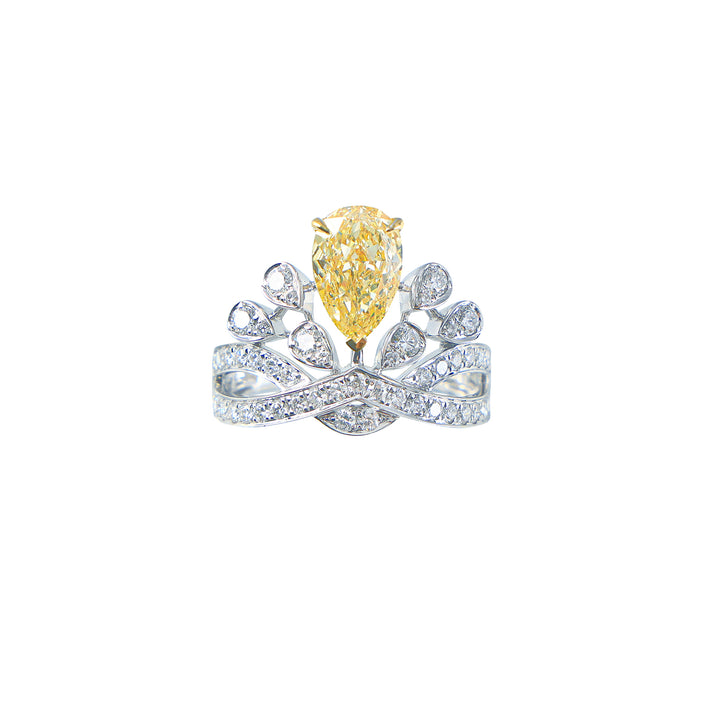
Yellow Diamond Rings
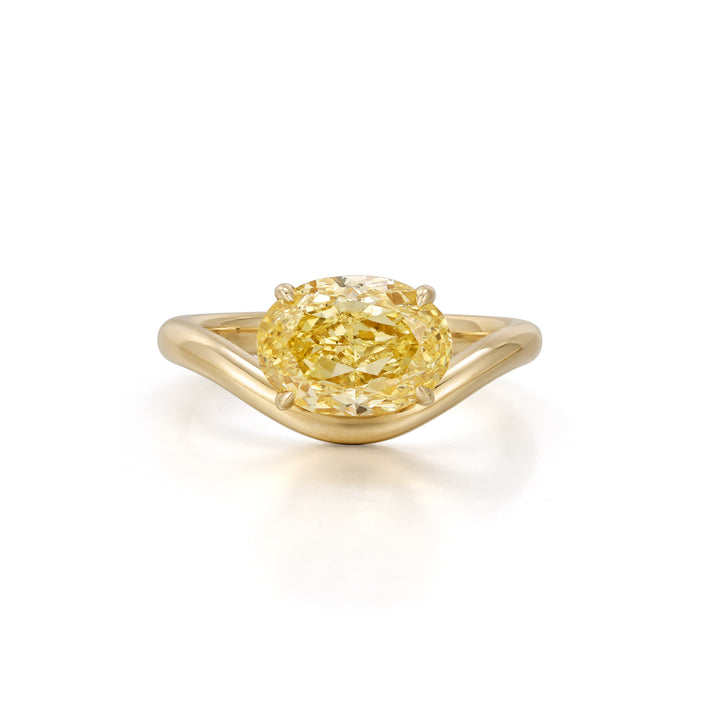
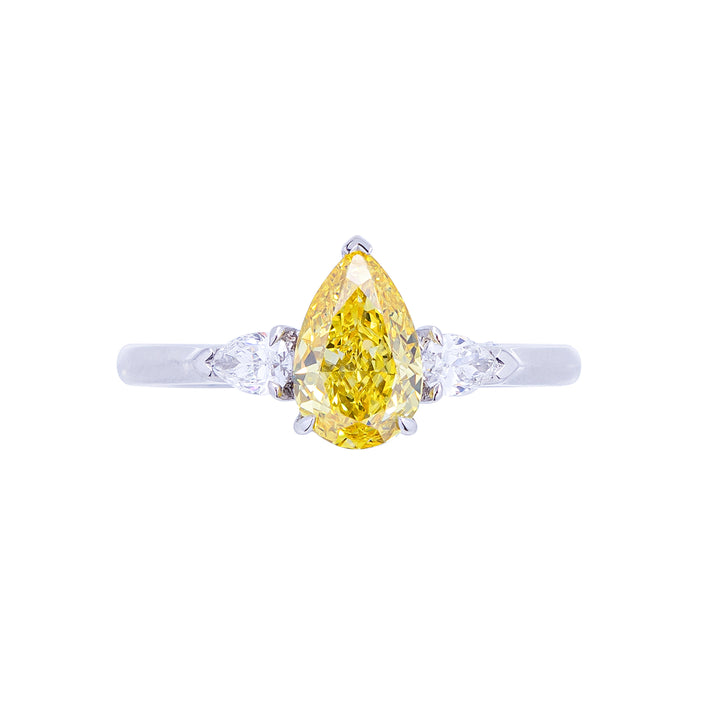
Yellow diamonds bring warmth, energy, and optimism to a design.
Unlike white diamonds, which are admired for their neutrality, yellow diamonds put color at the center of the design. Their golden tones naturally complement yellow gold, creating a rich, cohesive appearance, while white gold settings provide stronger contrast for a brighter overall look.
Depending on the intensity of the color, a yellow diamond can feel playful and contemporary or elegant and vintage-inspired.
Their versatility makes them one of the easiest fancy color diamonds to incorporate into both classic and modern engagement ring designs.
Green Diamond Rings
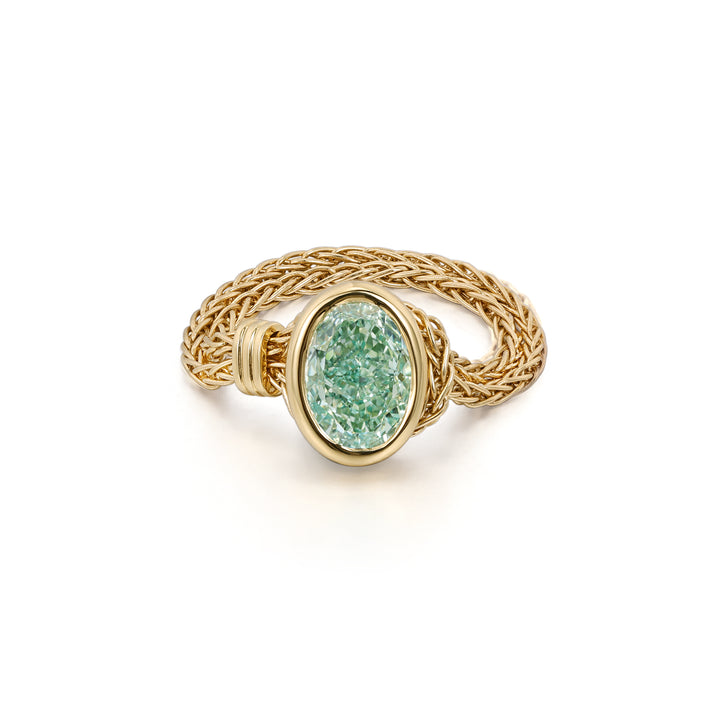
Green diamonds remain one of the most unusual choices in fine jewelry.
Their soft, earthy tones create a subtle connection to nature, giving them a distinctive character that feels fresh rather than flashy. While they are less commonly seen than pink or yellow diamonds, that rarity is part of their appeal.
Green diamonds pair particularly well with yellow gold, where the warm metal complements their organic color palette. Minimal settings often allow the unique hue to speak for itself.
Green diamonds remain far less common in bridal jewelry, which makes them especially appealing to buyers who rarely connect with more familiar diamond colors.
Colored Diamonds vs White Diamonds
Choosing between a colored diamond and a traditional white diamond is not about deciding which is better. It is about deciding what kind of impression you want your ring to create.
White diamonds have long been admired for their brilliance and neutrality. Fancy color diamonds take a different approach, allowing color to become part of the overall design rather than something to minimize.
| Characteristic | White Diamonds | Fancy Color Diamonds |
| Primary Focus | Brilliance and neutrality | Color and character |
| Visual Style | Classic and timeless | Distinctive and expressive |
| Overall Mood | Crisp, bright, and refined | Soft, bold, or unexpected, depending on the color |
| Popular Settings | Solitaire, pavé, halo | Solitaire, bezel, vintage, east-west |
| Design Flexibility | Neutral foundation for any style | Color becomes part of the design language |
| Best For | Traditional bridal styles | Individual expression and modern bridal trends |
The difference is primarily visual. White diamonds let brilliance lead, while fancy color diamonds make the color of the stone part of the ring's overall composition.
Choosing the Right Diamond Color
The easiest way to choose a diamond color is to think about the overall direction of the ring. Pink tends to soften a design, while blue gives it a cooler, more composed appearance. Yellow feels brighter and works naturally with warm metals.
Green is less familiar in bridal jewelry and often gives even a simple setting an unexpected edge.
Shape and metal matter too. The same pink diamond can feel romantic in rose gold and much sharper in platinum. A yellow diamond set in yellow gold creates a tonal look, while white metal increases the contrast.
Color does not work in isolation. The final ring comes from the way the diamond, cut, metal, and setting work together.
Lab-Grown Colored Diamonds: Expanding the Possibilities
For many years, owning a colored diamond was simply not realistic for most buyers. Natural fancy color diamonds are among the rarest gemstones in the world, and exceptional examples often sell for prices far beyond the reach of the average engagement ring budget.
Lab-grown technology has changed that.
Today's lab-grown colored diamonds share the same physical, chemical, and optical properties as mined diamonds while making a much wider range of colors available.
Rather than changing what a diamond is, modern technology has expanded the choices available to today's couples.
For engagement ring buyers, that wider availability has opened up far more room to experiment with color, shape, and setting. Buyers can now explore color, shape, and setting together rather than starting with a very limited pool of available stones.
At Elora, we curate lab-grown diamonds in selected shades of pink, blue, yellow, and green, alongside our champagne diamond collection. Our in-house custom cutting service also gives clients more flexibility with shape and proportion, from elongated silhouettes to less conventional cuts that are difficult to find in standard inventory.
The result is not simply more choice. It is the opportunity to create an engagement ring that feels considered, distinctive, and entirely your own.
Final Thoughts
Color changes a diamond ring in a way that carat weight or clarity grade cannot. It can soften a design, sharpen it, make it feel more playful, or take it in a completely unexpected direction.
That is part of the appeal of colored diamond engagement rings. Pink, blue, yellow, and green diamonds give buyers another way to shape the look of a ring from the center stone outward.
Explore Elora's Engagement Ring Collection to discover our latest designs, or visit our Custom Design page to create a ring around the diamond color, shape, and proportions you have in mind.
Frequently Asked Questions
Are colored diamonds real?
Yes. Fancy color diamonds occur naturally, although they are extremely rare. Today, they are also available as lab-grown diamonds, which have the same physical, chemical, and optical properties as natural diamonds while offering a wider range of colors and greater accessibility.
What is the difference between a fancy color diamond and a white diamond?
Traditional white diamonds are valued for their lack of visible color, while fancy color diamonds are prized because of their color. Rather than minimizing color, fancy color diamonds celebrate it as part of the overall design.
Are lab-grown colored diamonds real diamonds?
Yes. Lab-grown colored diamonds are real diamonds. They have the same crystal structure, hardness, brilliance, and durability as mined diamonds. The only difference is their origin.
Which colored diamond is best for an engagement ring?
There is no universal best choice. Pink diamonds are often chosen for their romantic appearance, blue diamonds for their refined elegance, yellow diamonds for their warmth, and green diamonds for their distinctive, nature-inspired look. The right color depends on your personal style rather than a traditional ranking.
Do colored diamonds sparkle as much as white diamonds?
Yes. Colored diamonds can be just as brilliant as white diamonds, but sparkle depends largely on the cut and facet pattern. Color changes the way that light appears through the stone, which is why a pink, blue, or yellow diamond can create a very different visual effect from a colorless diamond.
Can I customize a colored diamond engagement ring?
Absolutely. At Elora, we offer custom-cut lab-grown diamonds and bespoke engagement rings. If you're looking for a specific diamond color, shape, or setting, our team can work with you to create a ring tailored to your vision.


