What Is a Champagne Diamond? A Guide to Champagne Diamond Rings and Engagement Rings


For a long time, white diamonds were treated as the default choice for an engagement ring. The brightest stone, the highest color grade, the most traditional look.
That idea has started to shift.
More couples are looking beyond the standard options and choosing rings that feel more personal. Champagne diamond rings have become part of that movement. Their warm tones, softer sparkle, and understated character offer something very different from the crisp brilliance of a classic white diamond.
The appeal is not about replacing a traditional diamond. It comes from appreciating a different aesthetic. Some people are drawn to maximum brilliance. Others prefer depth, character, and a ring that feels a little less expected.
That is one reason champagne diamond engagement rings have become increasingly popular in modern bridal jewelry.
What Is a Champagne Diamond?
A champagne diamond is a diamond with naturally warm body color, ranging from soft nude and honey tones to rich golden and brown hues. Depending on the depth and saturation of the color, these diamonds may be graded within the traditional D to Z color scale or classified as fancy color diamonds.
What they have in common is that the color itself becomes part of the stone's appeal, rather than something to be minimized. A softly tinted J or K color diamond can feel just as "champagne" as a deeper Fancy Light Brown stone, even if the grading terminology is different.
The color develops naturally as the diamond forms. Nitrogen within the crystal contributes warm yellow tones, while subtle distortions in the crystal structure create the brown undertones that give champagne diamonds their distinctive appearance. The combination produces a softer, more layered color than a traditional yellow diamond.
The range itself is surprisingly broad. Some champagne diamonds have a pale beige or light golden look, while others develop richer caramel or nutty brown hues. At the deeper end of the spectrum, stones with stronger orange-brown saturation are often referred to as cognac diamonds.
Champagne diamonds are also different from yellow diamonds. While both owe part of their color to the presence of nitrogen, yellow diamonds derive their appearance primarily from nitrogen alone. Champagne diamonds combine that influence with natural crystal grain patterns, creating a warmer and more complex palette.
Today, champagne diamonds are available in both natural and lab-grown forms. Natural champagne diamonds develop their color over millions of years as the crystal grows underground. Lab-grown champagne diamonds achieve similar warm tones by carefully controlling growth conditions and nitrogen content during the creation process.
Creating stable, attractive champagne colors is often more technically demanding than producing many of the cooler gray or blue shades seen in modern lab-grown diamonds.

Why Champagne Diamond Rings Are Becoming More Popular?
Part of the appeal comes from a broader shift in engagement ring trends. More people are moving away from the idea that every ring should follow the same formula. Individual taste and self-expression often matter more than traditional expectations.
In many ways, champagne diamonds fit naturally into the rise of quiet luxury and the old money aesthetic. They do not rely on maximum brightness or the highest color grade to stand out. Instead, their beauty comes from subtlety, depth, and character. The look feels understated rather than attention-seeking.
It is not about rejecting tradition. It is about rewriting it.
A new generation of buyers is also rethinking long-standing ideas around engagement rings. Many couples are more interested in choosing something that reflects their own story rather than following a universal standard. That has helped drive growing interest in non-traditional bridal jewelry and alternative engagement rings.
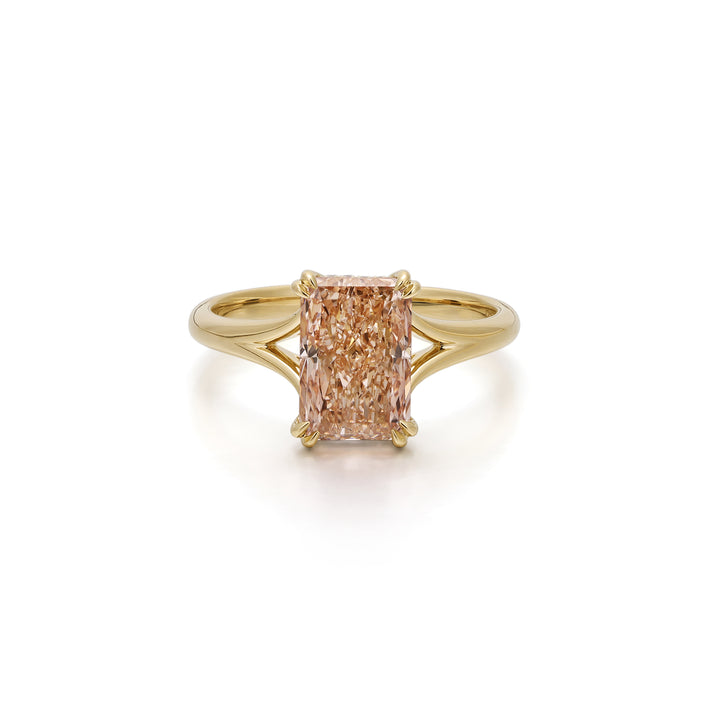
Champagne diamonds also have a practical advantage. Their warm tones pair beautifully with a wide range of skin tones and metal colors. Yellow gold brings out their golden undertones, rose gold creates an even softer look, and white gold or platinum offers gentle contrast. Even in a simple solitaire setting, a champagne diamond often feels distinctive without being overly bold.
Social media has helped accelerate the trend as well. Vintage-inspired rings, warm-toned diamonds, and antique cuts appear regularly across Instagram, Pinterest, and TikTok, while celebrities such as Jennifer Lopez and Halle Berry have also embraced colored diamond engagement rings. Together, these influences have broadened the idea of what a timeless engagement ring can look like.
Perhaps the biggest change, though, is how people think about color itself. For decades, the jewelry industry treated "more colorless" as automatically better. Today, many buyers see color as an expression of character rather than a compromise. A champagne diamond is not trying to be a white diamond. It offers a different kind of beauty, one that feels warmer, more individual, and a little less expected.
What Makes Champagne Diamonds Different?
The difference goes beyond color alone. Champagne diamonds create a different visual experience from traditional white diamonds, and much of that comes from the way they interact with light.
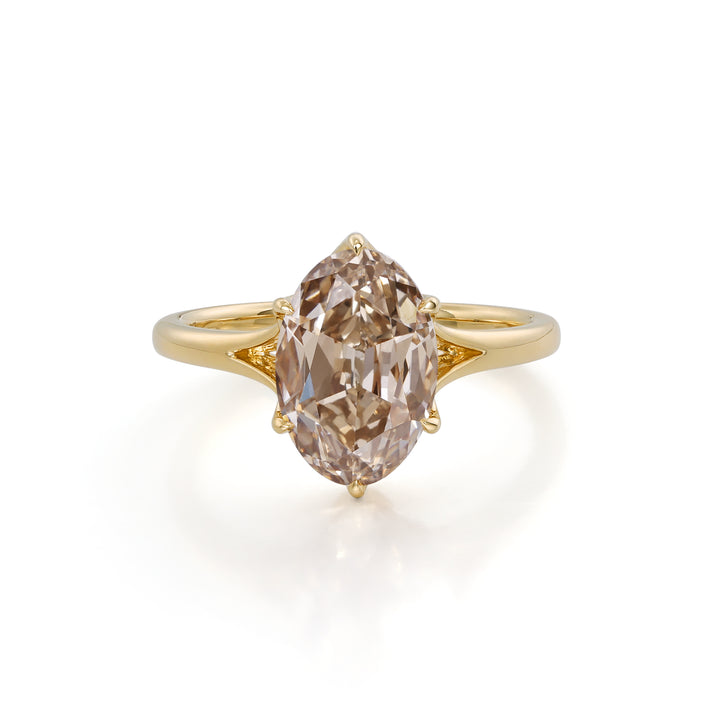
Every champagne diamond has its own character. Some stones lean toward soft honey or pale gold, while others develop richer caramel or deeper cognac tones. Even diamonds with similar grades rarely look exactly alike, which is part of their appeal.
The light itself also feels different. White diamonds are designed to maximize bright, icy brilliance. Champagne diamonds soften that effect. Their body color becomes part of the sparkle, creating softer flashes and a subtle glow rather than sharp white light.
The effect is often less dramatic at first glance, but many people find themselves noticing more of the diamond's depth and character over time.
That warmth also gives champagne diamonds a natural sense of atmosphere. They pair effortlessly with vintage-inspired settings, yellow gold, and antique cuts, but they can be equally striking in a clean solitaire. The stone brings enough character on its own that it rarely needs an elaborate setting to make an impression.
There is a practical side as well. The richer body color can make small inclusions less noticeable than they might be in a bright white diamond, which means many champagne diamonds remain beautifully eye-clean even in SI clarities.
Perhaps that is what makes them different more than anything else. A white diamond often draws attention through brilliance. A champagne diamond invites you to look a little closer.

Champagne Diamond vs White Diamond
Champagne diamonds and white diamonds are often compared, but they are designed to create very different impressions. A white diamond draws the eye with brightness and clarity. A champagne diamond lets color become part of the experience, bringing softness, depth, and a character all its own. The table below highlights some of the key differences between the two.
| Characteristic | Champagne Diamond | White Diamond |
| Overall Look | Warm, soft, and full of character | Bright, crisp, and classic |
| Color Palette | Honey, beige, caramel, and cognac tones | Colorless to near-colorless |
| Light Performance | Warm glow with deeper flashes | Intense white brilliance |
| Style | Vintage-inspired, earthy, and distinctive | Traditional and timeless |
| Best Metal Pairings | Yellow gold, rose gold, mixed metals | White gold, platinum, yellow gold |
| Everyday Wear | Warm tones naturally soften the appearance of minor inclusions | Brighter appearance can make imperfections more noticeable |
| Often Chosen By | People drawn to personal expression, vintage style, and warm tones | People who prefer a classic and traditional look |
| Price Range | Often more accessible at larger sizes | Premium pricing for higher color grades |
The difference is less about quality and more about aesthetic. Champagne diamonds and white diamonds simply offer two different approaches to beauty.
How Do Champagne Diamonds Compare to Other Colored Diamonds?
Champagne diamonds occupy a unique place within the world of colored diamonds. They offer warmth and individuality without the intensity or rarity that often comes with more vivid fancy colors.
Champagne Diamond vs Yellow Diamond: Yellow diamonds are known for their brighter, more saturated color, while champagne diamonds tend to have softer golden and brown undertones. They often feel more understated and are generally more accessible at larger sizes.
Champagne Diamond vs Pink or Blue Diamond: Pink and blue diamonds are among the rarest fancy color diamonds and often command significantly higher prices. Champagne diamonds offer a more approachable way to explore colored diamond jewelry while still feeling distinctive and unconventional.
Are Champagne Diamonds Good for Engagement Rings?
The short answer is yes. Champagne diamonds are just as durable and practical for an engagement ring as traditional white diamonds.
Whether natural or lab-grown, they have the same hardness of 10 on the Mohs scale as any other diamond, making them well suited for everyday wear and a lifetime of use.
Choosing a champagne diamond is not a compromise in quality. It is simply a different aesthetic choice.
That difference is part of the appeal. In a market where many engagement rings still follow the same visual formula, a champagne diamond offers something more personal. The subtle color, softer glow, and natural variation from one stone to the next create a look that is difficult to replicate with a colorless diamond.
Champagne diamonds also encourage a different way of thinking about value. Rather than focusing only on achieving the highest possible color grade, many couples choose a champagne diamond because they connect with its warmth and individuality. The decision becomes less about chasing a standard and more about creating a ring that feels personal.
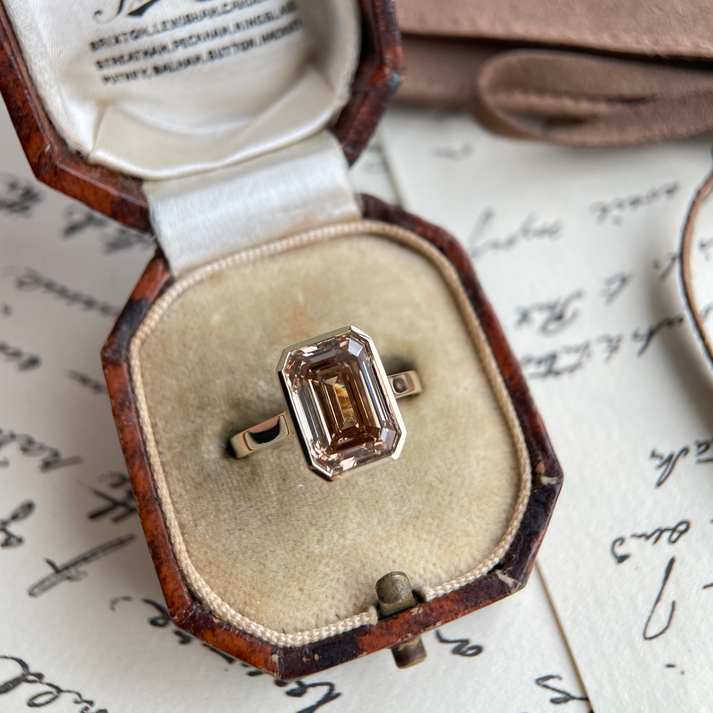
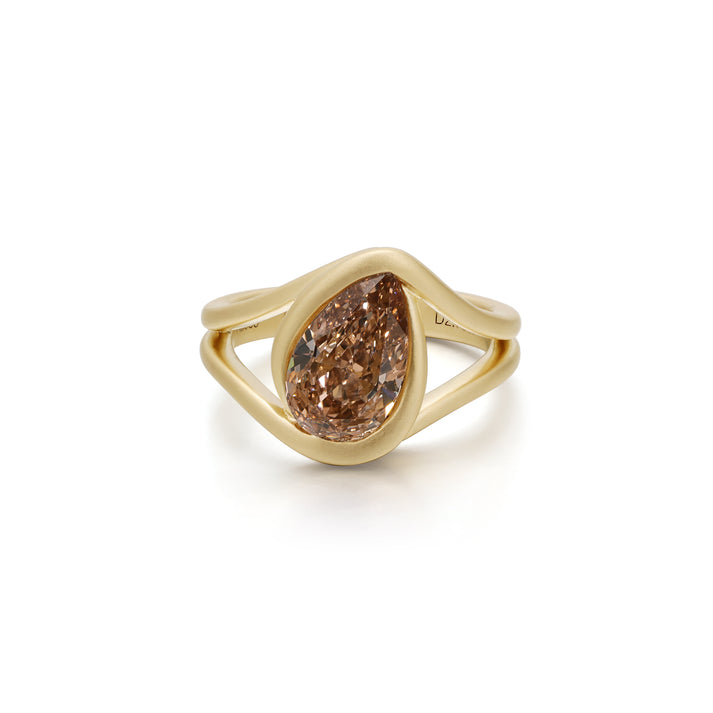
They also work beautifully with many of the design details that have become increasingly popular in modern bridal jewelry. Antique cuts, yellow gold, bezel settings, and vintage-inspired craftsmanship all pair naturally with the softer palette of a champagne diamond.
For couples creating a custom ring, They open up a different design direction than a traditional white diamond.
Beyond the technical details, many people are simply drawn to the feeling a champagne diamond creates. Its warm, earthy tones can feel softer and more lived-in than the crisp perfection often associated with colorless diamonds. For many couples, that quiet warmth feels closer to what a lasting relationship actually looks like.
Of course, champagne diamonds are not for everyone. Some people will always prefer the bright, classic look of a traditional white diamond, and there is nothing wrong with that.
The appeal of a champagne diamond comes from choosing something a little less expected.
The best engagement ring is not the one that follows every tradition. It is the one that still feels like you every time you look down at your hand.
Choosing the Right Champagne Diamond Ring
There is no single "best" champagne diamond ring. The most beautiful designs usually come from finding the right balance between color, shape, and setting rather than focusing on any one element alone.
Start with the ColorOne of the first decisions is how much warmth you want the diamond to have. Medium champagne shades offer a little more character while remaining versatile, making them a popular choice for engagement rings. Deeper champagne and cognac diamonds create a stronger vintage presence and often become the focal point of the entire design. None of these options is inherently better than another. The right choice depends on whether you are drawn to something understated or something with a little more depth and presence. |
 |
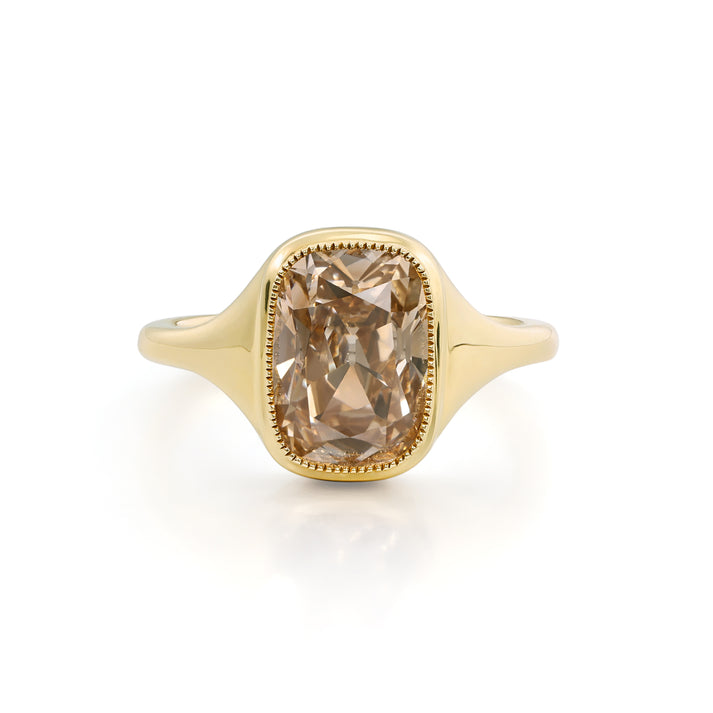
Think About ShapeShape has a surprisingly big influence on the overall look of a champagne diamond. Elongated shapes such as oval, pear, and marquise cuts create a softer, more contemporary silhouette, while also making the center stone appear larger on the hand. East-west settings have also become increasingly popular in recent years, offering a modern take on these classic shapes. Cushion and radiant cuts hold color particularly well, making them a natural fit for champagne diamonds. Their balanced proportions work beautifully in both vintage-inspired and more minimal settings. |
 |
For those who appreciate clean lines, emerald cuts create a completely different effect. The step-cut facets emphasize depth and body color, giving the stone a quiet, architectural elegance that pairs naturally with Art Deco influences.
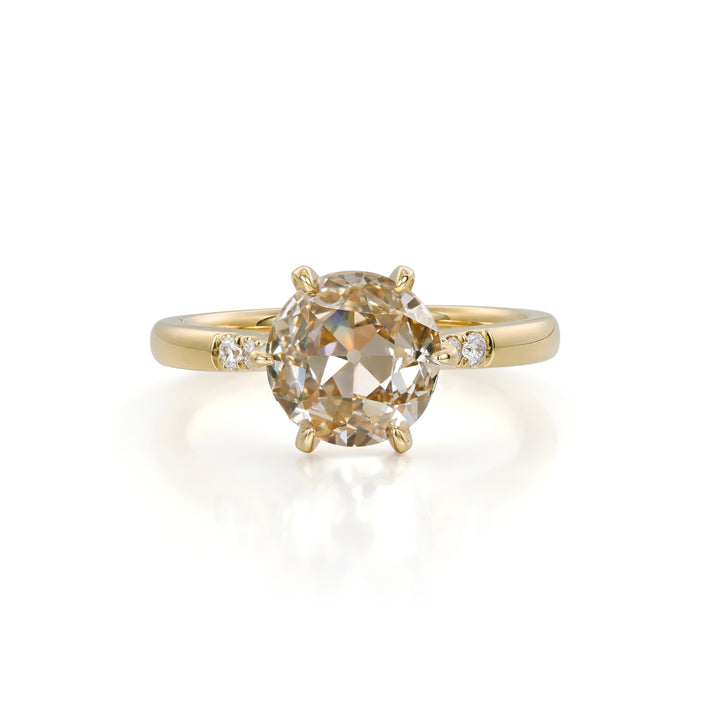
Even round champagne diamonds, though less commonly seen, offer an interesting balance between the familiar brilliance of a classic round cut and the warmth of a colored diamond.
Pair It with the Right Metal
The choice of metal can subtly change the way a champagne diamond is perceived.
Yellow gold is often the most natural pairing. The warm metal enhances the golden undertones of the diamond and creates a cohesive, tone-on-tone look that feels timeless without being overly traditional.
Rose gold softens the palette even further and pairs especially well with lighter champagne shades, creating a romantic and understated effect.
For those who prefer more contrast, white gold or platinum can make the diamond's color stand out more clearly while giving the ring a cleaner, more contemporary appearance.
Two-tone settings have also become increasingly popular. A yellow gold band combined with white prongs offers the warmth of gold while allowing more light to reach the center stone, creating a balanced look that works particularly well with champagne diamonds.
Consider an Antique CutIf there is one pairing that feels especially natural, it is a champagne diamond with an antique cut. Old Mine Cuts and Old European Cuts share many of the same qualities that make champagne diamonds so appealing. Neither is defined by perfect precision or maximum brilliance. Instead, both celebrate character, subtle variation, and a softer approach to light. |
 |
The larger facets of an antique cut allow the color of the diamond to become part of the visual experience, while the warm tones of a champagne stone enhance the vintage character of the cut itself. The result feels less like a modern trend and more like a piece with a story behind it.
It is also one of the combinations we see requested most often for custom engagement rings. Champagne diamonds and antique cuts both move away from the idea that perfection has to look one particular way. Together, they create rings that feel distinctive, considered, and full of character.

Champagne Diamonds and Lab-Grown Innovation
Lab-grown technology has opened up new possibilities for champagne diamonds, not by changing what makes them beautiful, but by making those qualities easier to explore.
Modern lab-grown technology has also made it easier to produce champagne diamonds in a wider range of cuts and proportions. Antique-inspired cuts, elongated cushions, Old Mine Cuts, and other less conventional shapes that can be difficult to source consistently in natural diamonds are now much more achievable.
For many buyers, that creative freedom is just as important as sustainability. Lab-grown diamonds offer a lower-impact alternative to mined stones while also making it possible to create rings that feel more personal and less standardized.
At Elora, much of our work centers around these possibilities. Alongside classic white diamonds, we curate lab-grown champagne diamonds in a range of carefully selected tones, from soft honey hues to richer cognac shades.
Many of our custom projects combine these warmer colors with antique cuts and unusual silhouettes, creating engagement rings that feel distinctive without losing their sense of timelessness.
Explore our collection of lab-grown champagne diamond engagement rings, or work with our team to create a custom design built around the color, cut, and setting that feels right for you.
Final Thoughts
Champagne diamonds do not ask you to give up the idea of a timeless engagement ring. They simply offer a different interpretation of it. For some people, that interpretation feels a little warmer, a little more personal, and a little closer to their own story.
If you are looking for an engagement ring that stands apart without feeling overdesigned, a champagne diamond may be worth a closer look.
FAQs
Q Are champagne diamonds real diamonds?
Yes. Champagne diamonds are real diamonds, available in both natural and lab-grown forms. They have the same hardness, durability, and everyday wearability as traditional white diamonds.
Q Are champagne diamonds rare?
Natural champagne diamonds are less common than traditional white diamonds, especially in larger sizes or unusual cuts. Lab-grown technology has made these colors much more accessible while maintaining the same visual appeal.
Q Are champagne diamonds good?
Yes. Champagne diamonds are valued for their unique color and character rather than for being completely colorless. For many buyers, that warmth is exactly what makes them appealing.
Q Do champagne diamonds sparkle?
Absolutely. They sparkle differently from white diamonds, though. Instead of crisp white brilliance, champagne diamonds often display warmer flashes of light with more depth and contrast.
What metal looks best with champagne diamonds?
Yellow gold is one of the most popular choices because it enhances the warm tones of the diamond. Rose gold creates a softer romantic look, while white gold or platinum provides stronger contrast.
Q Are champagne diamonds more affordable than white diamonds?
It depends on the specific stone. In the natural diamond market, many champagne diamonds can be more affordable than high-color white diamonds of similar size. Lab-grown champagne diamonds offer even greater flexibility, making it easier to choose larger stones or custom designs while staying within budget.


