Collection: Heart Cut Diamond
A heart cut diamond is the ultimate token of romance and devotion. Yet beneath this delicate form lies the most technically demanding shape in diamond geometry. It requires absolute precision to create two identical arches and a sharply defined top cleft. We rigorously screen our inventory to guarantee this exact symmetry. You are not just choosing a symbol of affection. You are securing a true piece of art that remains instantly recognizable from across the room.
To preserve this romantic twist on classic elegance, the sharp bottom point requires strict structural protection. We mount these diamonds using a solid corner prong to prevent chipping during daily wear. Because this complex silhouette can lose its definition in smaller sizes, we strongly advise selecting a stone of at least one carat to maximize its visual presence. Every Elora ring balances a definitive emotional statement with complete daily security.
-
Vendor:Elora Fine Jewelry
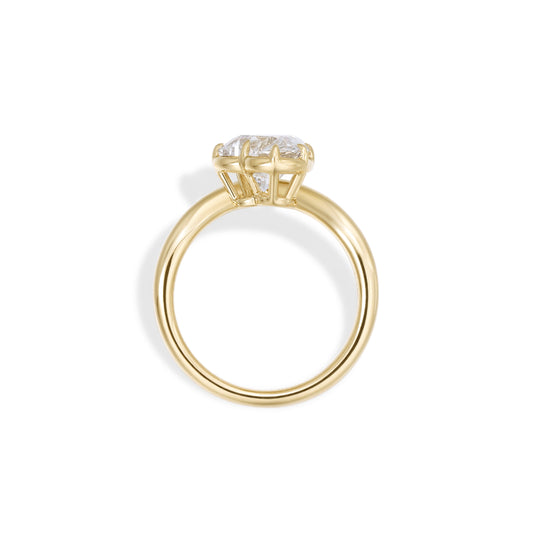
Honey-Champagne Heart Lab Grown Diamond Engagement Ring
Regular price $4,799.00$4,799.00 Regular priceUnit price / perSale price -
Vendor:Elora Fine Jewelry
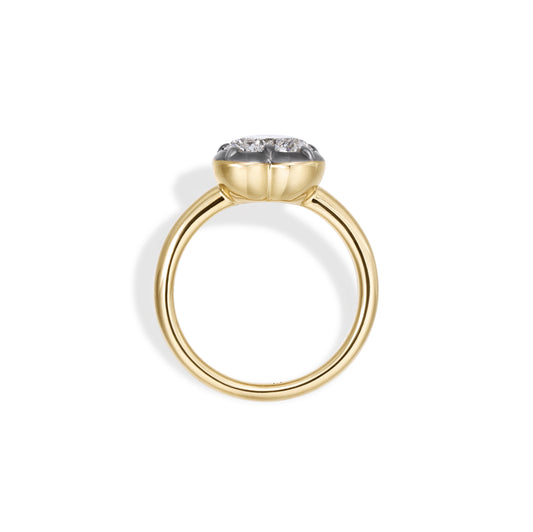
Arden-Heart Cut Lab Grown Diamond Engagement Ring
Regular price $4,599.00$4,599.00 Regular priceUnit price / perSale price -
Vendor:Elora Fine Jewelry
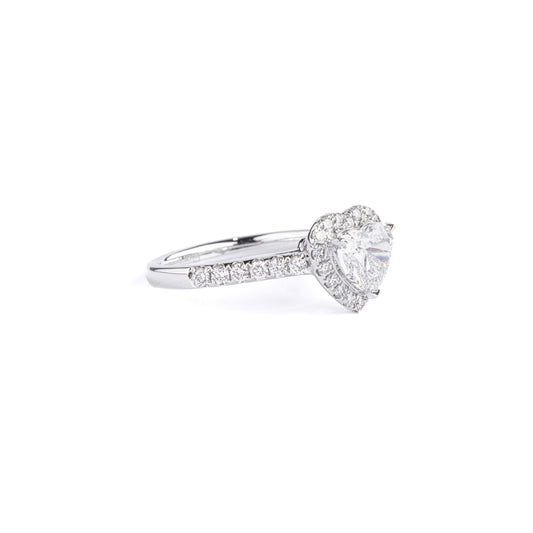
Wave-Heart Cut Lab Grown Diamond Engagement Ring
Regular price From $1,399.00From $1,399.00 Regular priceUnit price / perSale price -
Vendor:Elora Fine Jewelry
Eva-Heart Cut Lab Grown Diamond Pinky Ring
Regular price From $1,299.00From $1,299.00 Regular priceUnit price / perSale price -
Vendor:Elora Lab Diamond Jewelry
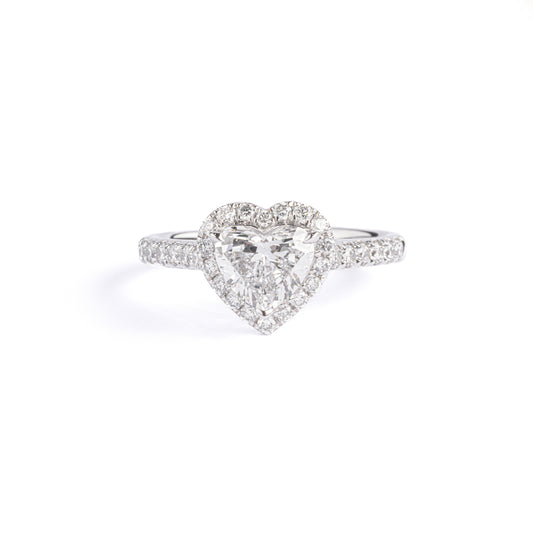
Anica-Heart Cut Lab Grown Diamond Ring
Regular price From $1,299.00From $1,299.00 Regular priceUnit price / perSale price
The Reality of Heart Cut Proportions
Most heart diamonds on the market are cut poorly. They either look like a round stone with a small chip at the top, or a stretched teardrop that completely loses its romantic intent. To get this specific shape right, a cutter has to sacrifice a massive amount of the original rough material. They must carve a deep cleft directly into the top edge and ensure the two rounded lobes mirror each other flawlessly. We reject any stone that fails this strict symmetry test. When you select a diamond from our inventory, you receive a crisp and unmistakable silhouette that actually looks like a heart from across the room.
Why Size Matters for This Shape
The complex outline of a heart diamond simply disappears if the stone is too small. The deep top cleft and sharp bottom tip require a substantial surface area to remain visually distinct. For this specific cut, we explicitly advise our clients to prioritize carat weight over minor clarity upgrades. A center stone of at least one carat ensures the geometry is legible on the hand. If you are working with a strict budget but want maximum visual impact, a design like the Anica Heart Ring provides an ingenious solution. The surrounding accent diamonds actively trace the outer edge of the center stone, essentially drawing the heart shape in brilliant light to make it look significantly larger.
Securing the Bottom Point
The sharp tip of a heart diamond chips easily if it strikes a hard surface, requiring a setting specifically engineered for physical protection. The Wave Heart Ring utilizes a precision V-shaped prong at the base to secure the diamond. This design wraps the vulnerable point in protective metal while allowing the rounded top lobes to remain fully exposed, capturing maximum light while ensuring the stone's long-term structural integrity.
Frequently asked questions
Learn More
What is a heart cut diamond?
A heart cut is a modified brilliant diamond with a distinctive cleft at the top and a pointed tip at the bottom.
It shares a similar facet structure with round diamonds but requires far more precision in shaping to achieve a balanced, recognizable outline.
What makes lab-grown heart diamonds special?
Lab-grown heart diamonds offer the same brilliance and symbolism as natural diamonds, at a more accessible price with a more ethical and environmentally friendly origin.
Heart shapes are rare in natural diamonds due to strict rough and cutting requirements. Lab-grown diamonds remove this limitation, allowing for more precise, well-defined heart shapes with better value.
Why do some heart diamonds not actually look like a heart?
Because shape matters more than specifications.
Heart cuts don’t have a standardized cut grade, so two diamonds with similar parameters can look completely different. If the symmetry is off, the shape can quickly lose its identity.
What should a well-cut heart diamond look like?
Focus on overall balance and symmetry.
A well-cut heart should have evenly matched lobes, a clean and defined cleft, and a centered point. The outline should feel smooth and intentional, not uneven or distorted.
What ratio looks best for a heart-shaped diamond?
Most heart diamonds look best close to a 1.00 ratio, typically within 0.90–1.05.
Shapes outside this range can appear too wide or too narrow, making the heart less defined.
Why is symmetry especially important in heart diamonds?
Because even small differences are immediately visible.
Unlike other shapes that can hide imperfections through sparkle, heart cuts rely heavily on symmetry to maintain their visual identity.
Do heart-shaped diamonds have a bow-tie effect?
Yes, but it usually appears differently.
The bow-tie is typically concentrated below the cleft rather than across the entire center. In well-cut stones, it appears soft and subtle rather than dark or distracting.
Why do smaller heart diamonds sometimes look less defined?
Heart shapes need enough size to show their cleft and rounded lobes clearly. In smaller stones, these details can blur, making the diamond look more like a rounded triangle.
For the best shape definition, we typically recommend choosing a heart diamond of at least 1 carat.
Are heart cut diamonds difficult to cut well?
Yes, they are among the more demanding shapes.
Achieving a balanced heart requires precise control over symmetry, proportions, and alignment. Small deviations can significantly affect the final appearance.
Do heart diamonds show color or inclusions easily?
They are relatively forgiving, but not entirely.
Their brilliant-style facets can help mask small inclusions, but areas near the cleft and center may reveal imperfections more easily in larger stones.
Is the tip of a heart diamond fragile?
The pointed tip is the most vulnerable area.
To protect it, settings typically use a V-shaped prong or similar protective design. With proper setting, heart diamonds are suitable for everyday wear.
What should I focus on most when choosing a heart diamond?
Start with the shape, not the specs.
If the outline isn’t symmetrical or visually balanced, no combination of carat, color, or clarity will improve it. A good heart cut should feel immediately recognizable and well-proportioned.
Are heart-shaped diamonds a practical choice or purely symbolic?
They can be both.
While they carry strong symbolic meaning, a well-cut heart diamond can also feel refined and wearable, depending on its proportions and setting.