Collection: Tennis Necklaces
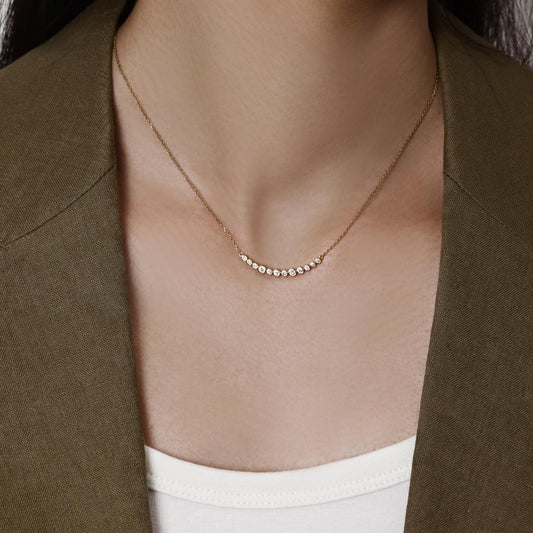
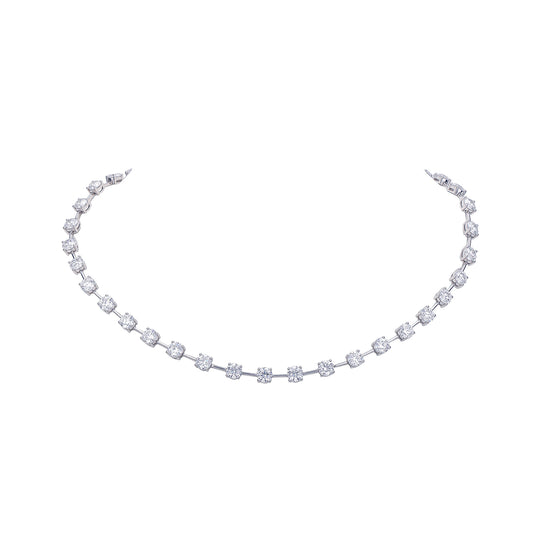
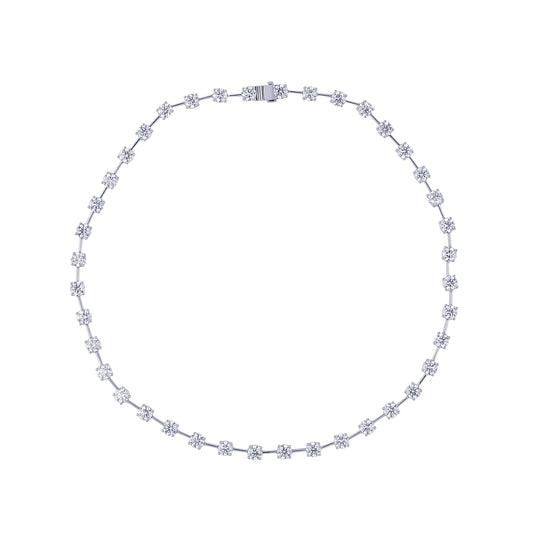
A tennis necklace sits at the collarbone, which puts it closer to the face than almost any other piece of jewelry. It shows up in every conversation, every photograph, every neckline. Our collection offers two distinct takes: the Classic Radiance in a traditional prong setting, and the Millie Graduated Bezel where stones taper in size from center outward and each diamond is framed in metal rather than lifted by prongs.
The graduated silhouette of the Millie reads differently from a uniform line. The center draws the eye, and the taper creates a sense of movement toward the neckline that a straight row of matched stones doesn't produce.

-
Vendor:Elora Fine Jewelry
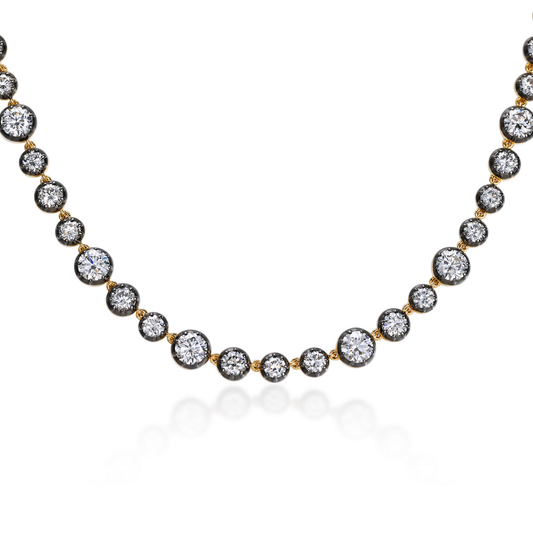
Georgian Bezel Round Diamond Tennis Necklace
Regular price $12,299.00$12,299.00 Regular priceUnit price per -
Vendor:Elora Fine Jewelry
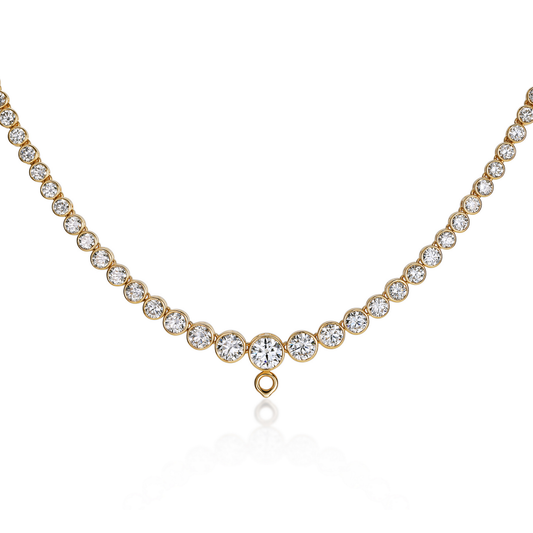
Graduated Round Diamond Bubble Tennis Necklace
Regular price $10,599.00$10,599.00 Regular priceUnit price per -
Vendor:Elora Fine Jewelry
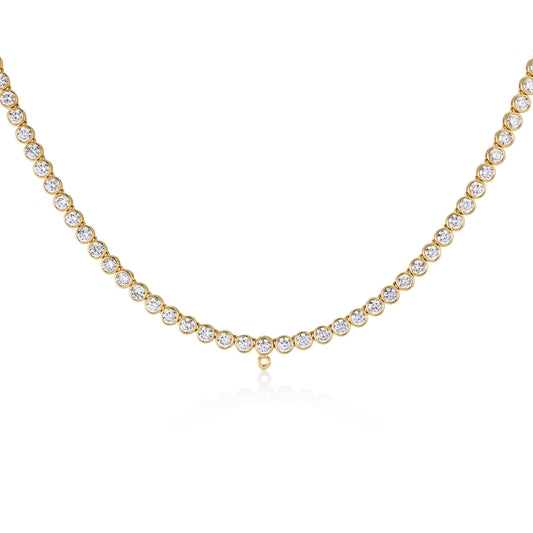
Round Diamond Bubble Tennis Necklace
Regular price $9,999.00$9,999.00 Regular priceUnit price per -
Vendor:Elora Fine Jewelry
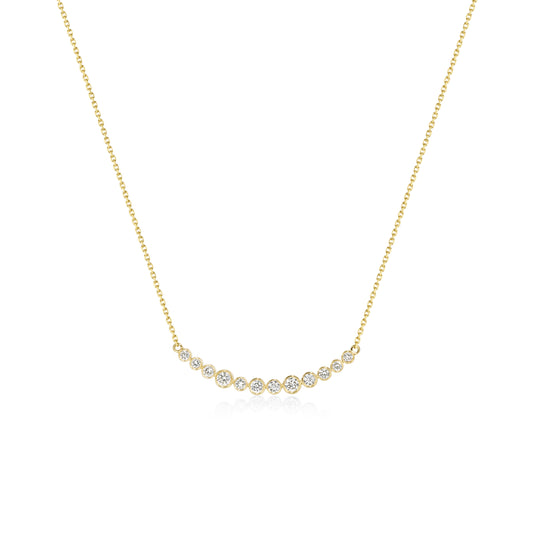
Millie-Graduated Bezel Diamond Necklace
Regular price From $620.00From $620.00 Regular priceUnit price per -
Vendor:Elora Fine Jewelry
Classic Radiance Tennis Necklace
Regular price $16,120.00$16,120.00 Regular priceUnit price per



What Sits at the Collarbone Does the Most Work
Jewelry at the collarbone occupies a specific visual territory: it frames the face, fills the neckline, and appears in every photograph taken from the front. A tennis necklace at this position does all of that with a single continuous line of diamonds that requires no pendant, no layering, and no additional thought. It's one of the few pieces that genuinely completes a look rather than adding to it.
Two Approaches to the Same Format
The Classic Radiance Tennis Necklace uses a uniform prong setting where each stone is the same size and sits at the same height. The line is even, the sparkle is consistent, and the effect is clean and immediate. This is the version that reads as classic from across the room.
The Millie Graduated Bezel Diamond Necklace works differently. The stones taper from a larger center diamond outward to smaller ones at the ends, and each stone is set in a bezel frame rather than lifted by prongs. The graduation creates a focal point at the center of the neckline, and the bezel setting gives the piece a quieter, more modern quality. Up close it reads as refined; from a distance it reads as a soft glow rather than a sharp sparkle.
Neckline and Length
Both pieces are designed to sit at the collarbone, which is the most versatile position for a necklace of this type. It works with crew necks, V-necks, off-shoulder styles, and open collars. The necklace doesn't compete with the neckline; it follows it. If you want to layer, a longer pendant or chain worn below creates a natural vertical line that extends the look downward without crowding the collarbone piece.
Prong vs. Bezel: A Practical Difference
Beyond aesthetics, the setting choice has practical implications. Prong settings expose more of the diamond surface, which means more light enters the stone and more sparkle exits. They also have more points of contact with clothing and hair. Bezel settings encase the stone's edge in metal, which protects the girdle, reduces snagging, and produces a softer, more diffused light return. For daily wear, the bezel is the lower-maintenance choice. For occasions where maximum brilliance matters, the prong setting delivers more.