Collection: Black Gold Wedding Band
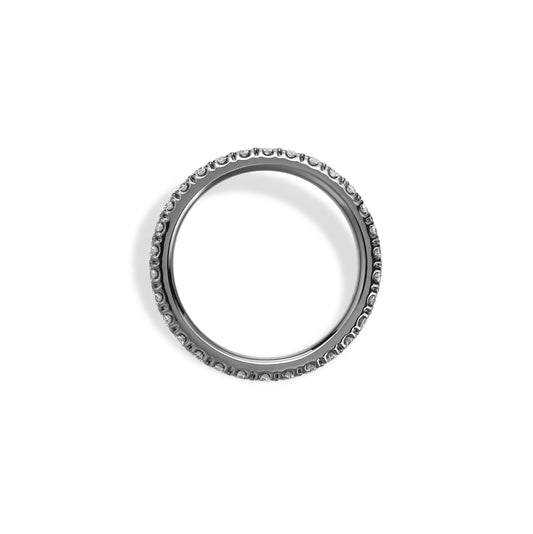
Black gold occupies a different register from every other metal in fine jewelry. Its surface absorbs light rather than reflecting it, which changes the way diamonds read against it entirely. Stones appear to emerge from the band rather than sit within it, and colored diamonds take on a depth of saturation that a white or yellow metal setting cannot produce. Elora's black gold wedding bands are designed around this visual logic, pairing the dark surface with lab grown diamonds in white, blue, and pink for bands where the contrast between metal and stone is the point.

-
Vendor:Elora Fine Jewelry
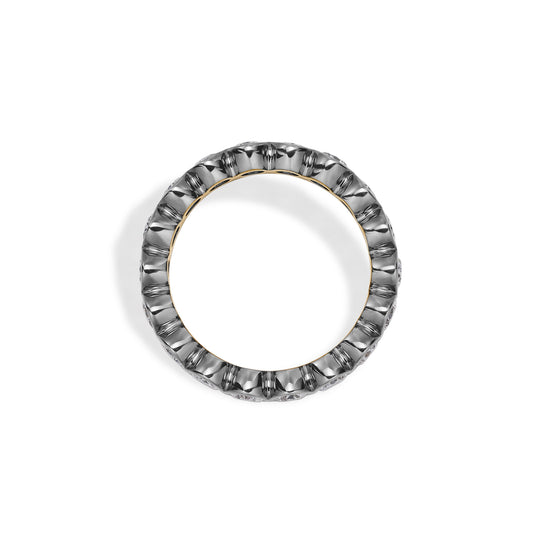
Orla-Oval Cut Diamond Eternity Band
Regular price $1,999.00$1,999.00 Regular priceUnit price per -
Vendor:Elora Fine Jewelry
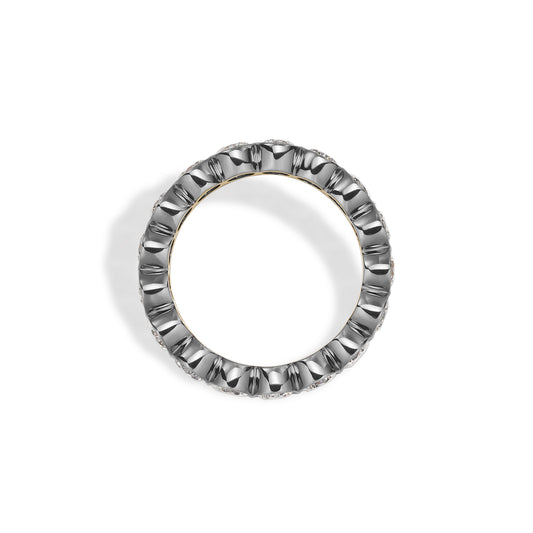
Orla-Round Cut Diamond Eternity Band
Regular price $1,699.00$1,699.00 Regular priceUnit price per -
Vendor:Elora Fine Jewelry
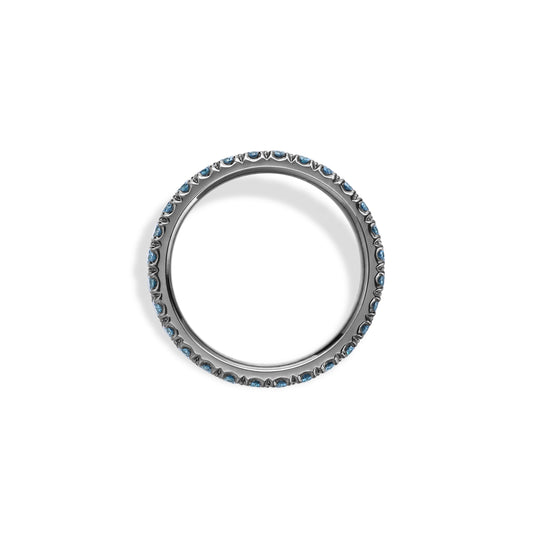
Irene-Round Cut Lab Grown Blue Diamond Ring
Regular price From $899.00From $899.00 Regular priceUnit price per -
Vendor:Elora Fine Jewelry
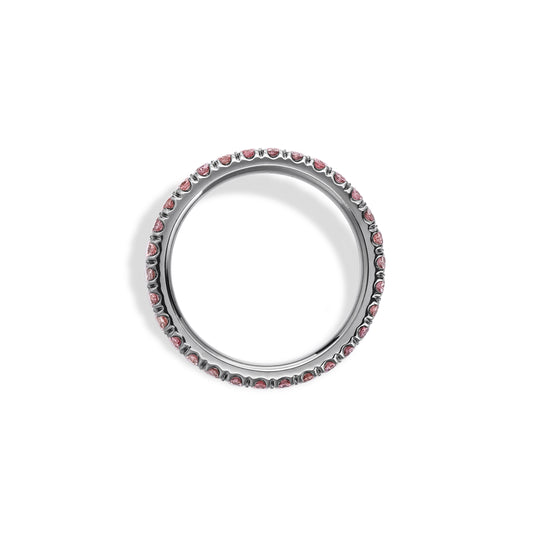
Irene-Round Cut Lab Grown Pink Diamond Ring
Regular price From $1,099.00From $1,099.00 Regular priceUnit price per -
Vendor:Elora Fine Jewelry
Irene-Round Cut Lab Grown Diamond Ring
Regular price From $799.00From $799.00 Regular priceUnit price per





What Black Gold Does to a Diamond That No Other Metal Can
Every metal in fine jewelry creates a relationship with the stones set within it. Yellow gold reflects warm light into a diamond's pavilion. White gold and platinum reflect neutral light. Black gold absorbs light rather than reflecting it, which produces a visual isolation effect that no other setting metal achieves. A diamond set in black gold appears to emerge from the surface of the band rather than sit within it, because the dark ground removes all competing visual information from around the stone. The contrast is the defining characteristic of the setting, and it is why black gold works particularly well with colored lab grown diamonds, where the saturation of the stone's color is the primary visual element.
Colorless Diamonds in a Black Setting
The contrast between a colorless diamond and a black gold band is the most direct expression of this effect. The Orla Oval Cut Diamond Eternity Band sets oval diamonds in a continuous band where the dark metal creates a visual ground against which each stone's brilliance reads with maximum clarity. The Irene Round Cut Lab Grown Diamond Ring applies the same principle to round brilliant diamonds, with the black surface making each stone appear brighter and more present than the same stones would read in a white or yellow metal setting. Both bands demonstrate how the absence of reflected light from the metal amplifies the light returned by the diamonds themselves.
Colored Diamonds and the Depth of a Dark Ground
Black gold intensifies the perceived saturation of colored stones in a way that lighter metals cannot. Against a white or yellow setting, a colored diamond shares visual space with the metal tone. Against black gold, the stone's color becomes the only element the eye registers. The Irene Round Cut Lab Grown Blue Diamond Ring uses this effect to give the blue stones a depth of color presence that their graded saturation alone would not produce. The Irene Round Cut Lab Grown Pink Diamond Ring takes the same approach with pink diamonds, where the contrast between the blush tone of the stones and the depth of the black surface produces a combination that reads as both precise and unexpected.
Understanding the PVD Surface Over Time
Physical vapor deposition produces a surface harder than standard precious metal finishes, but it responds differently to wear than a polished gold surface. Deep scratches that penetrate the coating will reveal the gold alloy beneath, and unlike rhodium plating, PVD coatings require specialized equipment to reapply. For daily wear under normal conditions the finish holds well. Treating the band with the same care as any fine jewelry piece, and avoiding abrasive surfaces and harsh chemicals, is the most practical approach to maintaining the surface over the long term.