Collection: Radiant Cut Diamond
The radiant cut was created for a single reason: to make a rectangular diamond sparkle. It takes the elongated lines of an emerald cut and fills them with the intense, shattered fire of a round stone. The result is a dense pattern of light known as the crushed ice effect. You get a substantial footprint on the hand, paired with a continuous, edge-to-edge brilliance.
This shape also has distinct physical advantages. The trimmed corners make the stone far less prone to chipping than a sharp square, ensuring safe daily wear in almost any setting style. Because the deep pavilion naturally traps and concentrates body color, it is the standard choice for fancy pink or yellow diamonds. It simply maximizes the richness of the hue better than any other cut.

-
Vendor:Elora Fine Jewelry
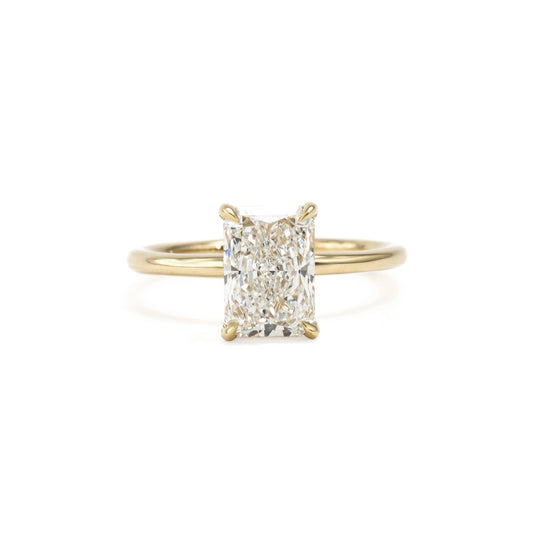
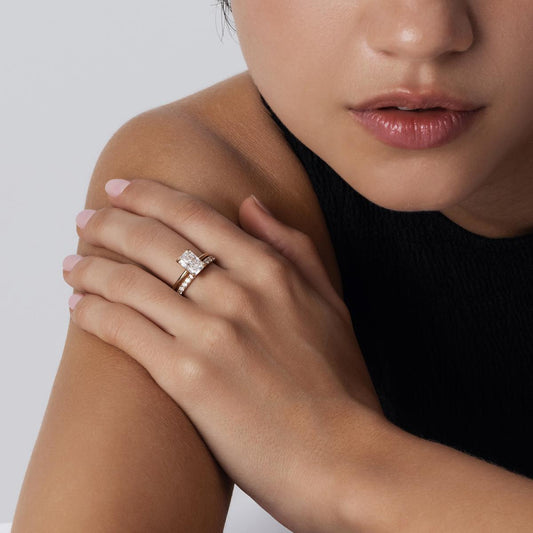
Nora-Radiant Cut Lab Grown Diamond Ring
Regular price From $999.00From $999.00 Regular priceUnit price per$999.00Sale price -
Vendor:Elora Fine Jewelry
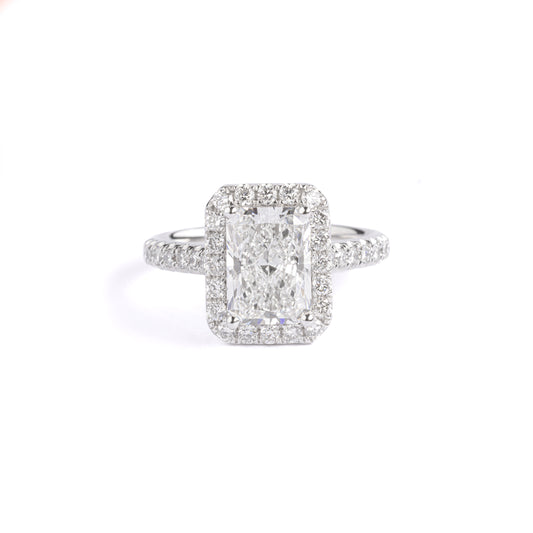
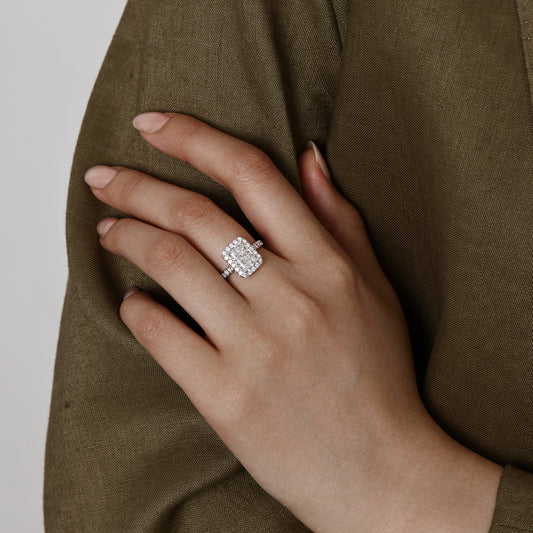
Briella-Radiant Cut Lab Grown Diamond Ring
Regular price From $1,299.00From $1,299.00 Regular priceUnit price per$1,299.00Sale price -
Vendor:Elora Fine Jewelry
Lucia-Champagne Radiant Lab Grown Diamond Engagement Ring
Regular price From $2,399.00From $2,399.00 Regular priceUnit price per -
Vendor:Elora Fine Jewelry
Ocean-Blue Radiant Lab Grown Diamond Engagement Ring
Regular price $4,799.00$4,799.00 Regular priceUnit price per -
Vendor:Elora Fine Jewelry
Caraway-Radiant Cut Lab Grown Diamond Engagement Ring
Regular price From $2,899.00From $2,899.00 Regular priceUnit price per -
Vendor:Elora Fine Jewelry
Lucia-Radiant Cut Lab Grown Diamond Engagement Ring
Regular price From $1,999.00From $1,999.00 Regular priceUnit price per -
Vendor:Elora Fine Jewelry
Rhea-Champagne Radiant Lab Grown Diamond Engagement Ring
Regular price From $2,699.00From $2,699.00 Regular priceUnit price per





The Mechanics of Radiant Cut Brilliance
A radiant cut handles light differently than a standard brilliant because the seventy facets on its pavilion create a highly complex network of internal reflections. Instead of returning light in broad flashes, the stone shatters it into tiny, rapid pinpoints to create what the industry calls the crushed ice effect. This dense optical pattern provides a significant practical advantage by naturally masking small internal inclusions. You can safely drop your clarity grade to VS2 or even SI1 and still secure an eye clean diamond, allowing you to allocate your budget toward a larger carat weight.
Managing Color in a Radiant Cut Diamond
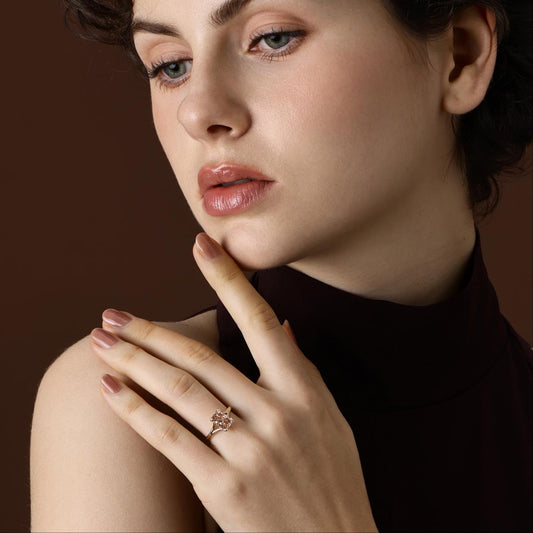
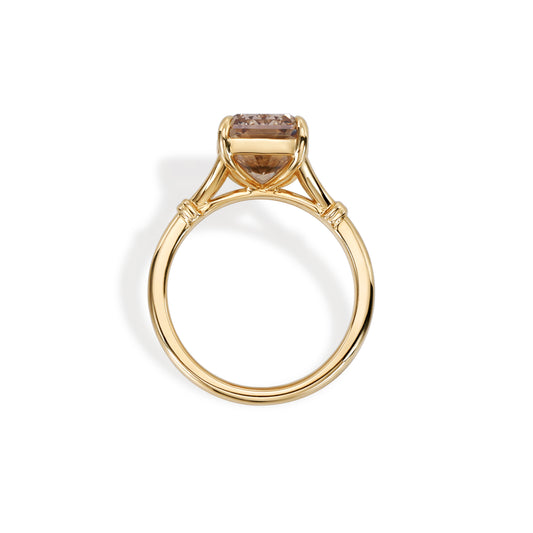
The deep physical architecture of this specific shape traps light and acts like a magnifying glass for the natural hue of the diamond. If you are shopping for a fancy colored stone, the radiant cut concentrates color saturation better than almost any other shape. The Lucia Brown Pink Radiant Ring demonstrates exactly how this geometry maximizes the visual depth of rare colored diamonds. Conversely, if you want a purely icy white engagement ring, you must be strict with your color selection. We advise staying in the D through F range because lower grades will quickly show a visible warm tint in the corners.
Choosing the Best Radiant Diamond Ratio
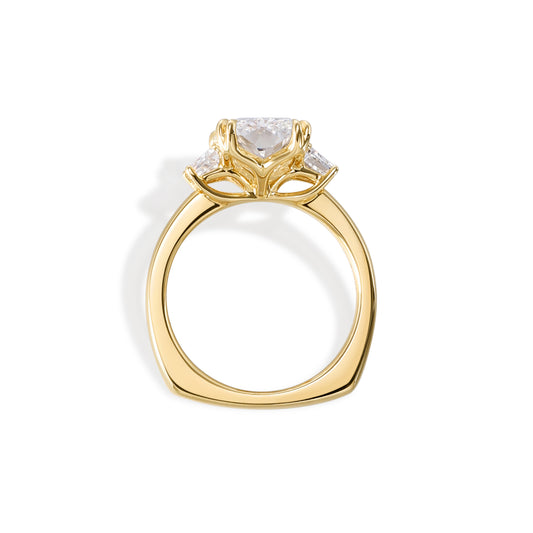
You dictate the actual shape of the diamond through its dimensional ratio. Pushing the ratio past 1.15 creates the requested elongated profile, a rectangular stretch that maximizes your finger coverage and actively slims the appearance of the hand. A classic four prong solitaire like the Nora Radiant Ring highlights these clean geometric lines perfectly. If you prefer a larger visual footprint, adding a diamond halo as seen in the Briella Radiant Ring builds naturally on the straight edges of the center stone to increase its overall presence.
Radiant Diamond Settings and Durability
Because sharp corners chip easily, the creators of the radiant cut trimmed the four outer points off entirely. This intelligent structural modification makes the diamond remarkably secure for daily wear, requiring less intrusive metalwork to stay physically protected while still allowing maximum light to enter the stone.