Collection: Pink Gemstone
Pink in gemstones is not one color. Pink tourmaline runs from pale blush to a saturated reddish pink, with a warmth that varies by stone. Pink spinel is cooler and more purely pink, with a brilliance that comes from its crystal structure rather than its transparency. Pink sapphire sits between them in tone but has a hardness of 9 that neither tourmaline nor spinel matches.
Cut changes how a stone reads. The sugarloaf cabochon, a polished dome with no facets, is quieter than a brilliant or step cut. It does not return light the same way. What it does instead is let the color of the stone come through undisturbed, which for pink tourmaline, a stone whose warmth is its main quality, is often the more interesting choice.

-
Vendor:Elora Fine Jewelry
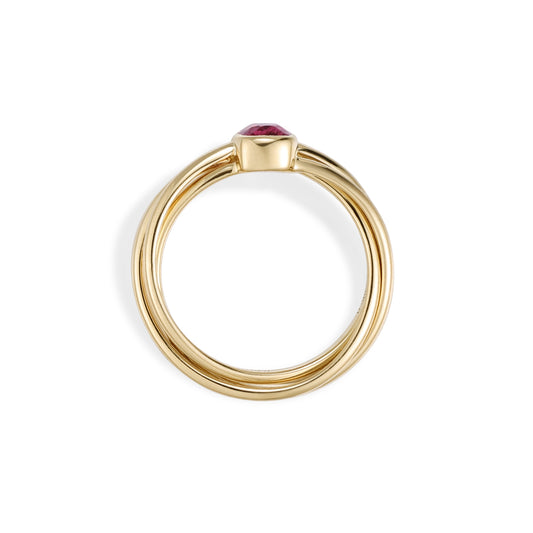
Mae-Cushion Cut Pink Spinel Trinity Gemstone Ring
Regular price $999.00$999.00 Regular priceUnit price per -
Vendor:Elora Fine Jewelry
Ellie-Cushion Cut Pink Tourmaline Gemstone Ring
Regular price $1,299.00$1,299.00 Regular priceUnit price per -
Vendor:Elora Fine Jewelry
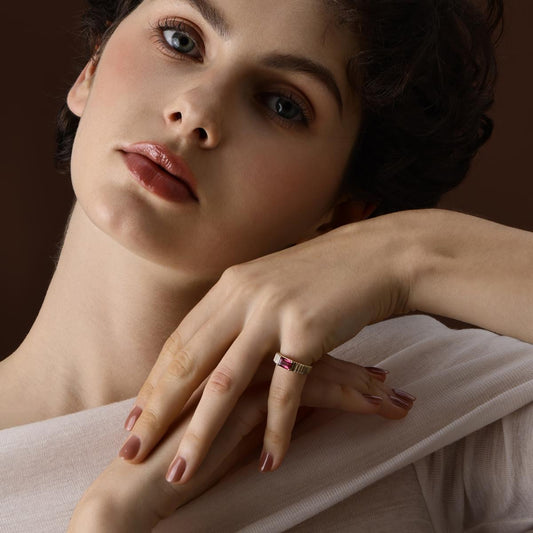
Hallie-Emerlad Cut Pink Tourmaline Gemstone Ring
Regular price $1,299.00$1,299.00 Regular priceUnit price per -
Vendor:Elora Fine Jewelry
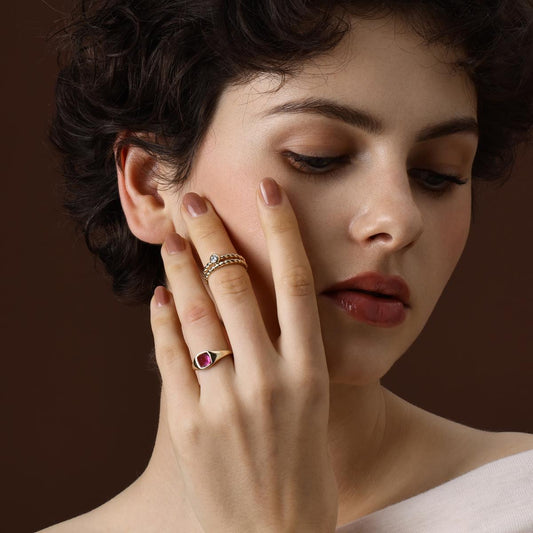
Sarah-Sugarloaf Cabochon Reddish Pink Tourmaline Gemstone Ring
Regular price $1,199.00$1,199.00 Regular priceUnit price per -
Vendor:Elora Fine Jewelry
Sarah-Sugarloaf Cabochon Pink Tourmaline Gemstone Ring
Regular price $1,199.00$1,199.00 Regular priceUnit price per -
Vendor:Elora Fine Jewelry
Ellie-Cushion Cut Light Pink Tourmaline Gemstone Ring
Regular price $1,299.00$1,299.00 Regular priceUnit price per -
Vendor:Elora Fine Jewelry
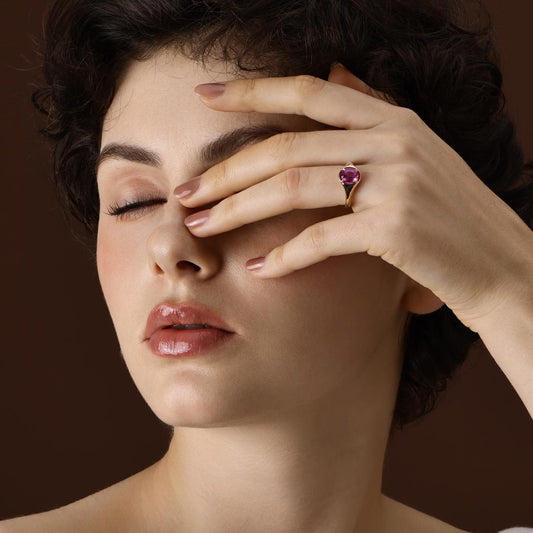
Evie-Oval Cut Lab Grown Pink Sapphire Gemstone Ring
Regular price $1,299.00$1,299.00 Regular priceUnit price per










Three Stones, One Color: How Pink Reads Differently Across Tourmaline, Spinel, and Sapphire
Pink is among the most varied colors in the gemstone world because it sits at the boundary between red and white, and different minerals arrive at it through different chemical paths. The result is that pink tourmaline, pink spinel, and pink sapphire are all genuinely pink but they do not look the same. Understanding what each stone brings to the color helps in choosing between them.
Pink Tourmaline
Tourmaline's pink range is the widest of the three stones here. It runs from a very pale, almost white blush through warm peachy pinks to a saturated reddish pink that approaches rubellite. The color comes from manganese, and the tone varies considerably from stone to stone. Tourmaline is also pleochroic, meaning it shows different colors when viewed from different angles, which gives faceted tourmaline a liveliness that is distinct from spinel or sapphire. The sugarloaf cabochon format used in two of the pieces here takes a different approach: the polished dome emphasizes the color itself rather than the light play, which suits tourmaline's natural warmth.
Pink Spinel and Pink Sapphire
Pink spinel is cooler than tourmaline, with a more purely pink tone and a stronger surface brilliance. It does not have tourmaline's warmth or color variation, but it has a clarity and consistency that makes it visually precise. Pink sapphire shares that precision and adds a hardness of 9, making it the most durable of the three for daily wear in a ring. The oval cut used in the sapphire piece maximizes the stone's color across its surface while the cushion cut of the spinel ring suits the stone's natural brilliance.
Frequently Asked Questions
Pink tourmaline is warmer in tone, more variable from stone to stone, and pleochroic, showing different colors from different angles. Pink sapphire is cooler, more consistent, and significantly harder at Mohs 9 compared to tourmaline's 7 to 7.5. Sapphire is more durable for daily wear in a ring.
A sugarloaf cabochon is a polished, domed cut with a square or rectangular base and no facets. The name comes from the shape of historical sugar loaves. It emphasizes the color and transparency of the stone rather than light return, and it has a quieter, more sculptural quality than faceted cuts.
No. Pink spinel and pink sapphire are entirely different minerals. Spinel is magnesium aluminum oxide; sapphire is corundum, aluminum oxide. They can look similar in color but have different crystal structures, different refractive indices, and different hardness levels. Sapphire at Mohs 9 is harder than spinel at Mohs 8.