Collection: Asscher Cut Diamond
The Asscher cut stands as a true masterpiece of vintage geometry. This rare square step cut draws light deep into its core rather than reflecting surface sparkle. Concentric rectangular facets work together to build a mesmerizing optical effect known as the windmill. An Asscher cut lab grown diamond offers a distinctly quiet and intellectual beauty for those who seek something extraordinary.
Achieving this architectural depth demands perfect symmetry and absolute clarity. The large open table acts as a clear window straight into the diamond. We secure these captivating stones in tailored solitaires and intricate vintage settings to protect their iconic cropped corners. Every Elora creation represents a bold statement of individuality and timeless devotion.

-
Vendor:Elora Fine Jewelry
Bonni-Asscher Cut Lab Grown Diamond Ring
Regular price From $999.00From $999.00 Regular priceUnit price per$1,799.00Sale priceSale -
Vendor:Elora Fine Jewelry
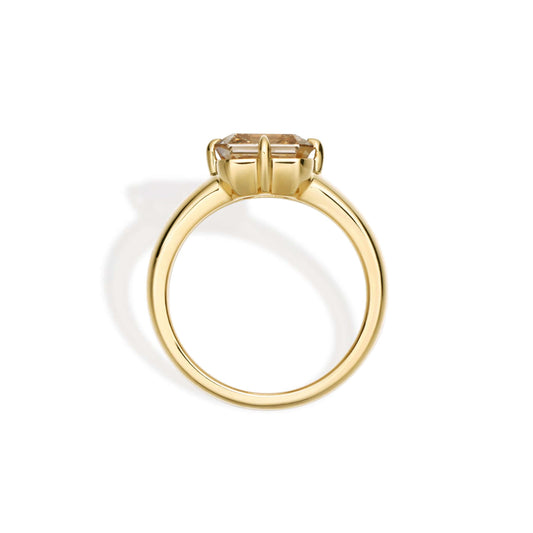
Sintra-Champagne Asscher Cut Lab Grown Diamond Ring
Regular price From $3,299.00From $3,299.00 Regular priceUnit price per -
Vendor:Elora Fine Jewelry
Keisha-Asscher Cut Lab Grown Diamond Ring
Regular price From $1,099.00From $1,099.00 Regular priceUnit price per -
Vendor:Elora Fine Jewelry
Dahlia-Champagne Asscher Cut Lab Grown Diamond Ring
Regular price $3,599.00$3,599.00 Regular priceUnit price per -
Vendor:Elora Fine Jewelry
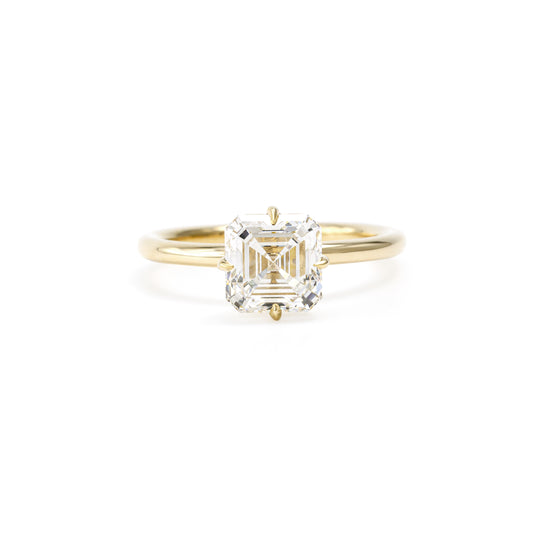
Luca-Asscher Cut Lab Grown Diamond Ring
Regular price From $999.00From $999.00 Regular priceUnit price per

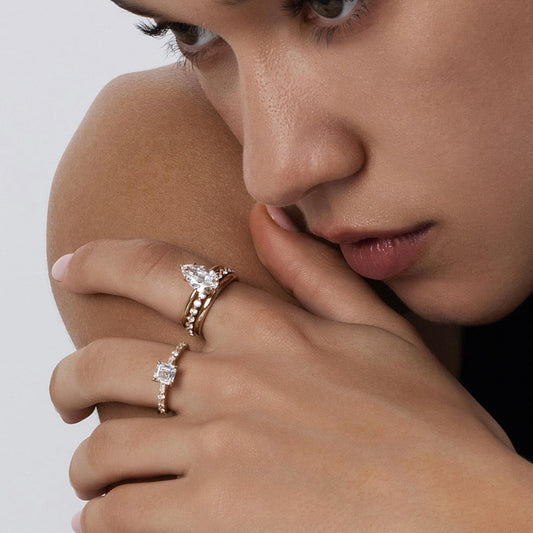

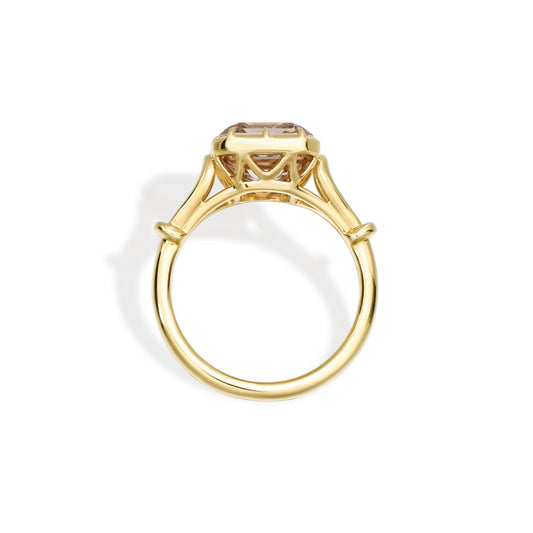
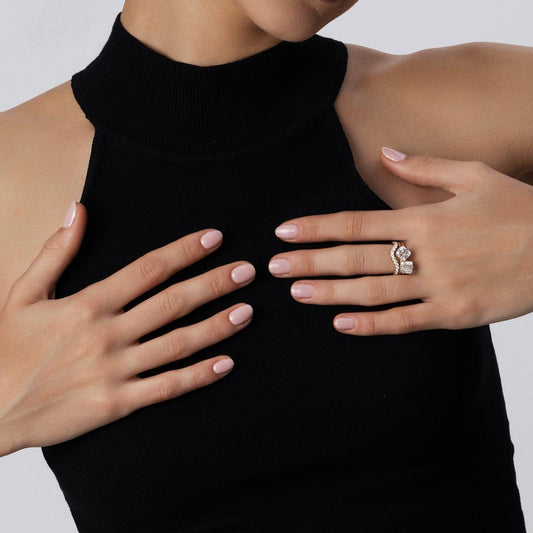
The Geometric Precision of the Asscher Cut
Selecting the perfect Asscher cut involves highly specific structural considerations. Gemologists classify this unique shape as a square step cut. The traditional Art Deco silhouette requires a length to width ratio strictly between 1.00 and 1.05. This extremely tight physical tolerance creates a perfectly balanced square face. A ratio slightly beyond 1.05 begins to appear distinctly rectangular to the naked eye. We meticulously evaluate the precise dimensions of every stone in our collection to ensure strict geometric adherence. This exact measurement guarantees the signature concentric squares remain visually flawless from every angle.
Optimizing Visual Proportions
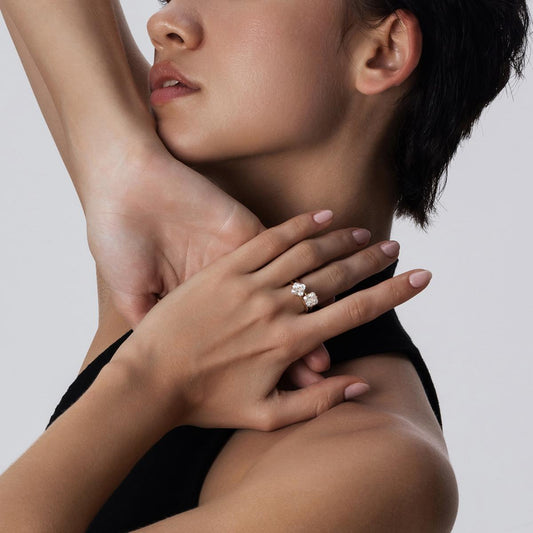
An Asscher diamond naturally carries more weight in its deep pavilion compared to traditional brilliant cuts. This means a one carat Asscher will appear slightly smaller across the top surface than a one carat round diamond. We design our settings to counter this visual effect smartly. The Keisha Pave Ring utilizes surrounding accent diamonds to increase the overall footprint on the finger adding brilliance while emphasizing its geometric depth.
Exploring Architectural Orientations
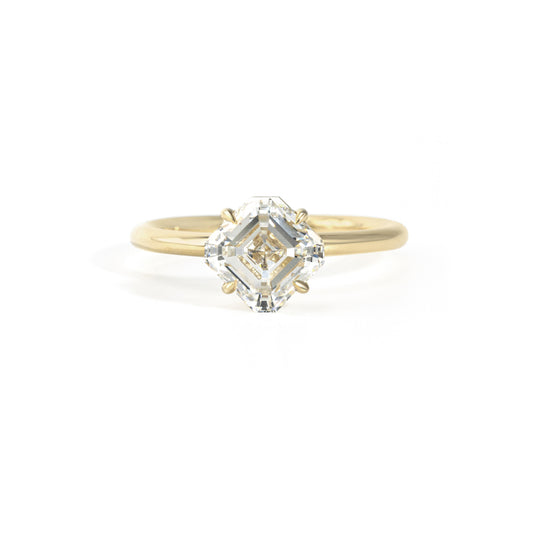
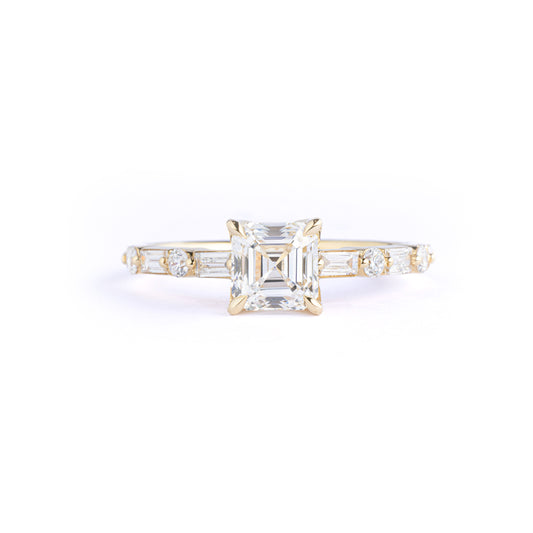
The deeply cropped corners of an Asscher cut define its distinctive octagonal shape. Choosing the right setting can either lean into tradition or offer a contemporary twist. The Luca Classic Solitaire features a unique Compass Setting placing the prongs at the North South East and West points of the diamond. This north south orientation offers a clean architectural look that highlights the linear symmetry of the stone.
For those seeking a departure from the classic square orientation the Bonni Asscher Ring reimagines the silhouette by rotating the stone into a kite like diamond shape. This subtle shift adds a modern edge to the Art Deco aesthetic creating a dynamic visual flow that differentiates it from standard step cut designs. We craft every piece to honor the strict geometry of the original Asscher cut while offering versatile ways to showcase its beauty.
The Physics of Step Cut Light Return
A poorly cut step diamond will exhibit severe windowing or extinction. Windowing occurs when light leaks straight through the center of the stone creating a dead zone. Extinction creates large dark areas that refuse to return any light at all. A truly exceptional Asscher cut must avoid both of these issues. We rigorously inspect the pavilion angle and crown height of every diamond to ensure optical perfection guaranteeing the internal windmill pattern remains perfectly centered and vibrant.