Collection: Three Stone
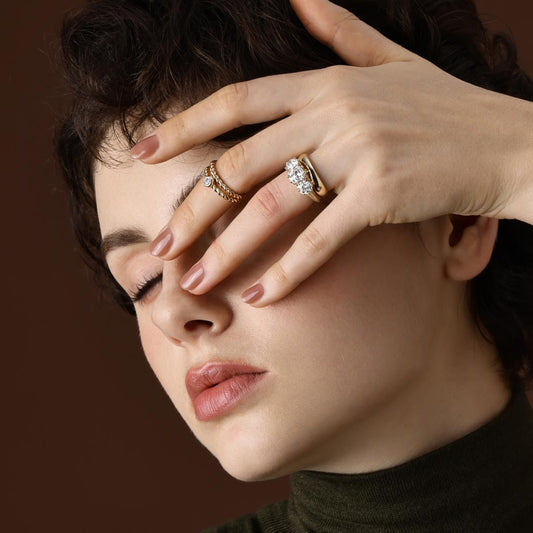
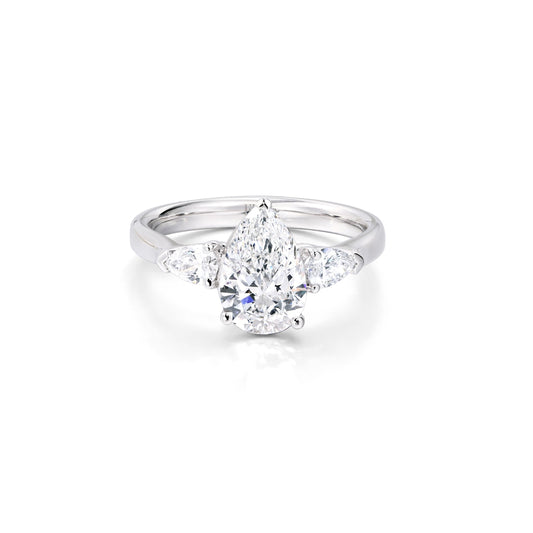
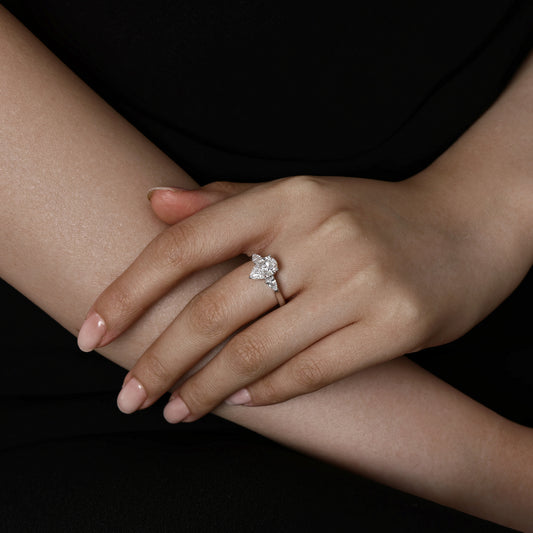
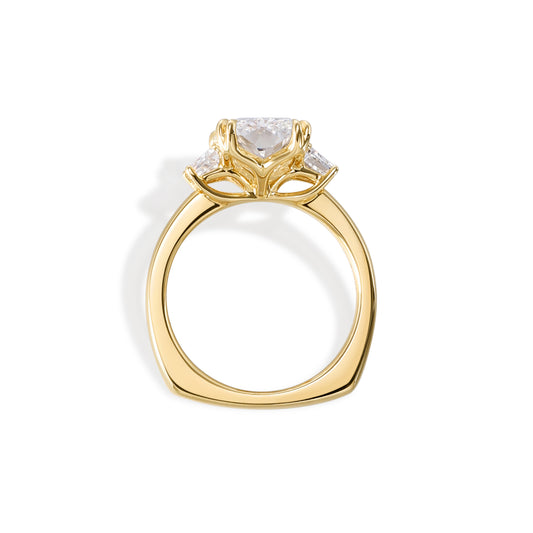
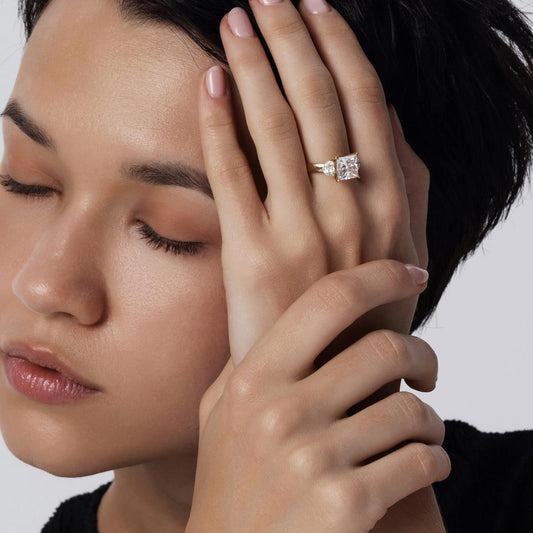
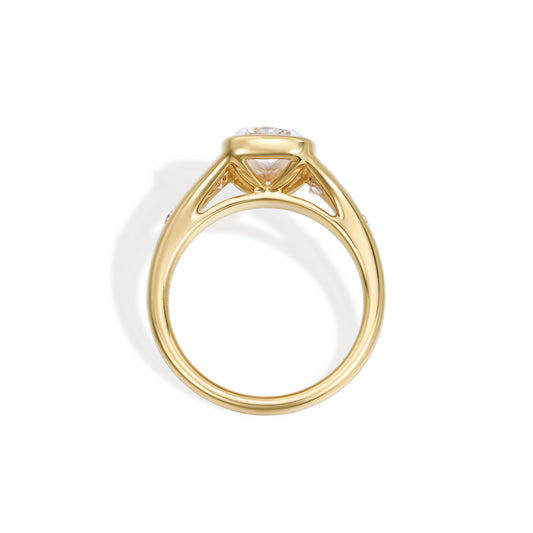
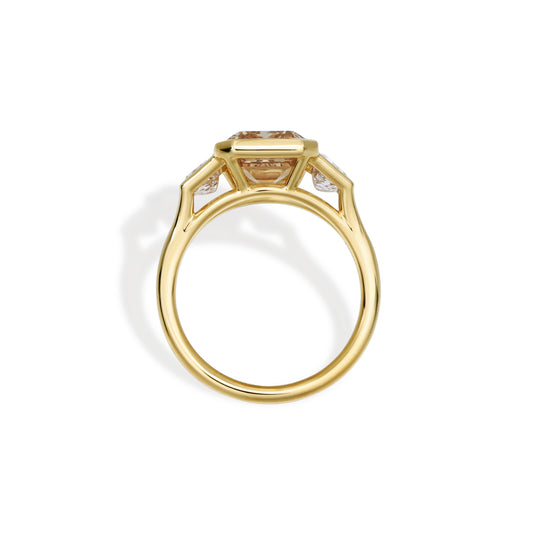
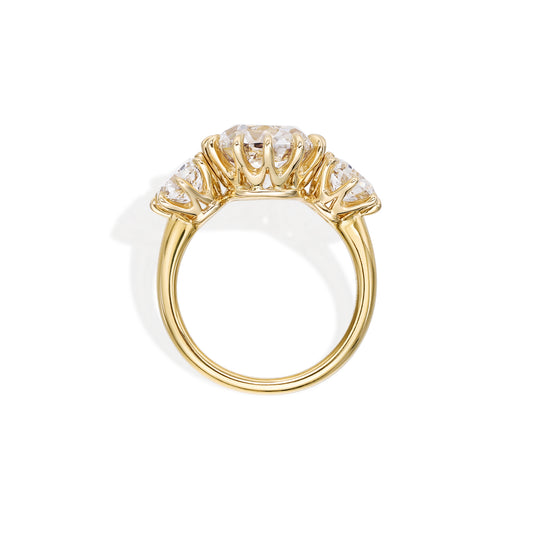
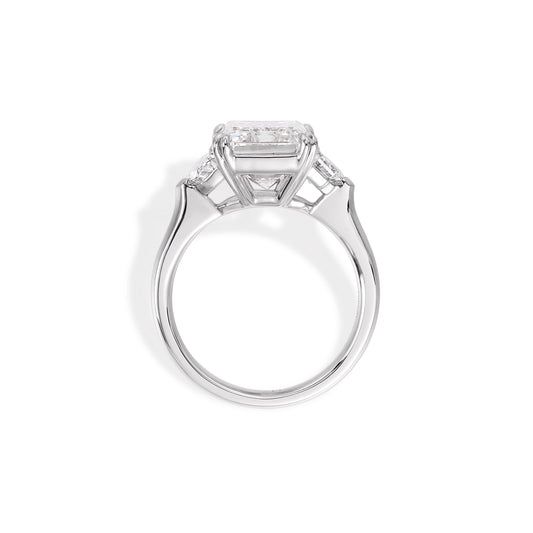
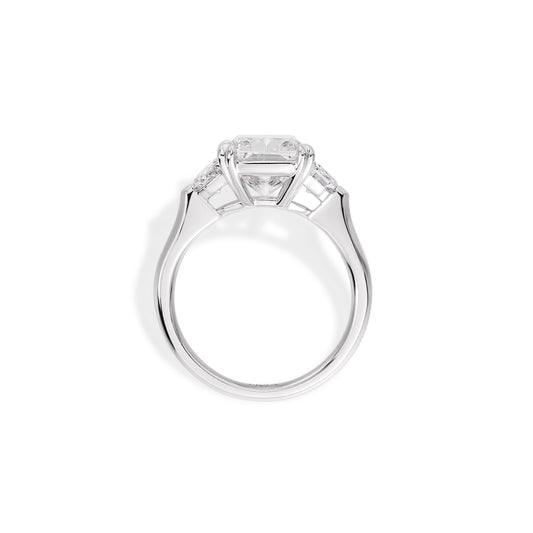
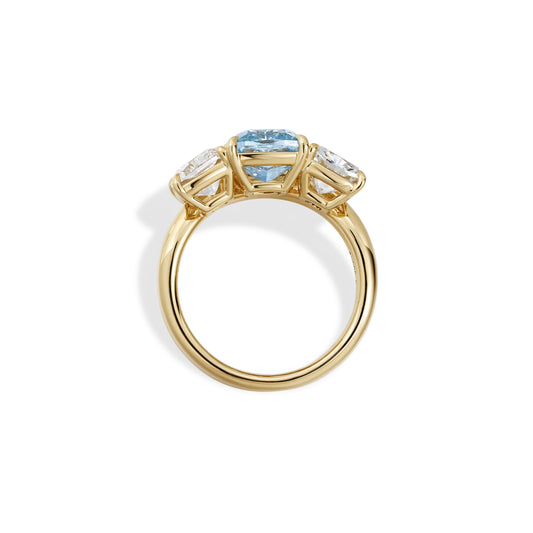
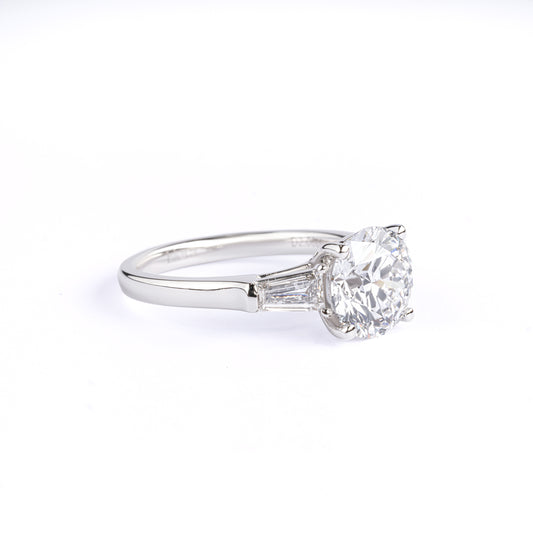
Designing a three stone ring demands strict geometric proportion. Poorly scaled side stones will easily crowd the center diamond and make the ring feel heavy. We engineer our settings to create a distinct visual hierarchy. By precisely angling the side diamonds to taper downward, we keep the overall profile remarkably low and draw all attention directly to the center stone.
Beyond the symbolism of past, present, and future, this horizontal layout offers a massive optical advantage. The side stones act as mirrors to bounce light directly back into the center pavilion. You gain exceptional edge-to-edge brilliance and serious finger coverage without sacrificing the classic elegance of a central focal point.

-
Vendor:Elora Fine Jewelry
Marcella-Antique Cut Lab Grown Diamond Trilogy Engagement Ring
Regular price From $2,184.00From $2,184.00 Regular priceUnit price per$2,299.00Sale priceSale -
Vendor:Elora Fine Jewelry
Gracie-Pear Cut Lab Grown Diamond Ring
Regular price From $1,299.00From $1,299.00 Regular priceUnit price per -
Vendor:Elora Fine Jewelry
Caraway-Radiant Cut Lab Grown Diamond Engagement Ring
Regular price From $2,899.00From $2,899.00 Regular priceUnit price per -
Vendor:Elora Fine Jewelry
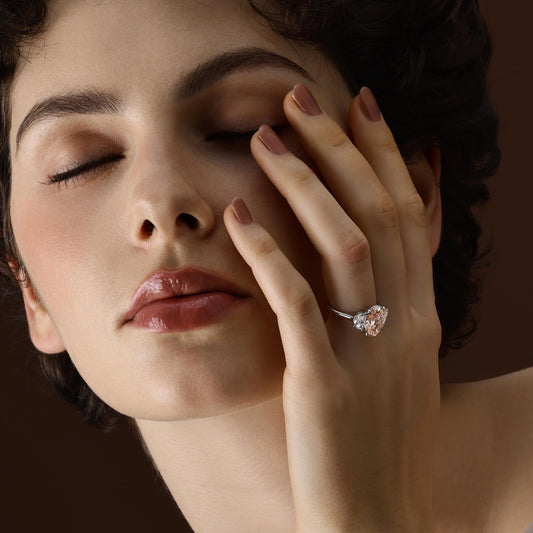
Phoebe-Pink Oval Lab Grown Diamond Engagement Ring
Regular price $3,229.00$3,229.00 Regular priceUnit price per$3,399.00Sale priceSold out -
Vendor:Elora Fine Jewelry
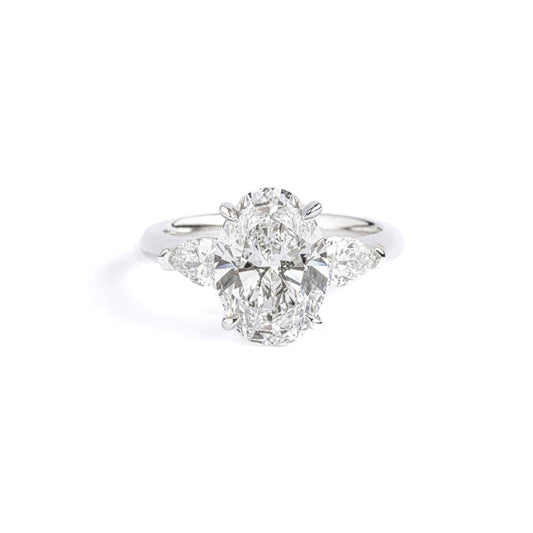
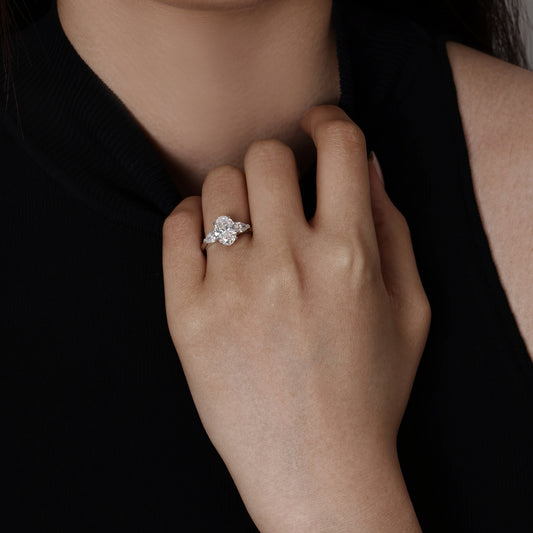
Dakota-Oval Cut Lab Grown Diamond Ring
Regular price From $1,299.00From $1,299.00 Regular priceUnit price per$2,799.00Sale priceSale -
Vendor:Elora Fine Jewelry
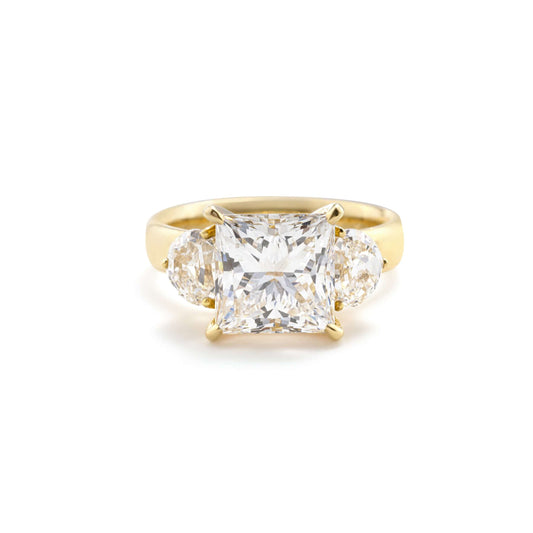
Hailey-Princess Cut Lab Grown Diamond Ring
Regular price From $1,399.00From $1,399.00 Regular priceUnit price per -
Vendor:Elora Fine Jewelry
Fallon-Cushion Cut Lab Grown Diamond Ring
Regular price From $2,199.00From $2,199.00 Regular priceUnit price per -
Vendor:Elora Fine Jewelry
Isla-Old Mine Cushion Cut Lab Grown Diamond Ring
Regular price From $2,499.00From $2,499.00 Regular priceUnit price per -
Vendor:Elora Fine Jewelry
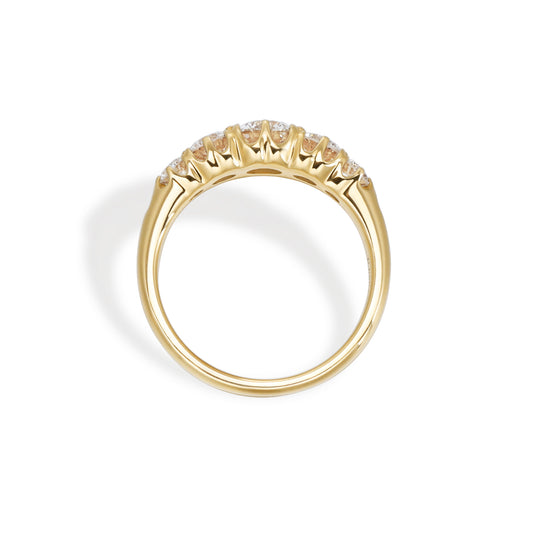
Dove-Round Lab Grown Diamond Five Stone Ring
Regular price From $1,399.00From $1,399.00 Regular priceUnit price per -
Vendor:Elora Fine Jewelry
Enya-Champagne Emerald Cut Lab Grown Diamond Ring
Regular price From $3,699.00From $3,699.00 Regular priceUnit price per -
Vendor:Elora Fine Jewelry
Carroll-Old Mine Cut Lab Grown Diamond Trilogy Engagement Ring
Regular price $4,399.00$4,399.00 Regular priceUnit price per$2,299.00Sale price -
Vendor:Elora Fine Jewelry
Bay-Cushion Cut Lab Grown Diamond Engagement Ring
Regular price From $2,799.00From $2,799.00 Regular priceUnit price per -
Vendor:Elora Fine Jewelry
Tate-Emerald Cut Lab Grown Diamond Engagement Ring
Regular price From $3,399.00From $3,399.00 Regular priceUnit price per -
Vendor:Elora Fine Jewelry
Sage-Blue Cushion Lab Grown Diamond Trilogy Engagement Ring
Regular price $4,599.00$4,599.00 Regular priceUnit price per -
Vendor:Elora Fine Jewelry
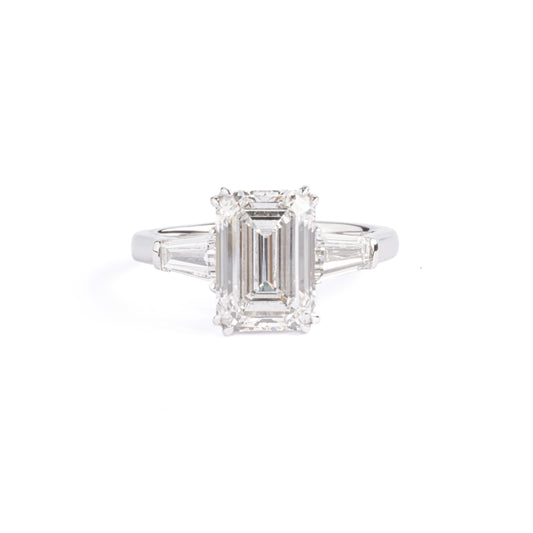
Gemma-Emerald Cut Lab Grown Diamond Ring
Regular price From $1,299.00From $1,299.00 Regular priceUnit price per$2,799.00Sale priceSale -
Vendor:Elora Fine Jewelry
Amber-Round Cut Lab Grown Diamond Ring
Regular price From $1,299.00From $1,299.00 Regular priceUnit price per











Selecting the Right Flanking Stones
You cannot just place three random shapes together. The flanking diamonds dictate the entire personality of your ring.
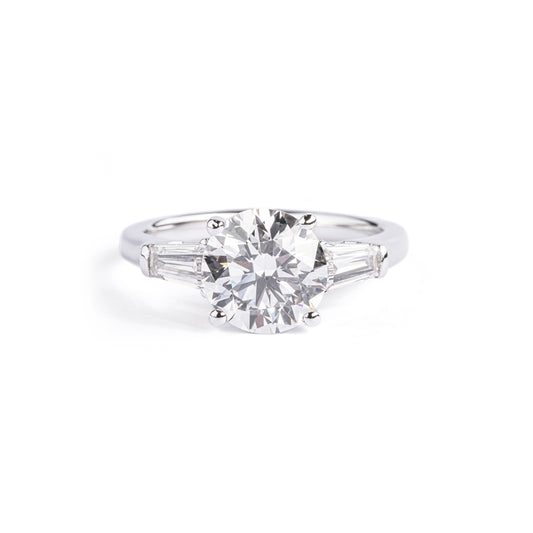
Pairing a round center with round side stones creates a soft and continuous sparkle. If you prefer a sharper aesthetic, step-cut trapezoids or tapered baguettes offer clean geometric lines. We precisely match the cut grade and color of all three lab grown diamonds. This guarantees the fire remains perfectly consistent across the entire width of your hand without any dull spots.
Fixing the High-Profile Problem
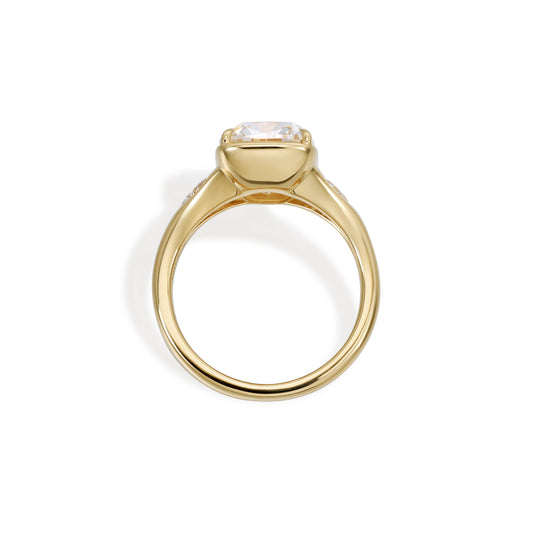
Setting three diamonds side by side requires substantial metalwork. A common flaw in mass-produced rings is a bulky undergallery. This lifts the stones far too high off the finger. They become top-heavy and snag on sweaters or pockets constantly.
We engineer a nested basket system to fix this. The side stones drop slightly lower than the center and angle downward to hug the natural curve of your hand. The ring stays flush against the skin. It feels incredibly secure and will not rotate out of place during your daily routine.
Proportional Logic in Three-Stone Layouts
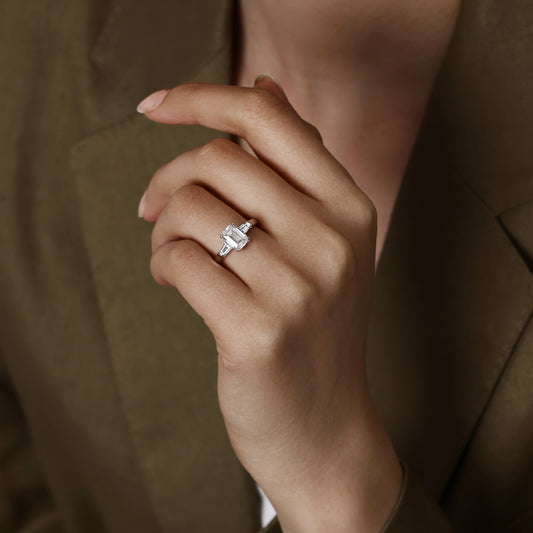
The visual character of a three-stone ring is defined by the specific ratio between the center diamond and its flanking side stones. In modern configurations, side stones are often scaled down significantly to act as visual anchors that prioritize the center stone's dominance. The Gemma Emerald Cut Ring utilizes this proportional contrast, using smaller step-cut side stones to frame and elevate the central diamond's presence on the finger.
Conversely, historical and antique-inspired designs often employ a more balanced distribution of carat weight. In a classic trilogy layout like the Marcella Antique Cut Ring, the side diamonds are only slightly smaller than the center stone. This creates a continuous, horizontal wall of brilliance that mimics the aesthetics of Georgian and Victorian eras. We offer the flexibility to adjust these proportions based on your preference for either modern hierarchy or vintage-inspired symmetry.
Avoiding the Wedding Band Gap
Multi-stone rings are notoriously tricky to pair with wedding bands. The outer baskets naturally block a straight band from sitting flush against the engagement ring. You end up with an awkward and uncomfortable gap.
Rather than dealing with metal constantly rubbing against metal, we always recommend a contoured band. A curved gold ring or an open cuff design will trace the exact outline of your specific side stones. Planning this pairing early guarantees a seamless and secure fit without any frustrating surprises.