Collection: Gemstone Spinel
Spinel is a stone that spent most of its history being mistaken for something else. Some of the most famous rubies in historical collections turned out to be spinel, including the Black Prince's Ruby in the British Imperial State Crown. The confusion is understandable: spinel and ruby share a similar color range and both have a vitreous luster that makes them difficult to distinguish without testing.
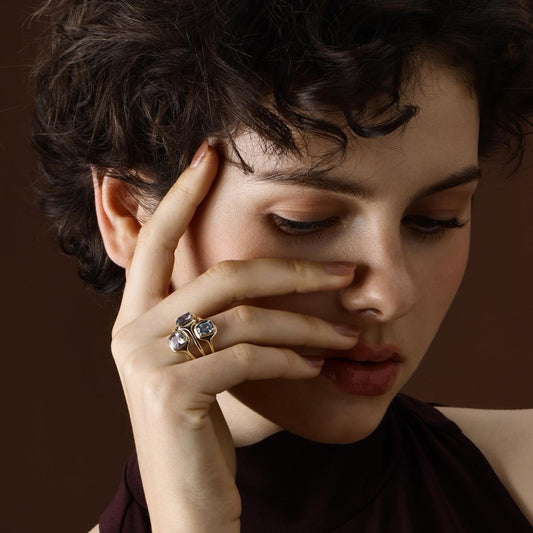
Spinel is now recognized as a distinct and significant gemstone in its own right, valued for its color range, its clarity, and a brilliance that comes from its cubic crystal structure. The seven pieces in this collection are all cushion-cut spinels in purple, pink, green, and grey, set in gold.

-
Vendor:Elora Fine Jewelry
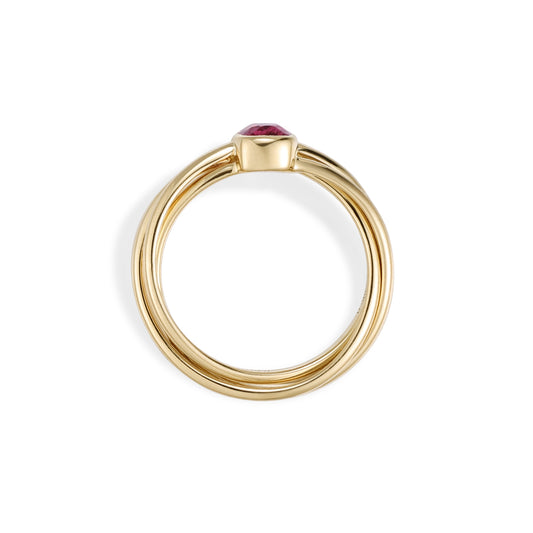
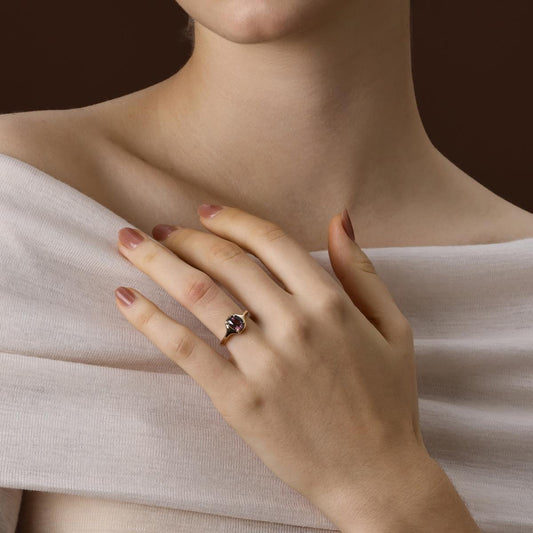
Raelynn-Cushion Cut Deep Purple Spinel Gemstone Ring
Regular price $1,399.00$1,399.00 Regular priceUnit price per -
Vendor:Elora Fine Jewelry
Mae-Cushion Cut Pink Spinel Trinity Gemstone Ring
Regular price $999.00$999.00 Regular priceUnit price per -
Vendor:Elora Fine Jewelry
Raelynn-Cushion Cut Pink Tourmaline Gemstone Ring
Regular price $1,299.00$1,299.00 Regular priceUnit price per -
Vendor:Elora Fine Jewelry
Ellie-Cushion Cut Deep Purple Spinel Gemstone Ring
Regular price $999.00$999.00 Regular priceUnit price per -
Vendor:Elora Fine Jewelry
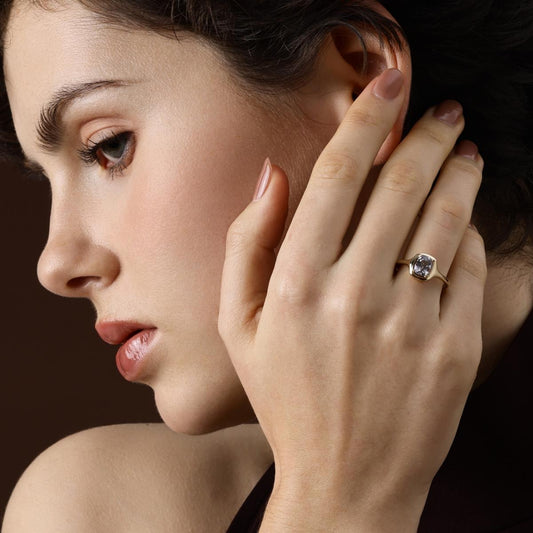
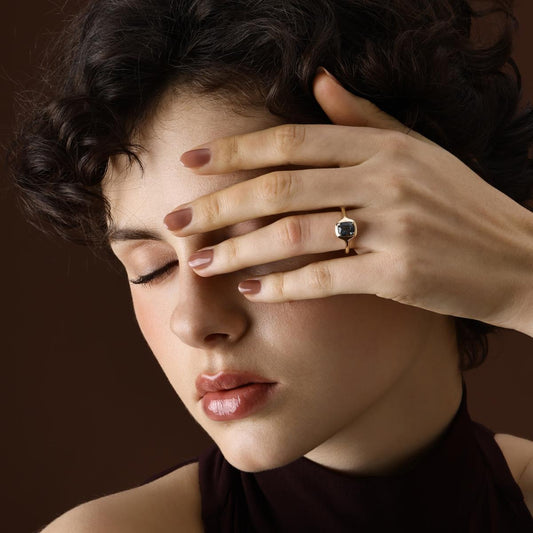
Ellie-Cushion Cut Grey Spinel Gemstone Ring
Regular price $1,299.00$1,299.00 Regular priceUnit price per -
Vendor:Elora Fine Jewelry
Ellie-Cushion Cut Green Spinel Gemstone Ring
Regular price $1,199.00$1,199.00 Regular priceUnit price per -
Vendor:Elora Fine Jewelry
Ellie-Cushion Cut Light Purple Spinel Gemstone Ring
Regular price $1,099.00$1,099.00 Regular priceUnit price per









Spinel: The Gemstone That Was Hiding in Plain Sight for Centuries
Spinel's history is unusual. For most of recorded jewelry history, it was not recognized as a separate mineral at all. Red spinel was sold and catalogued as ruby. Blue spinel was sold as sapphire. The stones were indistinguishable to the naked eye and shared enough visual properties that even experienced traders did not separate them. It was not until the development of modern mineralogy in the eighteenth and nineteenth centuries that spinel was identified as a distinct species with its own crystal structure, composition, and optical properties.
The consequence of that history is that spinel spent centuries undervalued relative to its actual quality. It is now increasingly recognized by collectors and jewelers who understand what the stone offers: exceptional clarity, strong brilliance from its cubic crystal structure, and a color range that covers red, pink, purple, blue, grey, green, and near-colorless. The pieces in this collection sit across the purple, pink, green, and grey end of that range, all in cushion cuts that suit the stone's natural brilliance.
The Cushion Cut and Spinel
The cushion cut has rounded corners and a pillow-like outline. It is a brilliant cut, meaning it has many facets arranged to maximize light return, but the rounded shape gives it a softer appearance than a round brilliant. Spinel's cubic crystal structure means it handles light well in any brilliant format, and the cushion cut in particular suits the color range of these stones. Purple and grey spinel have a depth that benefits from the cushion's ability to show color through the table while still returning light from the pavilion facets.
Frequently Asked Questions
Fine spinel, particularly in red and vivid pink, is genuinely rare and commands significant prices in the collector market. The purple, grey, and green tones in this collection are less rare but still less commonly seen in jewelry than sapphire or emerald. Spinel as a category is less well known to general buyers than its quality warrants.
Spinel has a Mohs hardness of 8, the same as topaz. It is harder than most colored gemstones and suitable for daily wear in rings. Unlike topaz, spinel has no cleavage, which means it is also tougher and less vulnerable to splitting from impact.
Yes. Spinel occurs in red, pink, purple, blue, grey, green, orange, and near-colorless. The red and vivid pink varieties are the most commercially significant, but the full color range is broad. The pieces in this collection cover purple, pink, green, and grey.
Spinel is one of the few colored gemstones that is typically not treated. It does not require heat treatment to improve color, and fracture filling is not standard practice for the stone. This makes it unusual in the colored gemstone trade, where treatment is the norm rather than the exception.