Emerald Cut Engagement Rings: The Complete Buying Guide (2026)


The emerald cut has a presence all its own. Instead of the intense sparkle of a round brilliant, it draws the eye with long, clean lines and broad flashes of light. Its stepped facets give the stone a sense of depth and structure, creating a look that feels elegant without being overly ornate. Worn by everyone from Beyoncé to Amal Clooney, it is a shape that has remained remarkably relevant for generations.
At Elora, we work closely with lab grown diamonds, and the emerald cut is one of the shapes we return to again and again. In this guide, we look at what sets it apart, the details worth paying attention to when choosing a stone, and what you can expect to pay for a lab grown emerald cut diamond in 2026.
What Makes the Emerald Cut Unique
The emerald cut is a step cut, defined by long, linear facets arranged in parallel rows. Unlike a brilliant cut, which uses numerous smaller facets to create intense sparkle, an emerald cut produces broader, more controlled flashes of light. Its open facet pattern also gives you a much clearer view into the diamond itself.
The cut has its roots in emerald jewelry. Early versions of the shape were developed for emeralds, whose relatively brittle structure benefited from cropped corners and a facet arrangement designed to reduce stress during cutting and setting. The shape was later adapted for diamonds and became particularly associated with Art Deco jewelry in the 1920s, when clean lines and geometric forms came to define the period.
What makes an emerald cut immediately recognizable is its hall of mirrors effect. Light moves through the long, parallel facets in broad flashes, creating a sense of depth rather than the scattered sparkle of a brilliant cut. It is a quieter kind of brilliance, but one that puts the diamond itself on full display. That openness also means clarity and cut quality deserve particular attention when choosing the stone.
Emerald Cut vs the Other Shapes
Emerald vs Round
A round brilliant is cut to maximize light return, giving it the bright, lively sparkle most people associate with a diamond. An emerald cut has a very different character. Its long, stepped facets create broad flashes of light and a sense of quiet depth rather than constant sparkle.
The difference is largely one of personality. A round brilliant feels bright and expressive, while an emerald cut is cleaner, more structured and architectural. If you are drawn to strong lines and understated elegance, the emerald cut has a look that is difficult to replicate with any other shape.
 ELORA FINE JEWELRY ELORA FINE JEWELRY
Amara-Emerald Cut Lab Grown Diamond RingFrom $999.00
Shop Amara Now
|
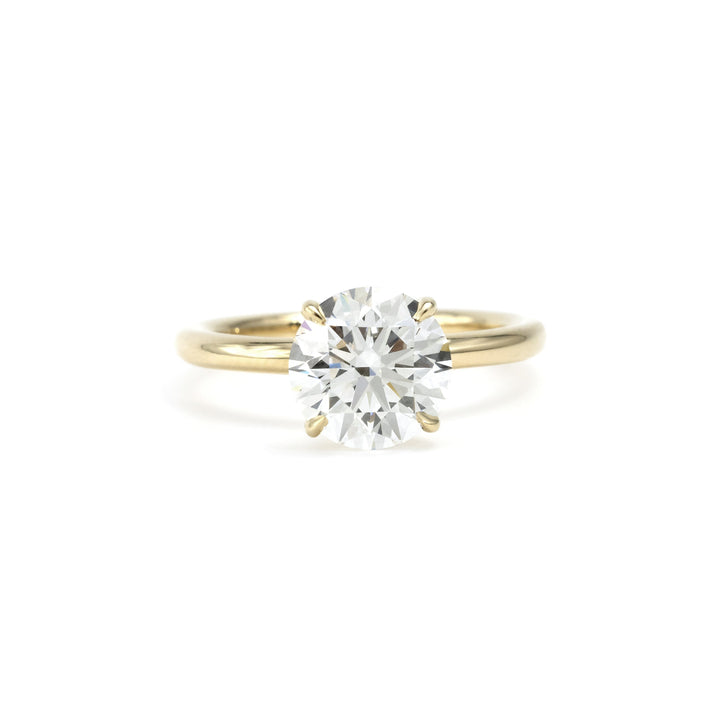 ELORA FINE JEWELRY ELORA FINE JEWELRY
Chloe- Round Cut Lab Grown Diamond RingFrom $1099.00
Shop Chloe Now
|
Emerald vs Radiant
A radiant is a brilliant cut with an emerald silhouette: rectangular with cropped corners, but covered in small facets instead of steps. It sparkles much more than an emerald cut while keeping the rectangular profile. The trade-off is that it lacks the emerald cut's clean, quiet elegance.
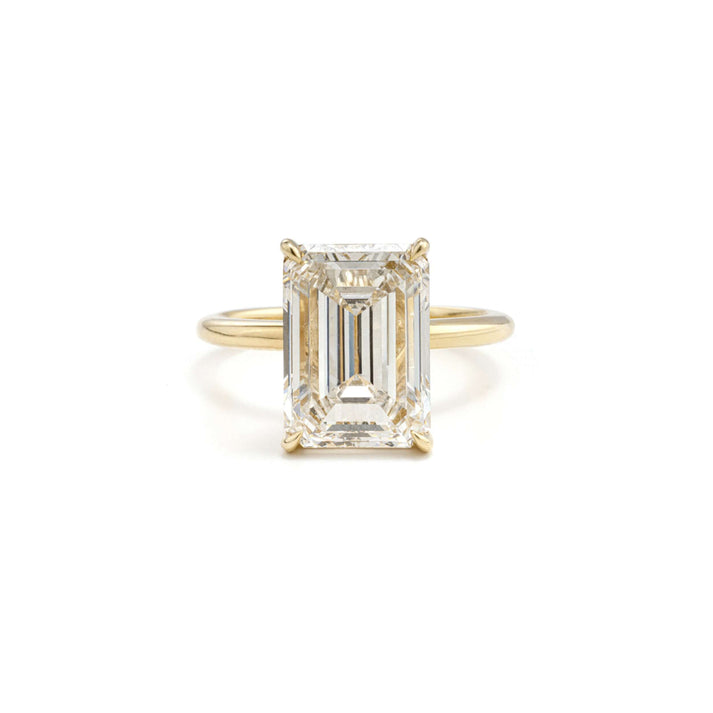 ELORA FINE JEWELRY ELORA FINE JEWELRY
Jude-Emerald Cut Lab Grown Diamond RingFrom $999.00
Shop Jude Now
|
 ELORA FINE JEWELRY ELORA FINE JEWELRY
Nora-Radiant Cut Lab Grown Diamond Ring
From $999.00 $999.00
Shop Nora Now
|
Emerald vs Asscher
An asscher is a square emerald cut. Same step facets, same hall of mirrors, different proportions. The emerald is rectangular and elongates the finger; the asscher is square and reads as more vintage. If you like the emerald cut but want a squarer look, the asscher is the answer.
 ELORA FINE JEWELRY ELORA FINE JEWELRY
Carmine-Emerald Cut Lab Grown Diamond Engagement RingFrom $2099.00
Shop Carmine Now
|
 ELORA FINE JEWELRY ELORA FINE JEWELRY
Bonni-Asscher Cut Lab Grown Diamond RingFrom $999.00
Shop Bonni Now
|
What to Look for in an Emerald Cut Diamond
Length to Width Ratio
The emerald cut is rectangular, and the ratio controls its character. A ratio of 1.30 to 1.50 is the classic range, with 1.40 as the most popular proportion. Below 1.30 it looks boxy and nearly square. Above 1.50 it turns long and slender, which some buyers love and others find too stretched. Try ratios in person if you can.
Clarity Matters More Here
The step cut is a window into the stone. Inclusions that a brilliant cut would hide in sparkle are visible in an emerald cut, so clarity is more important than in any other shape. Buyers should look for VS clarity or better, and should examine the actual stone or high resolution images before committing.
The Window Effect
A round brilliant is cut to maximize light return, giving it the bright, lively sparkle most people associate with a diamond. An emerald cut has a very different character. Its long, stepped facets create broad flashes of light and a sense of quiet depth rather than constant sparkle.
The difference is largely one of personality. A round brilliant feels bright and expressive, while an emerald cut is cleaner, more structured and architectural. If you are drawn to strong lines and understated elegance, the emerald cut has a look that is difficult to replicate with any other shape.
Color Sweet Spot
The open facets make color more visible too. A slightly warm stone looks warmer in an emerald cut than in a brilliant cut, which is why champagne and warm toned emerald cuts are so striking. For a white stone, look for G-H color as the value sweet spot, where the warmth reads as depth rather than tint.
 ELORA FINE JEWELRY ELORA FINE JEWELRY
Enya-Champagne Emerald Cut Lab Grown Diamond RingFrom $3699.00
Shop ELORA Now
|
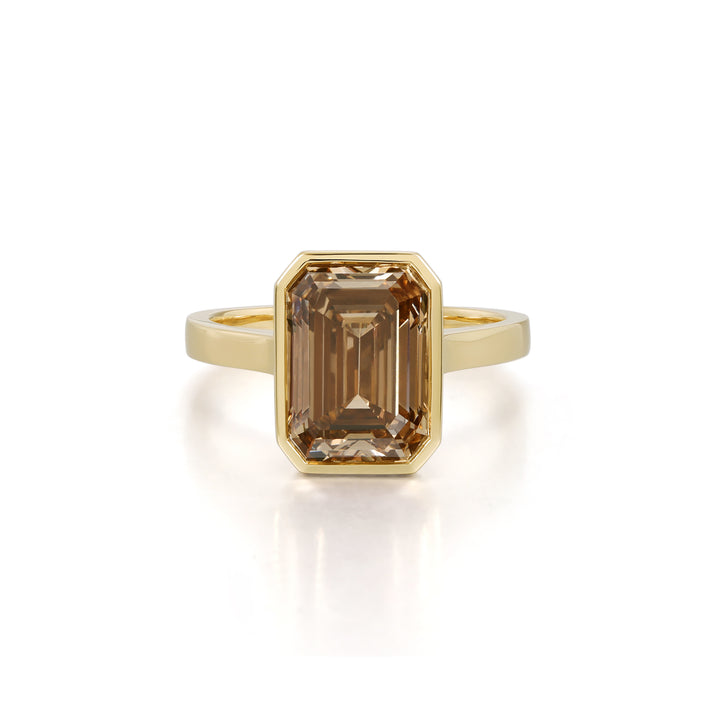 ELORA FINE JEWELRY ELORA FINE JEWELRY
Elise-Champagne Emerald Cut Lab Grown Diamond RingFrom $3199.00
Shop Elise Now
|
The Best Settings for an Emerald Cut
A solitaire is the classic pairing. The clean lines of the emerald cut deserve a clean band, and a thin or tapered band flatters the rectangle beautifully.
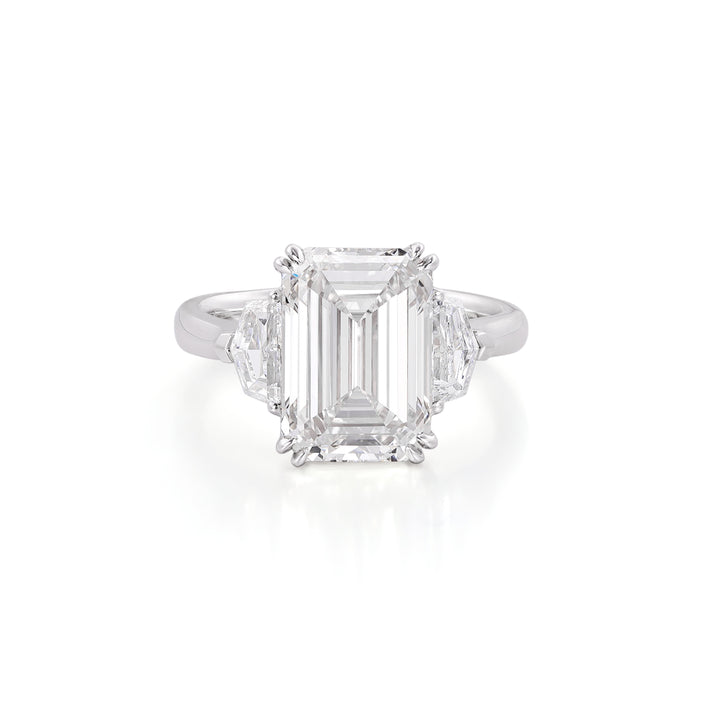
A three stone setting, with an emerald center and tapered baguette side stones, is the most traditional choice. The baguettes mirror the step facets and extend the line of the center stone, an Art Deco staple that still looks current.
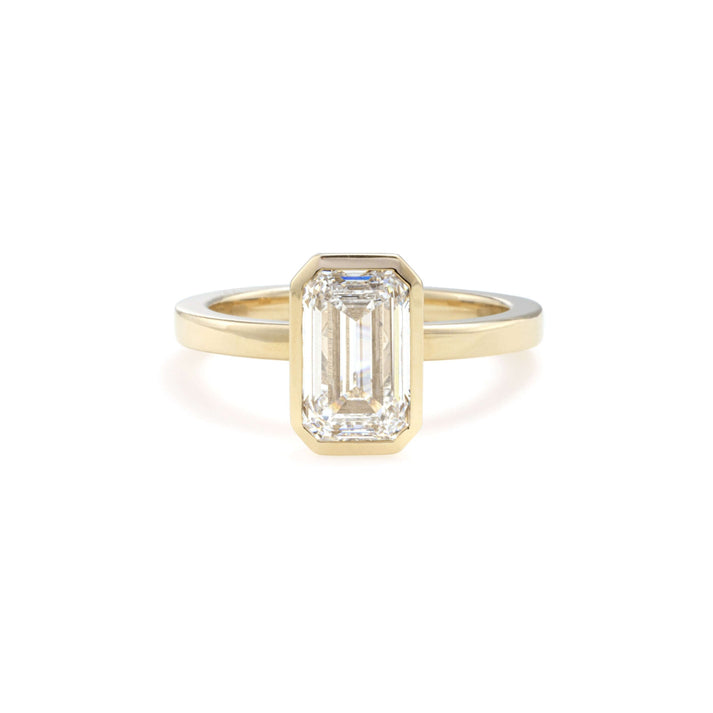
A bezel setting wraps the stone in metal on all sides. It is the most secure option for an emerald cut, protects the corners, and gives the ring a modern, minimal look. If the ring will be worn daily with an active lifestyle, a bezel is the practical choice.
Who Should Choose an Emerald Cut
The emerald cut tends to appeal to people who prefer clean lines and thoughtful proportions over high sparkle. There is a certain restraint to it. The stone feels considered and architectural, which is why it works so naturally with Art Deco, vintage inspired and minimalist settings.
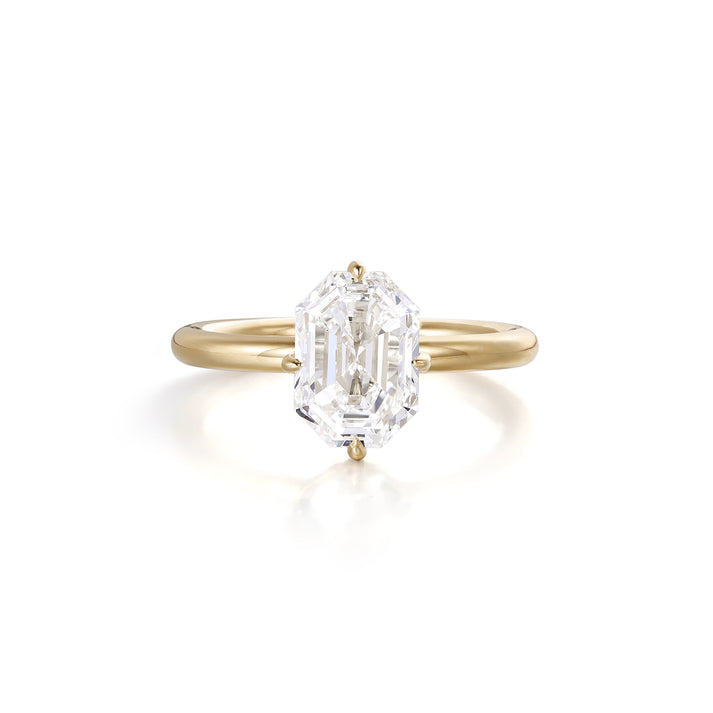
Its shape also has practical advantages. The cropped corners are less vulnerable than the sharp points of a pear or marquise, making it a comfortable option for everyday wear. Its elongated proportions can also create a flattering lengthening effect on the finger, particularly when set north to south.
What it will not give you is the constant sparkle of a brilliant cut. Emerald cuts reflect light in broader, more measured flashes, so they tend to feel quieter on the hand. If brilliance and fire are your priorities, a round or another brilliant cut may suit you better. If you are drawn to proportion, symmetry and a more understated presence, the emerald cut is hard to beat.

Emerald Cut Lab Grown vs Natural
The emerald cut is the shape where lab grown diamonds make the most financial sense, because the value gap is the same 40 to 60 percent while the visual difference is zero. A step cut shows off the interior of the stone, and a lab grown emerald cut and a natural emerald cut of the same grade look identical under any light.
The other advantage is access. Large, clean emerald cuts are among the rarest and most expensive natural diamonds, which is why five carat natural emerald cut rings are museum pieces. Lab grown production makes the same look reachable at a few thousand dollars. That is the entire reason Aurelia, our five carat emerald cut, can exist at its price point.
Conclusion
The appeal of an emerald cut lies in its proportions, clean lines and distinctive depth. When choosing one, clarity is especially important because the open facet pattern makes inclusions easier to see. VS clarity is often a good place to start, while a length to width ratio between 1.30 and 1.50 gives you plenty of choice between a broader or more elongated silhouette. Solitaire, three stone and bezel settings all work particularly well with the cut, allowing its shape to remain the focus.
If you would like to compare emerald cuts for yourself, explore our collection of certified lab grown diamonds from one to five carats. Each stone comes with its grading details and clear pricing, so you can compare proportions, clarity and overall appearance before choosing the one that feels right for your ring.
FAQ
Q Do emerald cut diamonds sparkle?
Emerald cut diamonds do sparkle, but differently from brilliant cuts such as round or oval diamonds. Their long step facets produce broad flashes of light and a distinctive "hall of mirrors" effect instead of the smaller, faster flashes associated with brilliant cuts.
Q What is the best clarity for an emerald cut diamond?
Clarity is especially important in emerald cut diamonds because the large, open table makes inclusions easier to see. VS1 to VS2 is often a practical starting range for an eye-clean stone, while VVS grades offer even greater transparency. The location and visibility of the inclusions matter just as much as the grade itself.
Q What is the best length-to-width ratio for an emerald cut diamond?
There is no single ideal ratio. A ratio around 1.40 to 1.50 creates the classic rectangular emerald cut look, while higher ratios produce a longer, more elongated silhouette. The best choice ultimately depends on the proportions you prefer and how the diamond looks on the finger.
Q What is the best setting for an emerald cut engagement ring?
Emerald cut diamonds work beautifully in solitaire, bezel, three-stone, and east-west settings. A simple solitaire emphasizes the clean geometry of the stone, while tapered baguettes or other step-cut side stones create a more classic look. Bezel and east-west settings offer a more contemporary interpretation.
Q What should I look for when buying an emerald cut diamond?
Look beyond carat weight and the certificate alone. Pay close attention to clarity, color, length-to-width ratio, symmetry, polish, and how the step facets reflect light. A good emerald cut should show a balanced hall-of-mirrors pattern without distracting inclusions, excessive darkness, or obvious windowing. Viewing photos and videos of the actual diamond is especially useful before making a decision.


