How to Choose the Perfect Champagne Diamond Color


Warm toned diamonds are having a moment. From Rihanna's orangey brown diamonds at the 2023 Oscars to Rose Byrne's 22.58 carat Fancy Yellow Brown diamond at the 2026 Academy Awards, champagne, amber and earthy diamond tones are becoming increasingly visible in modern jewelry.
The trend gained further momentum in 2025 when De Beers introduced Desert Diamonds, celebrating a natural diamond palette ranging from warm whites to champagne tones and amber hues. While Desert Diamonds specifically refers to a natural diamond initiative, it reflects a broader shift toward warmer, more individual diamond colors.
But how do you actually choose a champagne diamond? What does "champagne" mean on a diamond certificate, should you choose a lighter or deeper shade, and why can two diamonds with similar grades look completely different?
The most important thing to know is this:
Champagne is a color family, not a certificate grade.
This guide will help you understand color intensity, undertones, grading, cut and setting so you can find the champagne diamond color you truly love.
What Is a Champagne Diamond?
"Champagne diamond" is not an official GIA or IGI color grade. It is a widely used jewelry industry term describing diamonds with attractive warm colors ranging from pale beige and light brown to golden champagne, amber and deeper cognac brown.
Visually, the champagne family can span a broad spectrum:
Warm White -> Beige -> Sand -> Champagne -> Honey -> Amber -> Cognac -> Deep Brown
Some champagne diamonds also have noticeable secondary hues, creating golden, yellowish, orangy or pinkish brown colors.
The easiest way to think about champagne diamonds is therefore not as one specific shade of brown, but as an entire family of warm toned diamonds.
How Are Champagne Diamond Colors Graded?
Because Champagne is not an official color grade, an IGI or GIA certificate usually will not simply list the diamond's color as "Champagne." Instead, some warm brown diamonds fall within the traditional D-Z color scale, while diamonds with stronger color or other hues may be graded within a Fancy Color system.
| Grading Range | Official Color Category | General Visual Guide |
| G-J | Near Colorless | Mostly colorless, sometimes with subtle warmth |
| K-M | Faint / Faint Brown | Very subtle beige or brown warmth |
| N-R | Very Light / Very Light Brown | Light warm brown or champagne appearance |
| S-Z | Light / Light Brown | More noticeable light brown or champagne appearance |
| Beyond D-Z | Fancy Color | More pronounced color |
This table is a general visual guide, not a direct champagne grading scale. A K-M diamond is not automatically a champagne diamond, and diamonds within the same grading range can still look noticeably different.
Fancy colored diamonds are evaluated differently, with hue, tone and saturation playing important roles in their appearance.
Certificate descriptions may include:
- Fancy Light Brown
- Fancy Brown
- Fancy Deep Brown or Fancy Dark Brown
- Fancy Yellowish Brown
- Fancy Orangy Brown
- Fancy Pinkish Brown
- Fancy Brownish Pink
This is why there is no single certificate grade that means "champagne." Two diamonds can both belong visually to the champagne family while carrying very different descriptions on their reports.
What Is the C1-C7 Champagne Diamond Color Scale?
The C1-C7 Champagne Color Scale is a historical industry system associated with the marketing of brown diamonds from Australia's Argyle mine. Broadly, it moves from lighter champagne toward deeper brown:
- C1-C2: Light Champagne
- C3-C4: Medium Champagne
- C5-C6: Dark Champagne
- C7: Cognac
However, C1-C7 is not an official GIA or IGI grading scale, and there is no precise formula that converts a C grade into a D-Z or Fancy Color grade. It can be useful for discussing visual intensity, but the actual grading report and appearance of the diamond matter more.
Understanding Champagne Diamond Undertones
Color intensity is only half the story. Two champagne diamonds can have a similar depth of color yet look completely different because of their undertones and secondary hues.

Beige and Neutral Champagne
Soft and understated, often sitting visually between a warm white and a traditional champagne color.

Golden and Honey Champagne
Warm golden tones create the classic champagne appearance, ranging from delicate golden beige to richer honey brown.

Yellowish Brown
A noticeable yellow component can make the diamond appear warmer and more golden, especially alongside yellow gold.

Orangy Brown
Orange influenced brown creates amber, caramel and earthy tones that can work beautifully with vintage inspired designs.

Pinkish Brown and Brownish Pink
Pink influenced stones can range from subtle blush brown to colors where pink becomes much more prominent. In Pinkish Brown, brown is dominant; in Brownish Pink, pink is dominant.

Cognac and Deep Brown
Rich brown and cognac colors create a bolder, more saturated look in which the body color becomes a major part of the design.
There is no universally "best" champagne undertone. The right one is the color that appeals most to you.
Light vs. Dark Champagne Diamonds: Which Should You Choose?
A darker champagne diamond is not automatically a better champagne diamond. Color depth is a matter of preference.

Light Champagne
Light champagne diamonds retain much of the bright appearance associated with traditional diamonds while adding a soft beige, sand or warm brown tint.
- Subtle warmth
- A brighter overall appearance
- A color closer to warm white
- A softer, understated look
Medium Champagne
Medium champagne tones make the color more noticeable while still allowing plenty of brightness. Golden, honey and warm brown colors are often particularly apparent in this range.
Dark Champagne and Cognac
Deeper colors emphasize saturation and character, with amber, caramel and cognac tones becoming more pronounced. However, more color does not necessarily mean more beauty. Pay attention to whether the diamond still looks lively and dimensional rather than simply chasing the deepest color.
The goal is to find the combination of color, undertone, brightness and sparkle that you find most beautiful.
Why Can Two Champagne Diamonds With the Same Grade Look Completely Different?
A certificate cannot tell you exactly what a champagne diamond will look like. Fancy colored diamonds are influenced by hue, tone and saturation, while cut and facet pattern further affect how that color appears face up.
One Fancy Brown diamond may appear golden, neutral, honey toned, amber or slightly orange. Similarly, two Pinkish Brown diamonds can show noticeably different amounts and distributions of visible pink.
Lighting matters too. A champagne diamond may appear warmer under indoor lighting, more neutral in daylight, or pick up reflections from nearby objects and metal.
At Elora, when an individual champagne center stone is selected for a made to order piece, we can provide photos and videos so you can review its actual tone, undertone and overall character before production.
The certificate describes the color. Your eyes choose the diamond.

How Does Diamond Cut Affect Champagne Color?
Cut doesn't just reveal a champagne diamond's color. It can actively shape how that color is perceived.
The same champagne tone can appear brighter, richer or more transparent depending on how the diamond is faceted.
Brilliant & Mixed Cuts: Lively Color and Sparkle
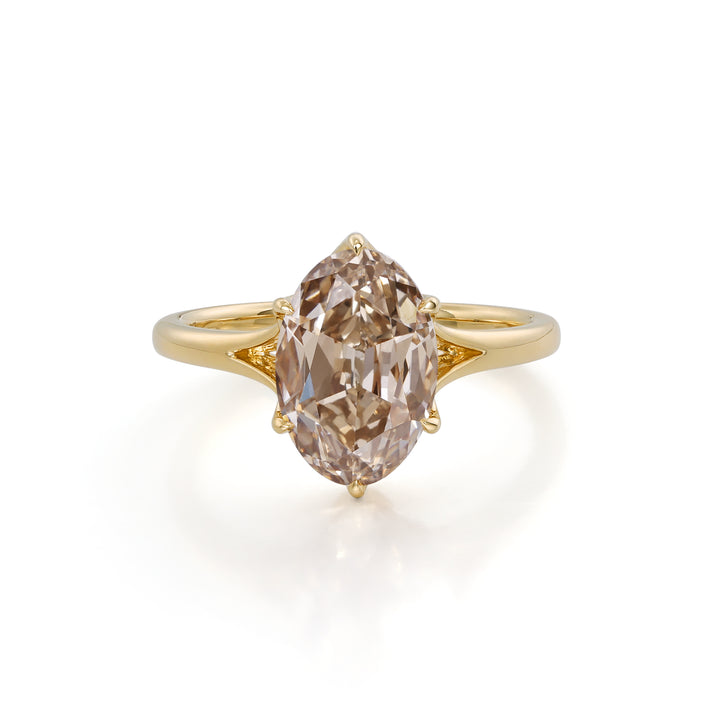
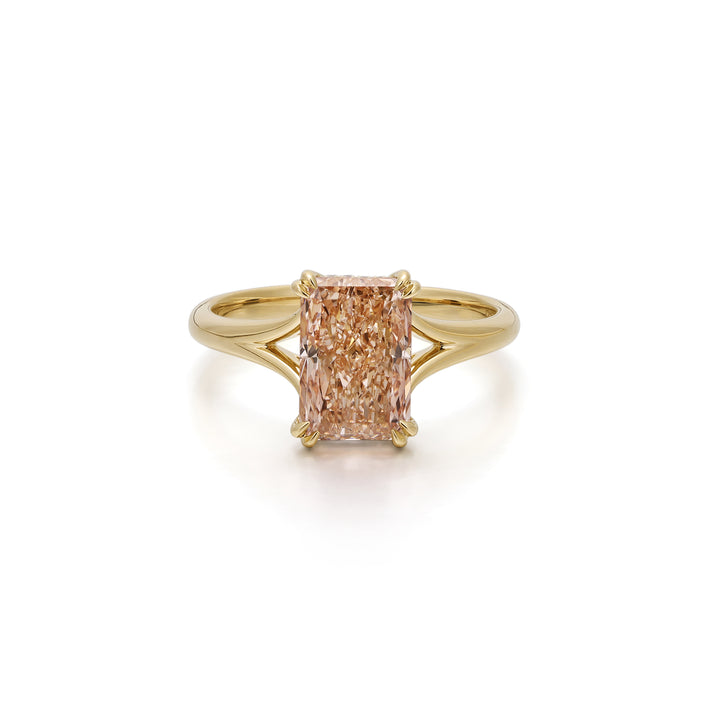
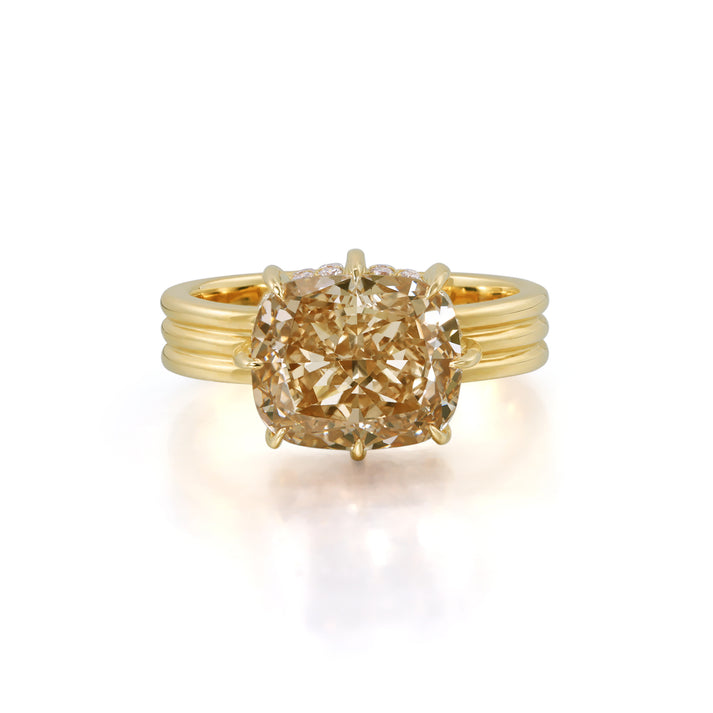
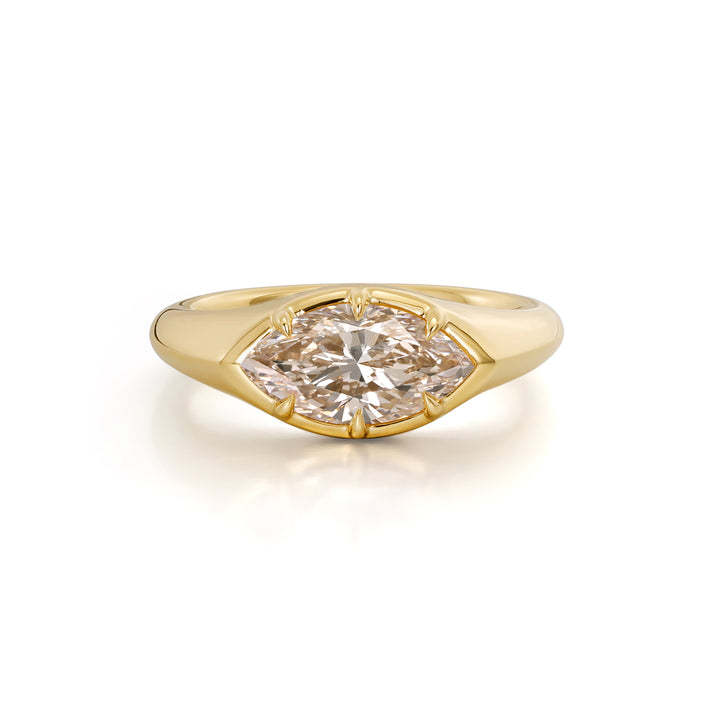
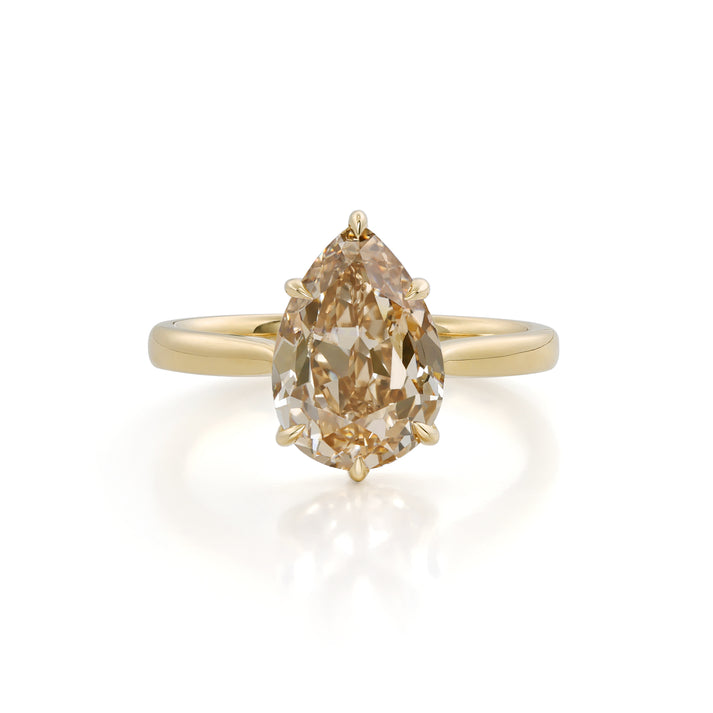
Brilliant and mixed cuts such as oval, pear, marquise and radiant create many reflections throughout the stone, mixing champagne color with flashes of brightness and sparkle.
Certain mixed cuts, particularly radiant style faceting, can concentrate color and make it appear richer face up. Pear and marquise shapes may also show deeper color toward their pointed ends.
The result is typically a lively, sparkling champagne appearance with more contrast and color variation.
Antique Cuts: Rich, Dimensional Warmth
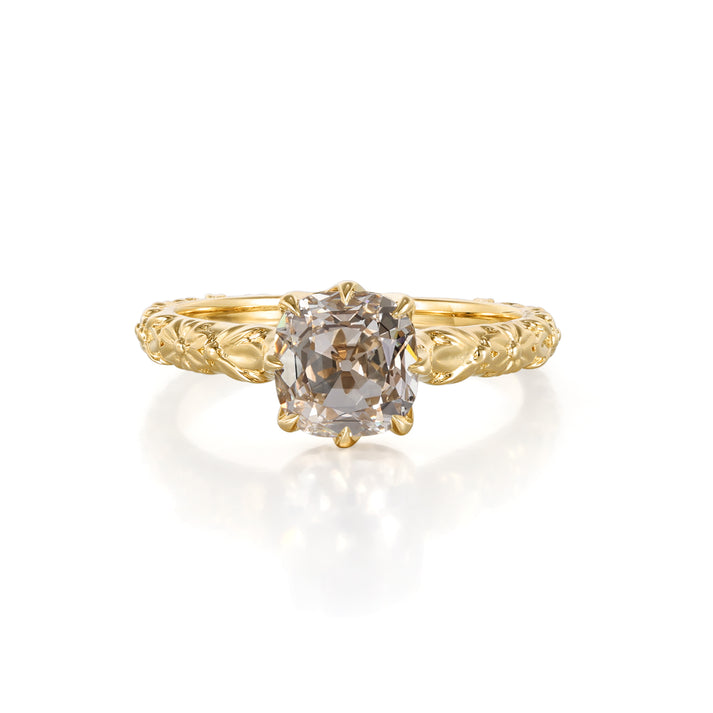
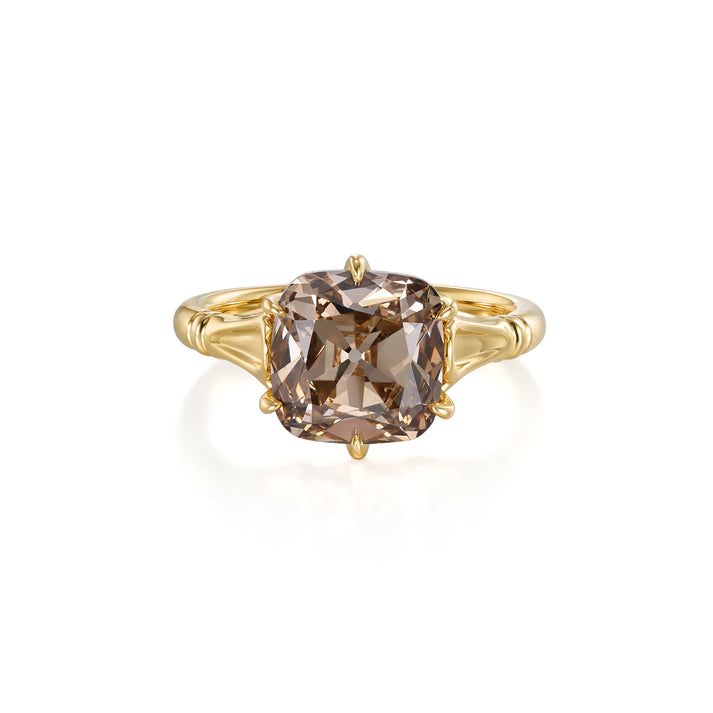
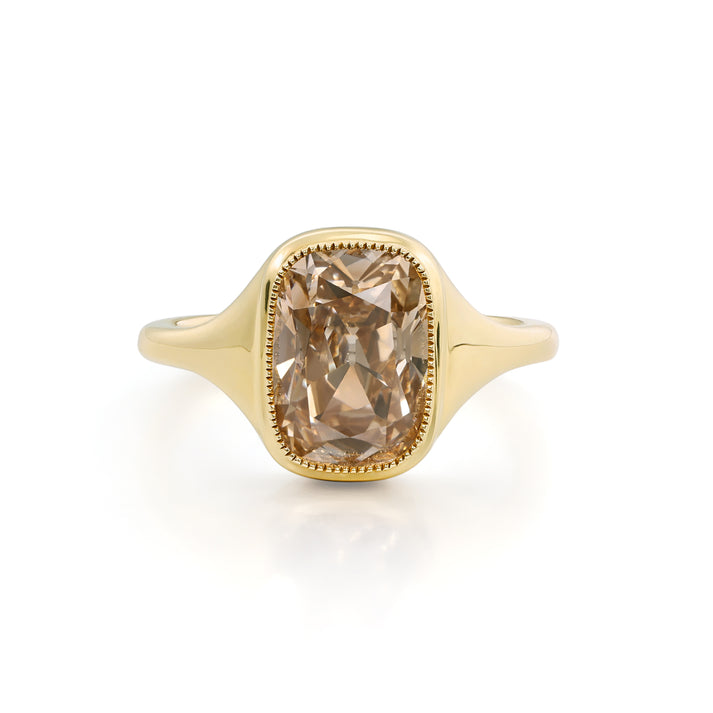
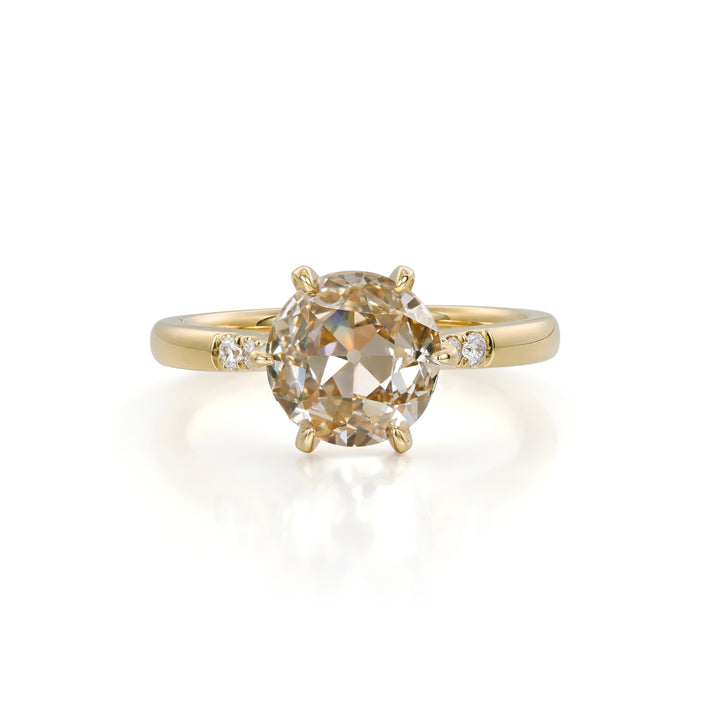
Old Mine, Old European and antique cushion cuts feature larger facets that create broader flashes of light. These larger facets allow warm body color to remain visible between flashes, often giving golden, honey and brown champagne tones a richer, softer and more dimensional character.
This natural warmth is one reason antique cuts pair so beautifully with champagne diamonds.
Step Cuts: Open and Transparent Color
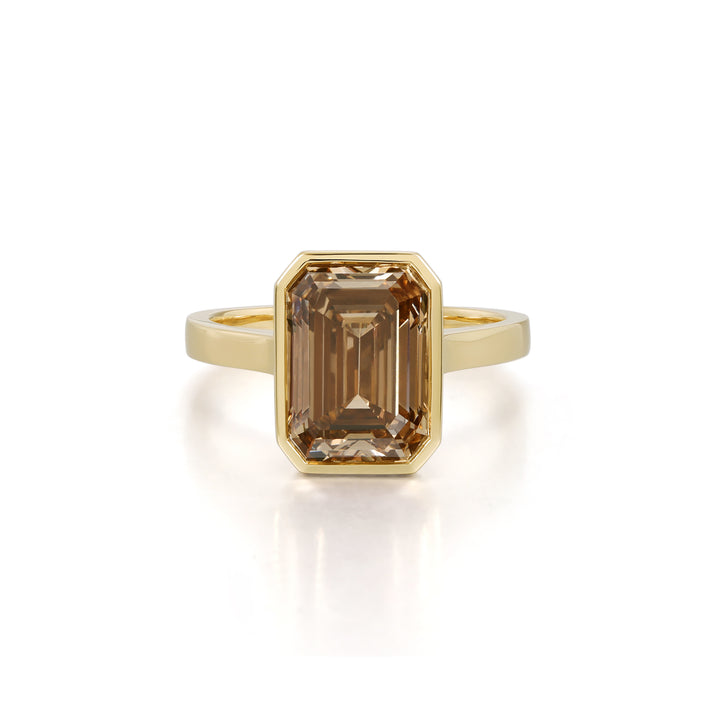
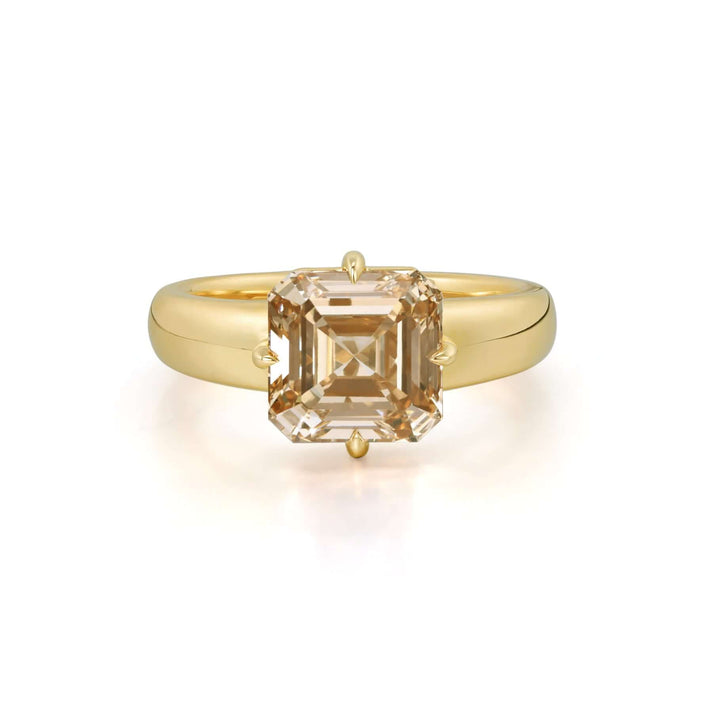
Emerald, Asscher and other step cuts use long, open facets with broad, mirror like reflections. Rather than breaking the color into many small flashes, they offer a clearer view into the stone, often making the champagne tone appear more even, transparent and glassy, with subtle undertones easier to appreciate.
This does not necessarily make the diamond look lighter. In some stones, the open facet pattern can actually make the body color more noticeable.
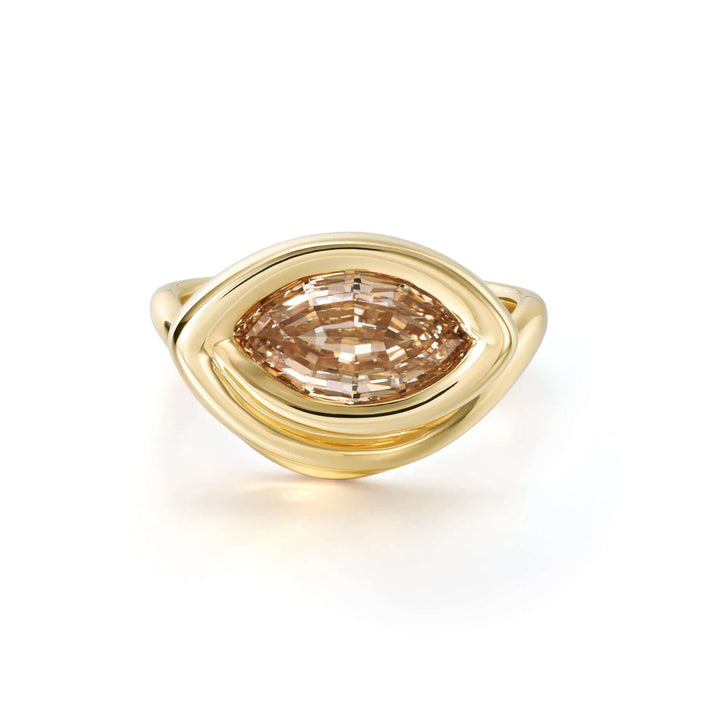
- Brilliant & Mixed Cuts: lively color + maximum sparkle
- Antique Cuts: rich warmth + broad flashes
- Step Cuts: open color + clarity of tone
There is no single best cut for a champagne diamond. The right choice depends on whether you want to emphasize sparkle, warmth or the purity of the color itself.
How Do Metal Color and Setting Affect a Champagne Diamond?
A loose champagne diamond and the same diamond in a finished ring may not look identical. The surrounding metal and setting structure can influence how you perceive its color.
Yellow Gold
Yellow gold can reinforce the warmth of champagne diamonds, particularly golden, honey and yellow influenced stones.
Rose Gold
Rose gold can complement champagne diamonds with blush, pinkish or warm brown characteristics.
White Gold and Platinum
White metals provide stronger visual contrast against a warm center stone and can create a cleaner, cooler surrounding environment.
Prong vs. Bezel Settings
Prong settings leave more of the diamond exposed and generally introduce less surrounding metal. A bezel surrounds more of the diamond, so the metal color can play a larger role in the overall visual impression.
The structure underneath the center stone matters as well. An open gallery exposes the diamond to more of its surroundings, while a more enclosed structure introduces more nearby metal. Setting design should therefore be considered part of the color selection process.
Can You Choose the Exact Color of a Custom Cut Champagne Diamond?
Elora offers custom diamond cutting for clients looking for specific proportions, antique facet patterns or unusual shapes. However, custom cutting a champagne diamond is different from selecting an already finished stone.
When selecting rough, we can target a general color family and approximate intensity, such as a lighter or deeper champagne tone. But the exact face up color, secondary hue and final certificate description cannot be guaranteed before the diamond is fully cut and polished.
This is particularly important when you are looking for a very specific secondary color, such as pinkish brown. If your first priority is an exact shade, we generally recommend selecting from finished champagne diamonds. If your priority is a particular ratio, facet pattern or unusual shape, custom cutting provides considerably more flexibility, with some natural variation in the final color.
How to Choose Your Champagne Diamond
Step 1: Choose Your Color Intensity
Do you prefer barely there beige, classic golden champagne or rich cognac brown?
Step 2: Choose Your Undertone
Look beyond the word brown. Do you prefer neutral beige, honey, gold, amber, orange influenced brown or a blush pink undertone?
Step 3: Choose Your Cut
Consider how a brilliant, antique or step cut will interact with the color and overall style you want.
Step 4: Consider Your Metal and Setting
The same champagne diamond can create a very different impression in yellow gold, rose gold, white gold or platinum.
Step 5: Review the Actual Diamond
Use the certificate to understand what you are buying, but do not choose based on grading terminology alone. Whenever possible, review photos and videos of the individual diamond under different lighting.
For champagne diamonds, visual preference matters more than chasing a particular grade.
Elora Champagne Lab Grown Diamonds
Creating an attractive champagne lab grown diamond involves more than simply producing visible brown color. What matters is the overall visual result: an appealing warm tone, attractive undertone, brightness and a cut that brings the character of the diamond to life.
Elora carefully selects champagne diamond rough and finished stones across a wide spectrum of warm colors, from subtle beige and golden champagne to amber, pinkish brown and deeper cognac tones.
With our in house diamond cutting capabilities, we work with modern brilliant cuts, antique inspired faceting, step cuts and unusual shapes, and can custom cut diamonds for specific proportions and designs.
For made to order pieces, we can share photos and videos of the individual champagne center diamond before production, allowing you to review its unique color and character before it becomes part of your finished jewelry.
Frequently Asked Questions
Q Are champagne diamonds real diamonds?
Yes. Champagne refers to the warm color appearance of a diamond, not a different gemstone. Lab grown champagne diamonds have the same diamond crystal structure as other lab grown diamonds.
Q Are champagne diamonds the same as brown diamonds?
Champagne diamonds generally belong to the broader warm brown diamond family, but "champagne" is a descriptive jewelry term rather than an official gemological grade.
Q Is Champagne an official GIA or IGI diamond color grade?
No. Depending on the stone, the certificate may instead contain a D-Z grade with a brown color description or a Fancy Color description.
Q What is the difference between champagne and cognac diamonds?
Champagne describes a broad range of warm diamond colors. Cognac is generally used for the deeper, richer brown end of that spectrum. Neither represents a single official GIA or IGI grade.
Q What does C1-C7 mean for champagne diamonds?
C1-C7 is a historical industry color scale associated with Argyle champagne diamonds. It progresses broadly from lighter champagne toward darker brown and cognac. It is not an official GIA or IGI grading system.
Q Are darker champagne diamonds more valuable?
Not necessarily. Carat weight, cut, clarity, shape, hue, tone, saturation and overall visual appeal can all play a role. For most buyers, the more useful question is which color they prefer.
Q Why does my champagne diamond look different in different lighting?
Daylight, warm indoor lighting, cool LED lighting, nearby colors and the ring's metal can all influence how you perceive a champagne diamond. This is normal.
Q Does yellow gold make a champagne diamond look darker?
Not necessarily darker, but yellow gold can make its warmth appear more pronounced. The exact effect depends on the diamond's undertone, cut and setting structure.
Q Can I choose the exact color of a custom cut champagne diamond?
Not with complete precision. Rough selection can target a general color family and approximate intensity, but the exact finished tone, secondary hue and certificate color cannot be guaranteed before cutting and polishing are complete.
Q Which champagne diamond color is best for an engagement ring?
There is no single best color. Light champagne offers subtle warmth, golden and honey tones create a classic champagne appearance, orangy and pinkish brown stones offer unusual undertones, and deeper cognac colors create a bolder look.


