Collection: White Gold Engagement Ring
White gold serves a highly specific architectural purpose in fine jewelry. By utilizing a bright rhodium finish this metal acts as a direct extension of your diamond. It reflects pure white light upward into the facets eliminating any warm shadows from the setting. This optical continuity makes your center stone appear larger and distinctly crisp.
Our artisans frequently secure the diamond within white gold prongs or a bezel setting creating a subtle frame that visually lifts the stone. Paired with a solid yellow gold band the contrast remains soft and balanced allowing the diamond to appear brighter and more prominent without overwhelming the overall design. Discover a collection that leverages modern metallurgy for maximum visual impact and structural security.

-
Vendor:Elora Fine Jewelry
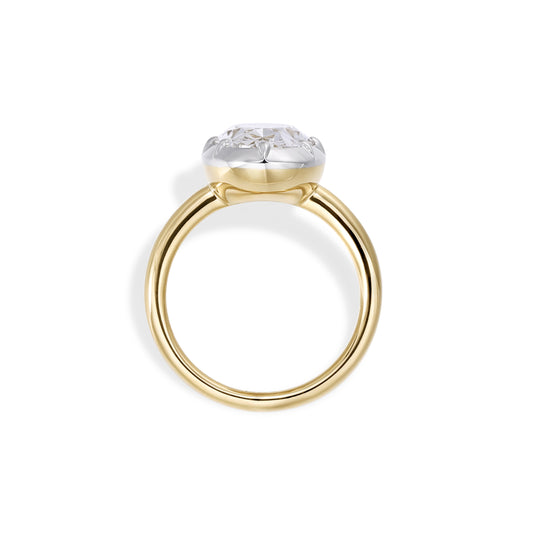
Lena-Oval Cut Lab Grown Diamond Engagement Ring
Regular price From $1,999.00From $1,999.00 Regular priceUnit price per -
Vendor:Elora Fine Jewelry
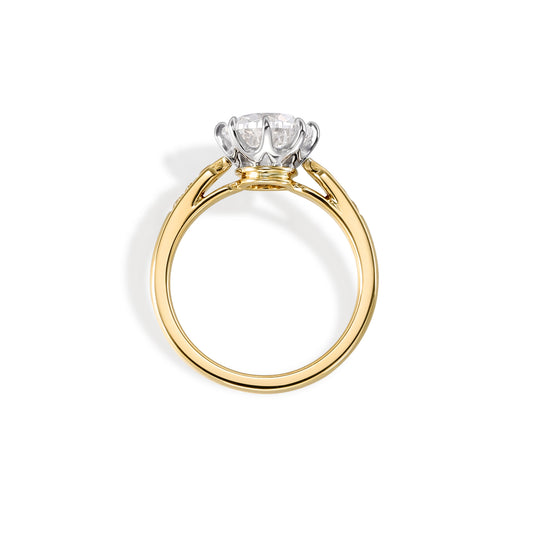
Carmine-Old European Cut Lab Grown Diamond Engagement Ring
Regular price From $2,199.00From $2,199.00 Regular priceUnit price per -
Vendor:Elora Fine Jewelry
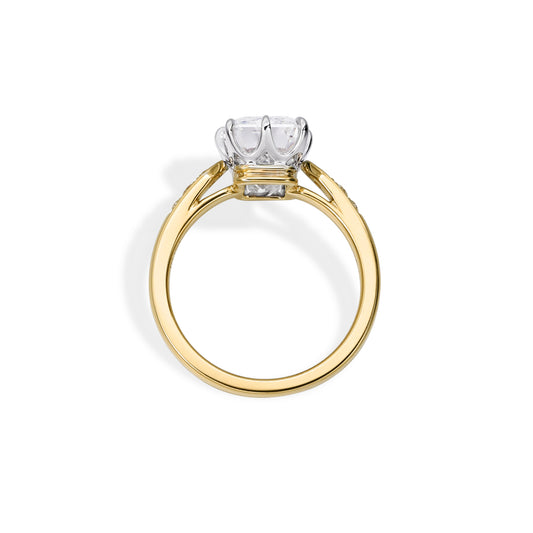
Carmine-Emerald Cut Lab Grown Diamond Engagement Ring
Regular price From $2,099.00From $2,099.00 Regular priceUnit price per -
Vendor:Elora Fine Jewelry
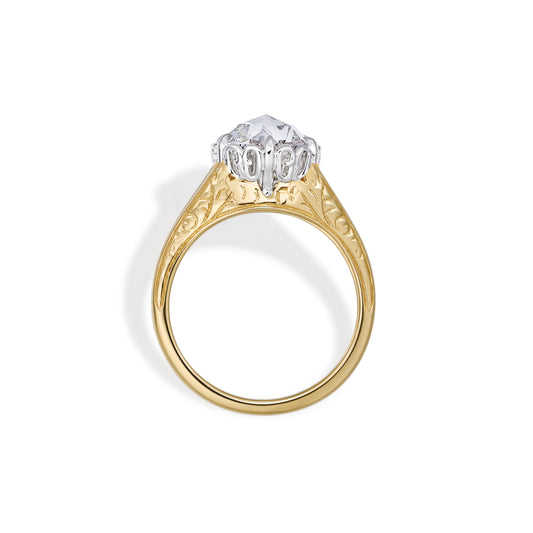
Santi-Round Rose Cut Lab Grown Diamond Engagement Ring
Regular price From $2,199.00From $2,199.00 Regular priceUnit price per -
Vendor:Elora Fine Jewelry
Lena-Old Mine Cushion Cut Lab Grown Diamond Engagement Ring
Regular price From $2,899.00From $2,899.00 Regular priceUnit price per -
Vendor:Elora Fine Jewelry
Lena-Old Mine Cut Lab Grown Diamond Engagement Ring
Regular price From $2,299.00From $2,299.00 Regular priceUnit price per -
Vendor:Elora Fine Jewelry
Ocean-Blue Radiant Lab Grown Diamond Engagement Ring
Regular price $4,799.00$4,799.00 Regular priceUnit price per -
Vendor:Elora Fine Jewelry
Skye-Blue Oval Lab Grown Diamond Engagement Ring
Regular price $3,799.00$3,799.00 Regular priceUnit price per -
Vendor:Elora Fine Jewelry
Lena-Pear Cut Lab Grown Diamond Engagement Ring
Regular price From $1,999.00From $1,999.00 Regular priceUnit price per -
Vendor:Elora Fine Jewelry
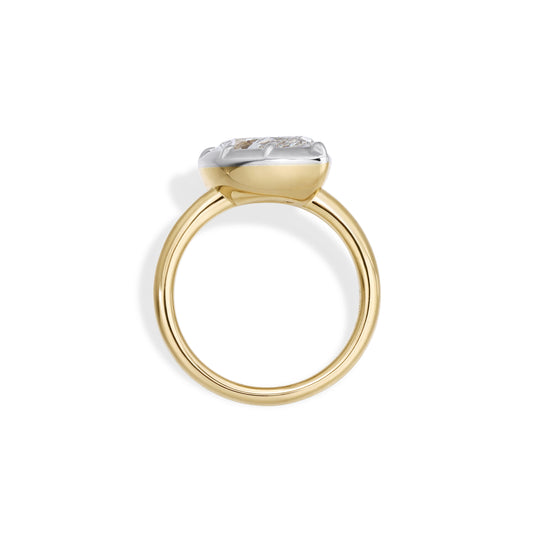
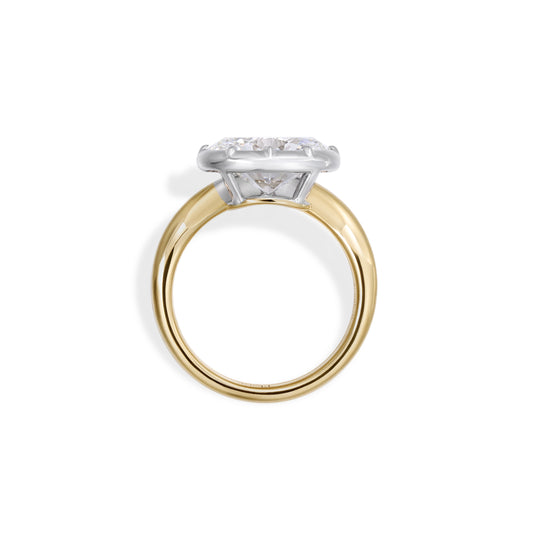
Lena-East West Oval Cut Lab Grown Diamond Engagement Ring
Regular price From $2,999.00From $2,999.00 Regular priceUnit price per







The Metallurgy Behind Structural Brilliance
White gold is a precisely calculated alloy designed to solve the physical limitations of pure gold. Pure gold is inherently soft so metallurgists blend it with dense white metals like palladium or silver. This fusion fundamentally alters the molecular structure of the metal yielding a highly rigid foundation capable of securing significant carat weights. To achieve its signature icy exterior the ring undergoes an electroplating process where a microscopic layer of rhodium is bonded to the surface. This dense platinum group metal not only provides a highly reflective mirror shine but also adds a crucial layer of scratch resistance to the setting ensuring your ring maintains its sharp profile over decades of wear.
Manipulating Light Through Mixed Metal Architecture
Master jewelers frequently rely on white gold to control how light interacts with a diamond. A yellow gold prong can inadvertently cast a warm reflection deep into the pavilion of a colorless stone altering its visual grade. By crafting the head of the ring in white gold the metal acts as an invisible frame that reflects pure white light directly back into the facets. This optical technique is highly prominent in the Lena Oval Cut Ring where the white metal prongs blend seamlessly into the diamond. When paired with a contrasting yellow gold band the icy center stone appears to float above the finger becoming the absolute focal point of the design.
The Lifecycle of a Rhodium Finish
The bright white exterior of this metal is beautiful but it does require an understanding of its physical lifecycle. Over years of daily wear the friction from your hands will gradually thin the rhodium surface layer eventually revealing the natural warm champagne tone of the underlying gold alloy. This transition is a normal part of the metal aging process rather than a defect. Restoring the ring to its original bright state is a standard and straightforward procedure. A master jeweler will polish away the microscopic scratches and submerge the piece in a rhodium bath returning the setting to its exact factory finish.
Exploring Distinct Structural Profiles
Our collection focuses on designs that utilize white gold strategically to enhance the physical presence of the diamond. The Lena Old Mine Cushion Cut Ring merges chunky antique facet patterns with sharp modern white metalwork for a striking visual contrast that highlights the deep fire of the historical shape. For those seeking maximum finger coverage the Lena East West Oval Cut Ring uses bright white metal to secure the stone horizontally across the hand. This specific orientation requires immense structural integrity from the prongs making a white gold alloy the optimal engineering solution for a secure and prominent display.
Frequently Asked Questions
White gold prongs reflect bright colorless light directly into the diamond. This prevents the warm tones of a yellow band from altering the visual color grade of the center stone ensuring maximum icy brilliance.
The bright rhodium finish will eventually wear down to reveal the slightly warm tone of the gold alloy beneath. This is standard wear and is easily reversed with a quick professional rhodium application to restore its bright white color.
Yes. The alloy metals used to create white gold add significant strength to the pure gold. This creates a highly durable material excellent for securing large diamonds in thin or delicate prongs.
Most individuals prefer to have their rings professionally cleaned and the rhodium finish reapplied every twelve to eighteen months to maintain a brilliant mirror shine.