Collection: Rose Gold Wedding Band
Rose gold gets its color from copper, and that copper does more than produce a blush tone. It hardens the alloy, making rose gold more scratch-resistant than yellow gold of the same karat, and it gives the metal a warmth that deepens gradually over years of wear as the copper oxidizes. No plating is involved and no color maintenance is required. Elora's rose gold wedding bands are built around this material logic, with designs that let the character of the metal carry the piece rather than relying on surface treatment or decorative excess.

-
Vendor:Elora Fine Jewelry
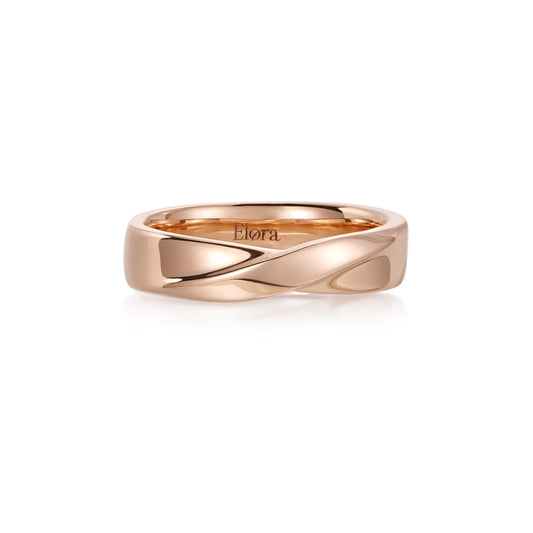
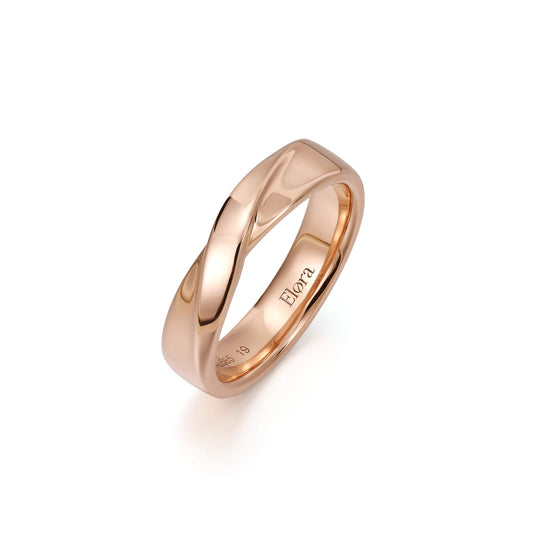
Ethan-Twist Rose Gold Wedding Band
Regular price From $699.00From $699.00 Regular priceUnit price per
Rose Gold as a Material Choice, Not Just a Color
Rose gold is frequently chosen for its appearance, but the properties that make it a sound choice for a wedding band go beyond color. The copper content in the alloy, which is what produces the blush tone, also increases the hardness of the metal relative to yellow gold of the same karat. A 14K rose gold band is harder and more resistant to surface scratching than a 14K yellow gold band, which matters for a piece worn continuously without removal. The color itself requires no maintenance. Unlike white gold, there is no rhodium layer to monitor or reapply. The blush tone is inherent to the alloy and will remain consistent across decades of wear, deepening slightly over time as the copper develops a natural patina.
The Construction Logic of a Twisted Band
A twisted band profile is one of the more technically demanding designs in wedding jewelry. The torsional geometry of the twist must be held precisely by the metal, and any softness in the alloy will cause the profile to flatten or lose definition under the mechanical stress of daily wear. The Ethan Twist Rose Gold Wedding Band is built in rose gold specifically because the copper-hardened alloy maintains the sharpness of the twist over time. The result is a band where the geometry reads as clearly after years of wear as it does at the point of purchase, without the profile softening into an indistinct rounded form.
How Rose Gold Reads Against Other Metals
Rose gold occupies a tonal position between yellow gold and white gold, which gives it a particular versatility when stacking with an existing engagement ring. Against a yellow gold setting, a rose gold band creates a tonal relationship that reads as warm and cohesive without being identical. Against a white gold or platinum setting, the blush tone introduces a contrast that is softer and more gradual than the contrast produced by yellow gold, making the two pieces read as a considered combination rather than a deliberate opposition. The Ethan works across all three pairings, with the twist profile adding visual interest that a plain band would not provide in the same stacking context.
A Band That Changes With You
Most fine jewelry is designed to stay as close to its original condition as possible. Rose gold takes a different position. The copper in the alloy reacts gradually with skin and air, producing a deepening of the blush tone over years of wear that gives the band a warmth and depth that a new ring does not have. This is not deterioration. It is the material expressing its own history, and it is one of the reasons that rose gold pieces are often described as becoming more beautiful with age rather than simply holding their original appearance.