Collection: Princess Cut Diamond
The Princess cut stands as a masterful intersection of contemporary architecture and timeless romance. Unlike the rounded silhouettes of traditional diamonds, the Princess cut is defined by its sharp, clean lines and dramatic right angles, offering a bold aesthetic for the modern avant-garde. By maintaining a perfect square ratio and meticulously aligning each facet, we ensure that the stone’s crisp geometry serves as a powerful stage for light.
Each Elora lab-grown diamond is hand-selected for its superior crown height and pavilion depth. Whether set in a minimalist solitaire to highlight its linear purity or surrounded by delicate pavé, our Princess cut diamonds are a testament to the beauty of technical perfection.

-
Vendor:Elora Fine Jewelry
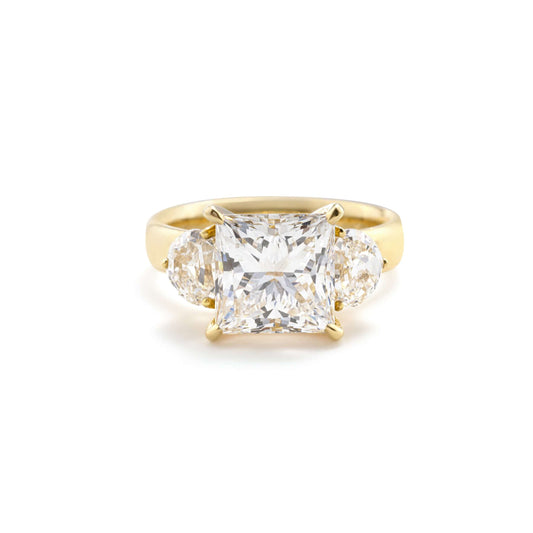
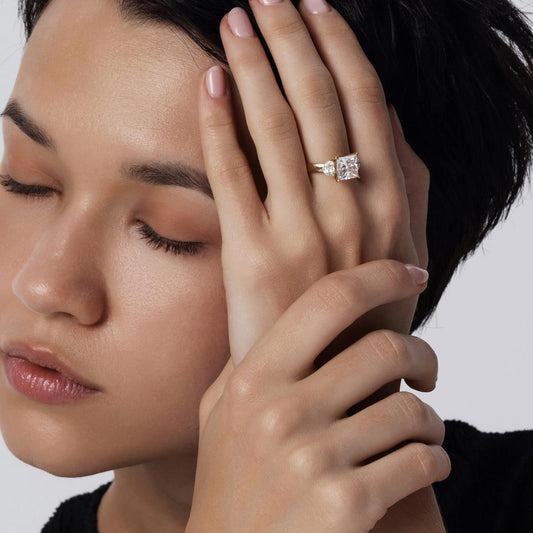
Hailey-Princess Cut Lab Grown Diamond Ring
Regular price From $1,399.00From $1,399.00 Regular priceUnit price per -
Vendor:Elora Fine Jewelry
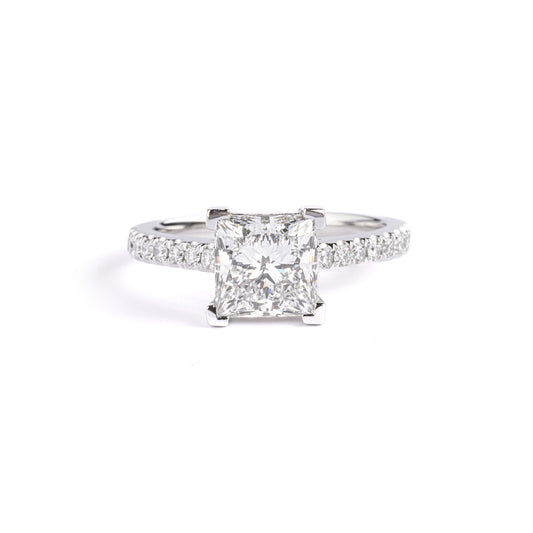
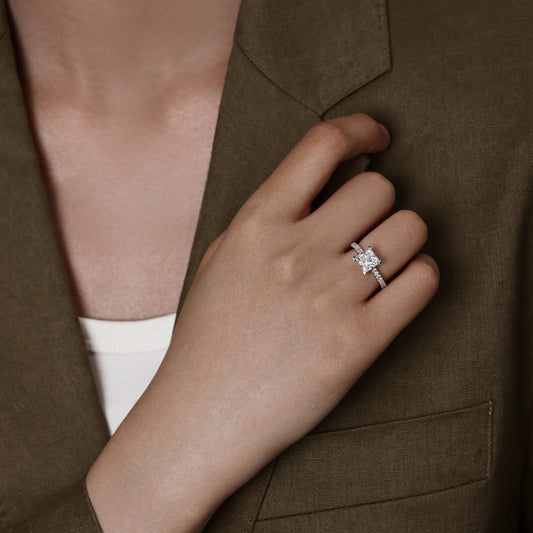
Heidi-Princess Cut Lab Grown Diamond Ring
Regular price From $1,299.00From $1,299.00 Regular priceUnit price per
The Architecture of the Princess Cut
The Princess cut is the definitive choice for those who demand the brilliance of a round diamond but prefer the bold, clean lines of a square silhouette. Created in the 1960s, this cut is celebrated for its pyramid-like shape and innovative faceting. At Elora, we select lab-grown Princess diamonds that exhibit a perfect 1.00 to 1.04 length-to-width ratio, ensuring a balanced, symmetrical face that maximizes light return across every sharp angle. This exact geometric adherence guarantees that the stone remains visually powerful from every perspective.
Precision in Symmetry and Sparkle
Unlike step-cuts like the Asscher, the Princess cut is a "brilliant" style cut, meaning it is engineered for maximum fire. The visual magic lies in its "chevron" facets on the pavilion. A diamond with more chevrons will produce a delicate, crushed-ice sparkle, while fewer chevrons result in broader, bolder flashes. We meticulously screen our inventory to ensure every stone possesses a centered "X" pattern when viewed from the top, a hallmark of superior symmetry and optical alignment that defines a truly premium lab-grown diamond.
Structural Integrity and Setting Design
The defining feature of a Princess cut is its four pointed corners. Because these points are where the diamond is thinnest, they require thoughtful protection. Our settings are engineered to secure these delicate extremities without diminishing the stone's visual footprint. For those seeking maximum brilliance across the entire band, the Heidi Princess Cut Ring features a shimmering pavé setting that complements the center stone’s fire. If you prefer a more classic, substantial profile, the Hailey Three-Stone Ring utilizes side stones to frame the Princess cut, creating a tiered architectural look that enhances its presence on the finger.
Choosing Between Modern and Vintage Spirits
While the Princess cut is inherently modern, its appeal lies in its versatility. It can feel starkly contemporary in a sleek platinum band or take on a regal, vintage-inspired air when framed by decorative accents. We evaluate the crown height and table percentage of each lab-grown diamond to avoid the "flat" look often found in mass-produced stones. An Elora Princess cut maintains a high crown that encourages light dispersion, ensuring that even in lower light settings, the diamond retains its vibrant, multidimensional character and unmistakable edge.