Collection: Diamond Band
A diamond band places the stone at the center of the design rather than using it to frame something else. The result is a ring that works independently, without needing an engagement ring alongside it to make sense. Elora's diamond band collection spans round, emerald, pear, and marquise cut lab grown diamonds across a range of setting profiles and stone counts.
The collection is built around the idea that a diamond ring does not need to follow a conventional format to carry weight, and that the most personal piece of jewelry is often the one chosen entirely for yourself rather than for an occasion.

-
Vendor:Elora Fine Jewelry
Vigo-Pear Cut Lab Grown Diamond Ring Curved Band
Regular price From $699.00From $699.00 Regular priceUnit price per -
Vendor:Elora Fine Jewelry
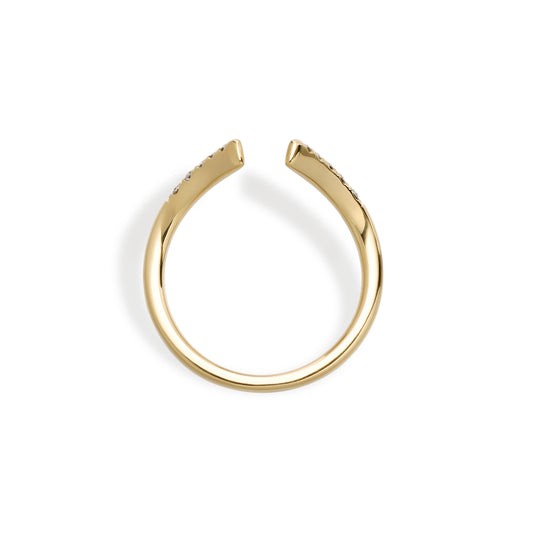
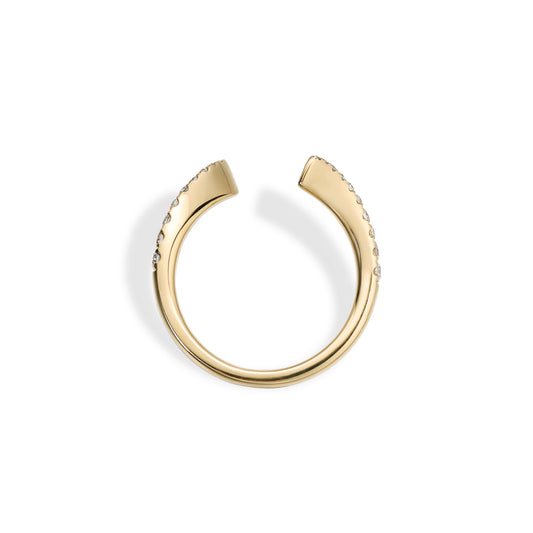
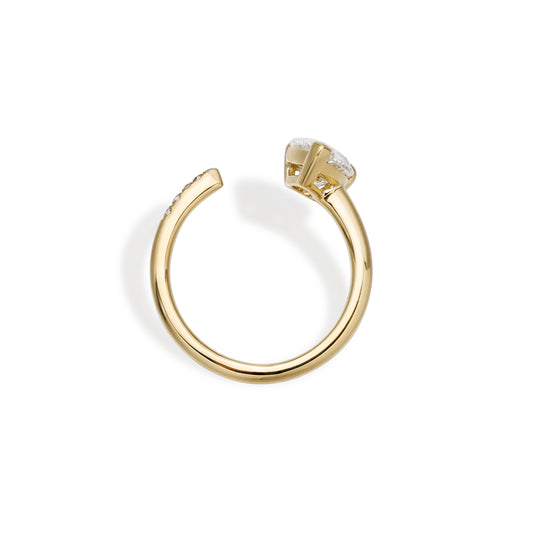
Perry-Marquise Cut Lab Grown Diamond Ring Open Band
Regular price From $799.00From $799.00 Regular priceUnit price per -
Vendor:Elora Fine Jewelry
Asher-Round Cut Diamond Ring Pavé Contour Wedding Band
Regular price $999.00$999.00 Regular priceUnit price per -
Vendor:Elora Fine Jewelry
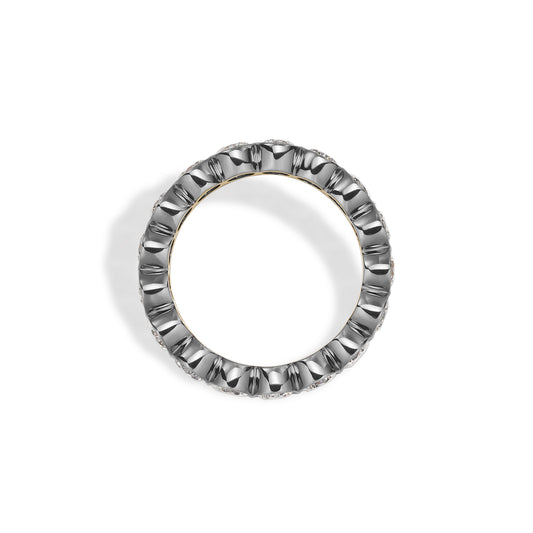
Orla-Round Cut Diamond Eternity Band
Regular price $1,699.00$1,699.00 Regular priceUnit price per -
Vendor:Elora Fine Jewelry
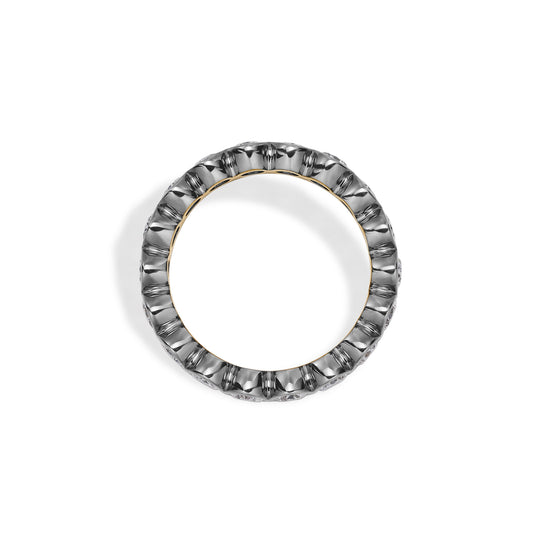
Orla-Oval Cut Diamond Eternity Band
Regular price $1,999.00$1,999.00 Regular priceUnit price per -
Vendor:Elora Fine Jewelry
Harper-Contour Pavé Diamond Open Band Ring
Regular price $999.00$999.00 Regular priceUnit price per -
Vendor:Elora Fine Jewelry
Lottie-Pear Cut Lab Grown Diamond Pinky Ring
Regular price $999.00$999.00 Regular priceUnit price per






A Diamond Band as the Main Event
Most diamond rings are designed around a center stone, with the band serving as a frame. A diamond band reverses that logic. The stones are the band, distributed across the setting in a way that gives the ring its own presence without relying on a separate focal point. This makes a diamond band one of the most versatile pieces in fine jewelry. It can be worn alone as a complete ring, stacked against an engagement ring to add brilliance to an existing set, or layered with other bands to build a combination that reads as personal rather than prescribed.
Round Brilliant Bands: Versatility Across Every Context
Round brilliant diamonds are the most optically efficient cut, returning more light to the eye than any other shape. In a band format, this translates to consistent sparkle regardless of how the ring sits on the finger or what light conditions it is worn in. The Clara Round Cut Lab Grown Diamond Ring and the Aura Round Cut Lab Grown Diamond Ring offer different stone counts and band profiles within the same cut, while the Gianna, Maya, and Della Round Cut Lab Grown Diamond Rings each bring a distinct setting architecture to the same brilliant cut. The range allows the same optical quality to be expressed at different visual weights, from a band that reads as delicate to one that commands attention on its own.
East-West Settings: A Different Way to Wear a Stone
Emerald, pear, and marquise cuts are typically set along the vertical axis of the finger, but an east-west orientation rotates the stone 90 degrees so it runs horizontally across the band. This changes the visual logic of the ring entirely. Rather than drawing the eye up and down the finger, the stone spreads across the width of the hand, creating a broader, more architectural presence that reads as deliberate and unconventional. The Billie Emerald Cut Lab Grown Diamond Ring uses the step-cut facet structure of the emerald in this horizontal orientation, producing a band with a clean, graphic quality that reflects light in broad flashes across the width of the finger. The Ida Pear Cut Lab Grown Diamond Ring and the Maeve Marquise Cut Lab Grown Diamond Ring apply the same east-west logic to pointed-tip cuts, where the horizontal placement of the stone's axis creates a wide, low-profile silhouette that sits close to the finger and reads as modern rather than traditional.
Wearing a Diamond Band Without an Engagement Ring
A diamond band does not need context to work. Worn alone on any finger, it reads as a complete piece rather than half of a set. The single-stone and multi-stone designs in this collection are proportioned to stand independently, with setting depths and band widths calibrated for a ring that will be the primary piece on the hand rather than a supporting element. For those who want the presence of a diamond ring without the format of a traditional engagement ring, a diamond band offers a direct and considered alternative.