

Everything You Need to Know About Marquise Engagement Rings

Marquise engagement rings have always carried a certain mystique. Elegant, elongated, and instantly recognizable, the marquise cut is a shape that rewards those who take the time to understand it. When chosen well, it feels refined and expressive.
This guide walks through everything you need to know about marquise engagement rings, from their history and symbolism to the practical details that truly matter when choosing one.
What Is a Marquise Cut Diamond Engagement Ring
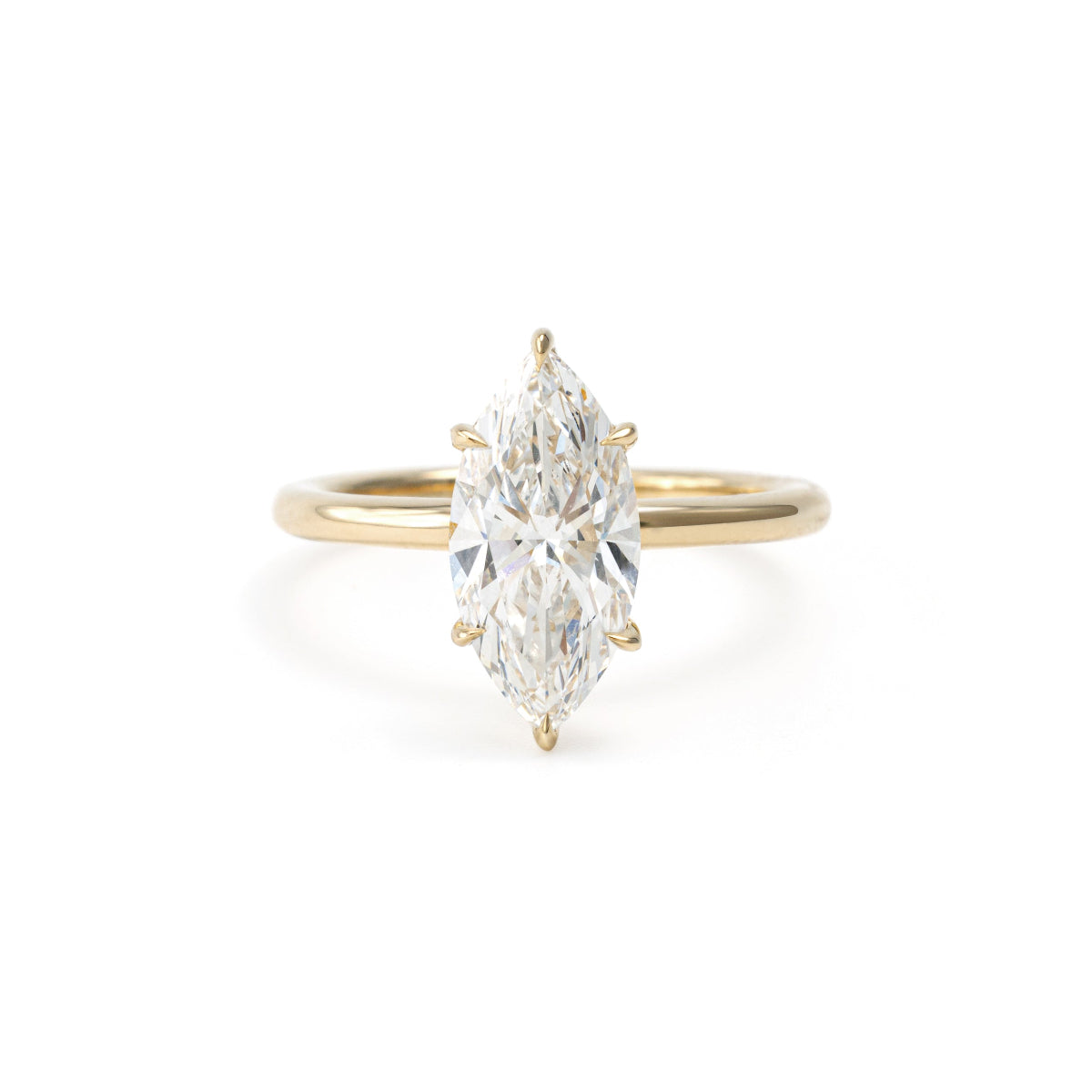
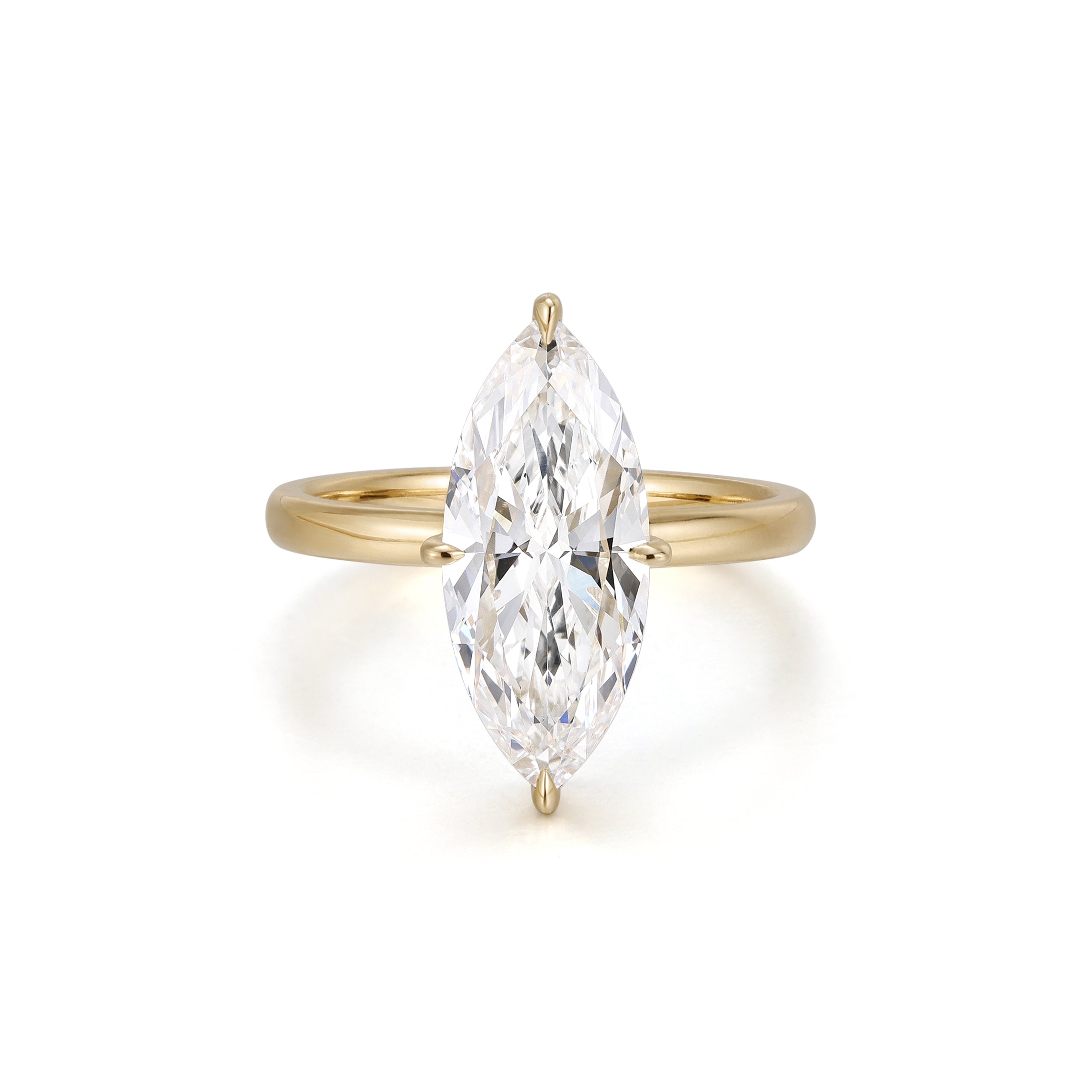
A marquise cut engagement ring features a diamond with a slender, elongated outline and pointed ends. The widest point sits at the center, while both tips taper gracefully outward.
One of the defining characteristics of the marquise cut is its ability to appear larger than other diamond shapes of the same carat weight. Because the stone stretches lengthwise across the finger, it offers excellent surface coverage and creates a visually striking presence.
This elongated silhouette also gives the illusion of longer, more slender fingers. For many wearers, this flattering effect is one of the strongest reasons to consider a marquise engagement ring.
The History of the Marquise Cut
The marquise cut traces its origins to eighteenth century France. Historical accounts suggest that King Louis XV commissioned a diamond shape inspired by the smile of his beloved, the Marquise de Pompadour. The elongated form, with its soft curves and pointed ends, was created to capture elegance in a way no existing cut had done before.
Over time, the marquise cut became associated with aristocratic taste and refined beauty. It reappeared across different design eras, including the twentieth century, before giving way to more geometric styles. Today, it remains a quiet classic, favored by those who appreciate heritage, craftsmanship, and individuality in equal measure.

Why Choose a Marquise Cut Engagement Ring
One of the most compelling reasons to choose a marquise cut engagement ring is its visual impact. Compared to round diamonds, marquise stones distribute their weight across a longer outline. This often makes them appear larger face up, even at the same carat size.
The shape also has strong character. It is distinctive without being overly bold. Many people are drawn to the marquise cut precisely because it does not feel generic. It reads as intentional, personal, and confident.
In addition, the marquise cut adapts well to different styles. Depending on the setting and proportions, it can feel vintage, minimal, romantic, or modern.
Advantages and Disadvantages of a Marquise Engagement Ring
Like any diamond shape, the marquise cut has both strengths and considerations.
On the positive side, it offers excellent finger coverage and an elegant profile. It stands out visually while remaining timeless. Its rarity compared to round or oval diamonds also appeals to those seeking something less common.
 For reference, a 1 ct marquise diamond ring and a 2 ct marquise diamond bracelet shown on a US size 6.5 finger.
However, the pointed tips are more delicate than rounded edges. Without proper protection, they can be vulnerable to chipping. This makes setting choice especially important.
Another consideration is the bow tie effect. Many elongated diamond shapes, including marquise cuts, can show a darker shadow across the center. A subtle bow tie is normal and often acceptable. A strong or overly dark one, however, can diminish the diamond’s brilliance.
 Difference in bowties in a marquise shape diamond
How to Evaluate Cut Quality in a Marquise Diamond
Marquise diamonds do not receive an overall cut grade from GIA. Instead, cut quality is assessed through two criteria on the certificate: polish and symmetry. Both should ideally be rated Excellent.
These grades ensure clean facet junctions, balanced proportions, and better overall light performance. In simple terms, polish and symmetry are the two non negotiable grades to prioritize on paper.

That said, technical grades alone do not guarantee visual beauty. Shape appeal is one of the most overlooked aspects of a marquise diamond. A stone can appear perfectly symmetrical on paper and still feel awkward in person. Shape appeal is visual.
It describes how the parts of the diamond relate to the whole. Experienced jewelers assess this by comparing the outline of one stone to others of the same shape and cutting style. A well shaped marquise should feel balanced, fluid, and intentional at first glance.
The image below illustrates how subtle variations in outline can affect a marquise diamond’s appearance.
An appealing outline appears smooth and proportional, while common issues include bulged wings that look overly rounded, flat wings that lack curvature, and undefined points where the tips appear soft instead of sharp. A strong marquise diamond does not need explanation. It simply looks right.
 The diamond on the left has an appealing outline. The three on the right illustrate common shape issues that may reduce visual harmony.
Length to width ratio is another important factor to consider. Most marquise diamonds fall between 1.75 and 2.25, with many buyers preferring ratios between 1.85 and 2.0 for a refined, elongated look. However, numbers alone are not enough.
The bow tie effect, outline flow, and overall balance can only be judged by reviewing real images or videos.
 Examples of marquise diamonds with different length to width ratios
Color and Clarity Considerations
Because marquise diamonds taper toward pointed ends, color and inclusions can be more noticeable near the tips. In today’s market, most high quality marquise engagement rings are selected in the colorless to near colorless range. D, E, and F color grades offer a bright, clean appearance that maintains consistency from center to point, especially in elongated shapes where color distribution matters more.
For clarity, VS and VVS grades are commonly chosen to ensure the diamond appears clean to the eye, even in the most delicate areas. In practice, these higher clarity ranges also make it easier to find marquise diamonds with strong symmetry and well defined outlines.
Modern lab grown diamonds, in particular, allow for greater consistency in color, clarity, and symmetry, making it easier to select marquise stones that look balanced and refined in real life rather than simply impressive on paper.
The Importance of Setting Design
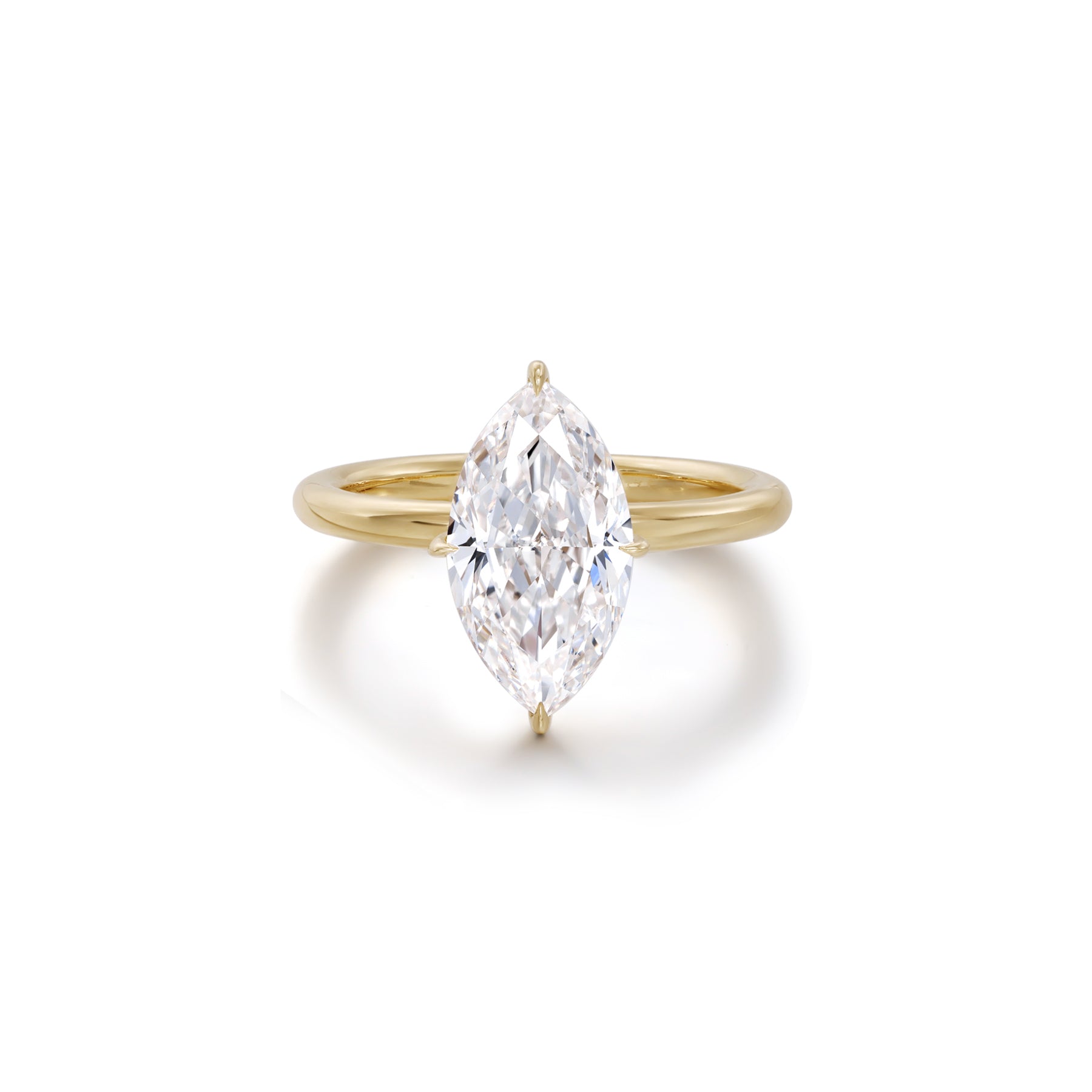
Setting design plays a critical role in how a marquise engagement ring performs and wears over time. Because the diamond features pointed ends, proper support and balance are essential for both durability and visual harmony.
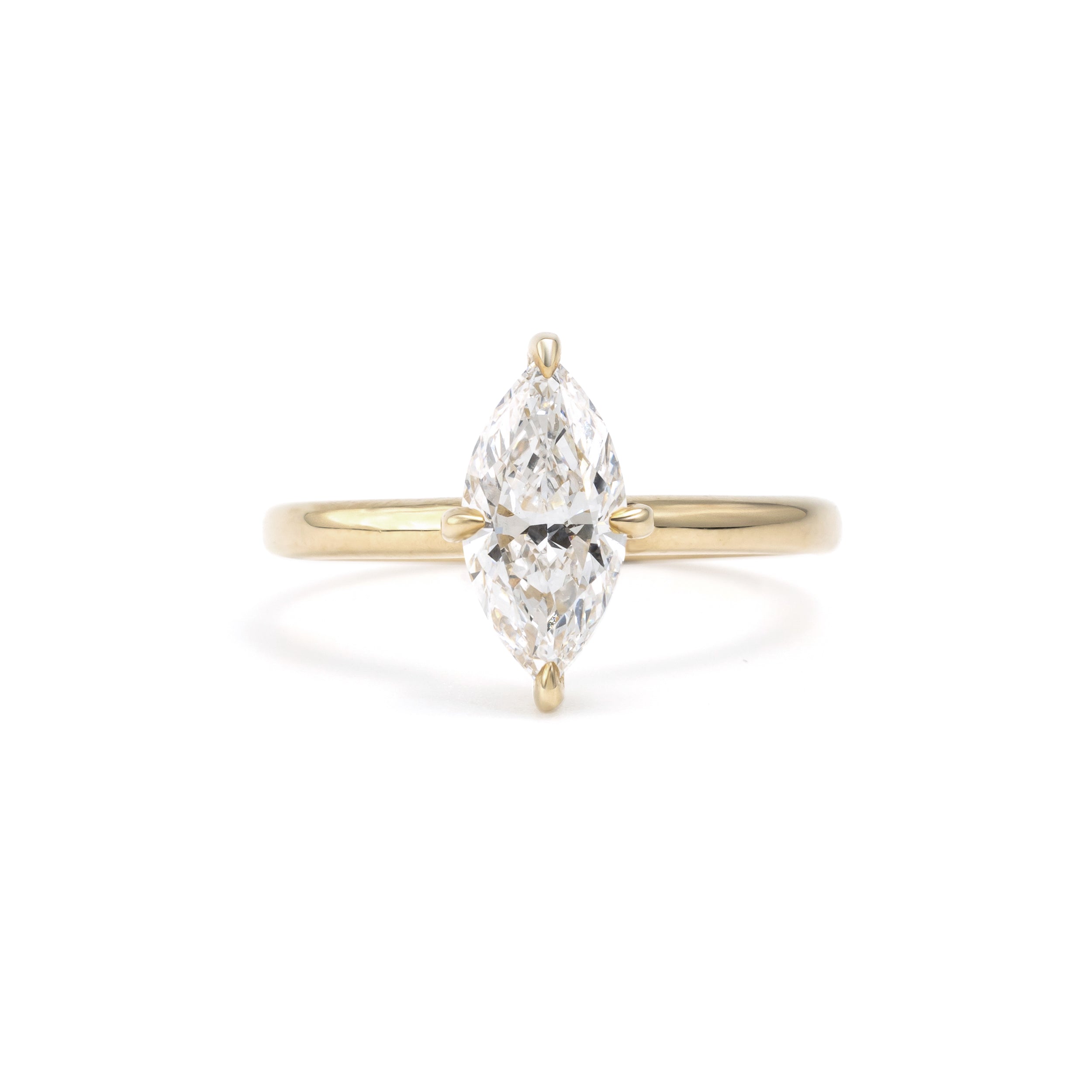
Most marquise engagement rings are set with standard prongs, typically using either a four prong or six prong configuration. Four prong settings create a cleaner, more open look that highlights the diamond’s outline and brilliance.
Six prong settings offer additional security and a more structured appearance, helping distribute pressure more evenly across the stone. The choice often comes down to personal preference and how the ring is intended to be worn daily.
V shaped prongs are sometimes used to protect the pointed tips, but they are not the only effective solution. Well designed standard prongs, when properly positioned and crafted, can provide excellent protection while maintaining a refined silhouette.
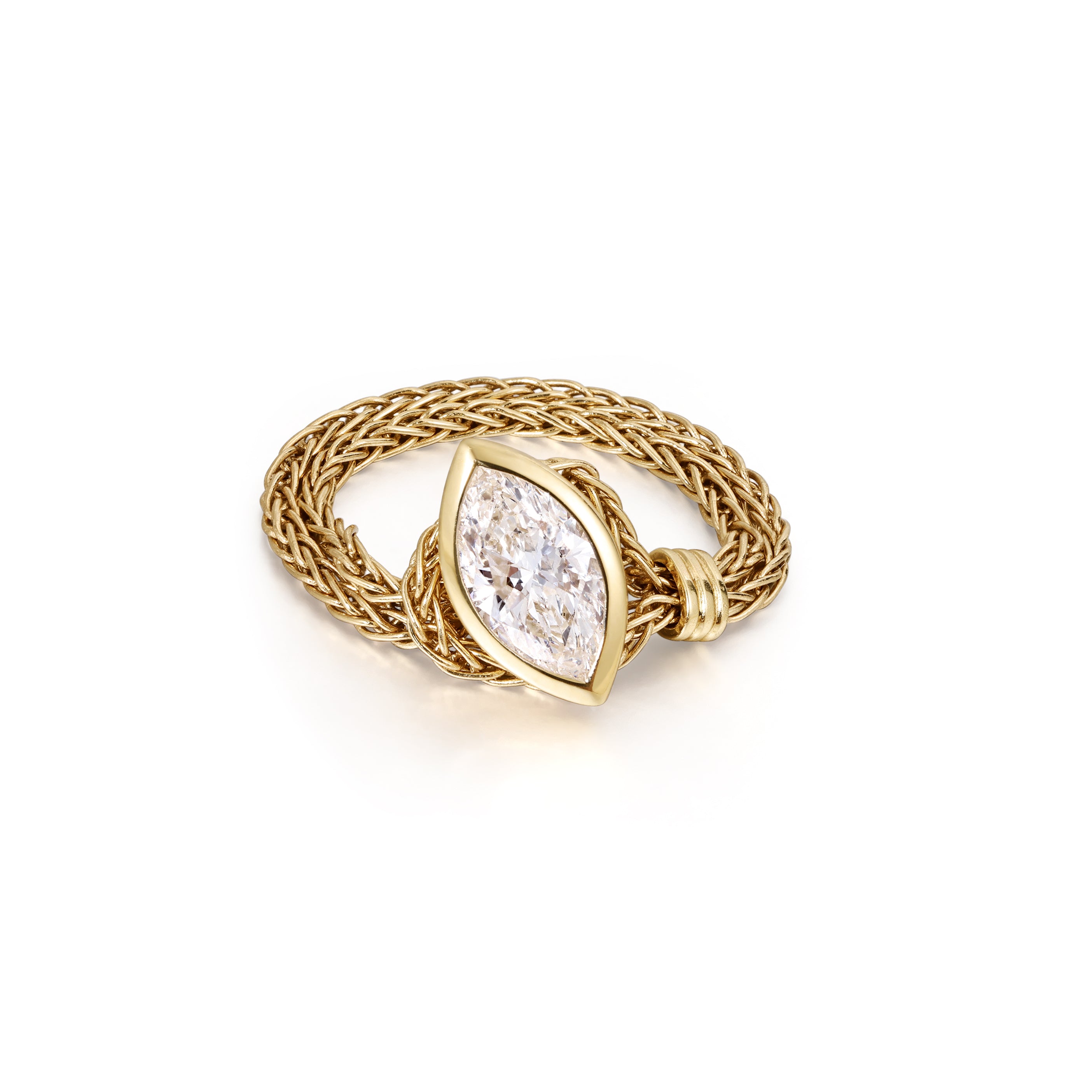
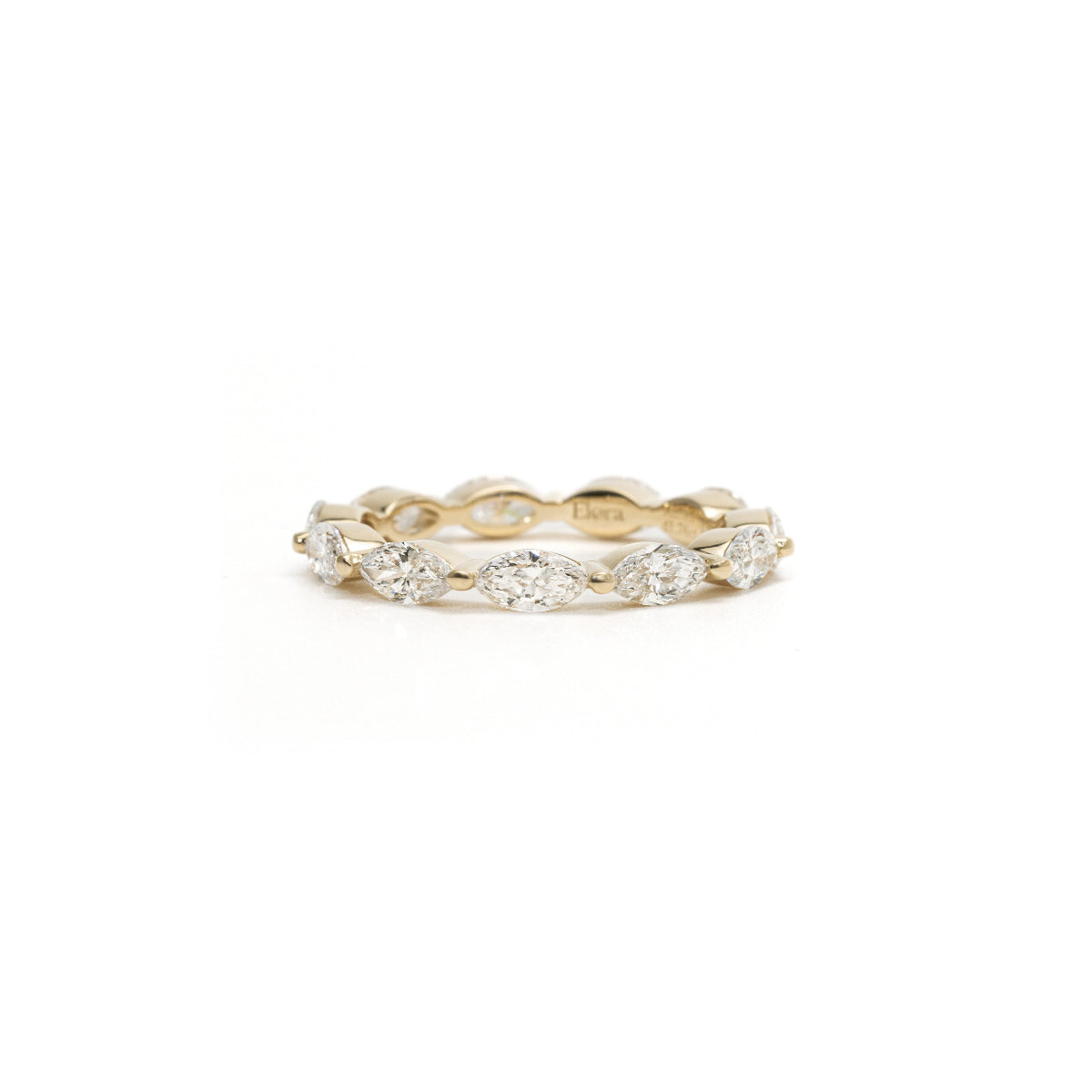
Bezel settings offer maximum coverage and a sleek, modern look, though they slightly soften the diamond’s outline. Halo settings add sparkle and visual weight while offering extra edge protection. Band width also plays an important role.
Slim bands emphasize the diamond’s length and delicacy, while wider bands create a more grounded, vintage inspired feel. Often, if a marquise ring feels visually unbalanced, the issue lies in band proportion rather than the diamond itself.
Orientation and Wearing Style
Traditionally, marquise diamonds are set vertically along the finger. This north south orientation enhances finger length and creates a classic profile.
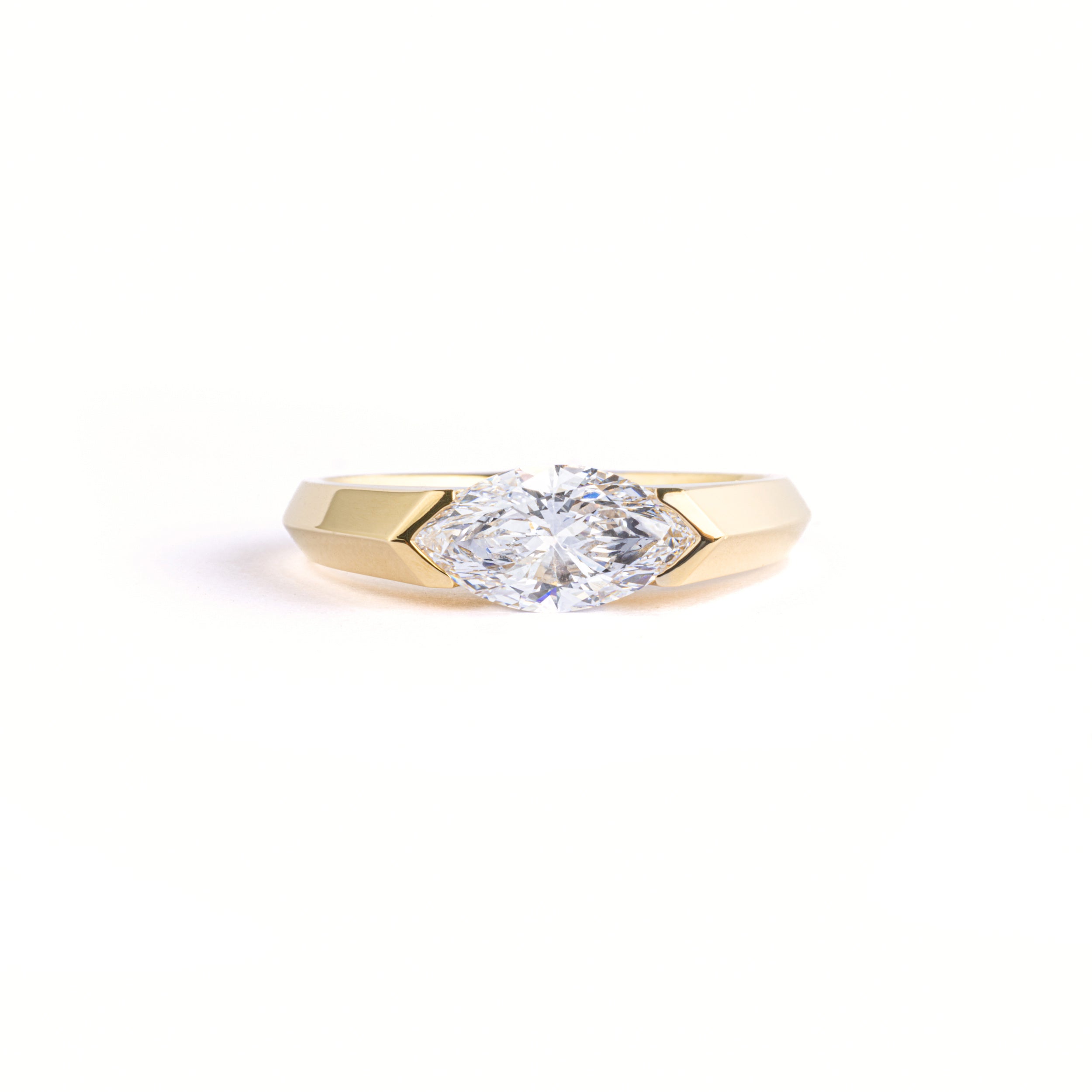
East west settings place the diamond horizontally. This approach feels more contemporary and fashion forward. It appeals to those who want a nontraditional engagement ring without sacrificing elegance.
Both orientations can work beautifully when proportions are right.
 ELORA FINE JEWELRY ELORA FINE JEWELRY
Marina-Marquise Cut Lab Grown Diamond RingFrom $999.00
View Product
|
 ELORA FINE JEWELRY ELORA FINE JEWELRY
Anais-Marquise Cut Lab Grown Diamond RingFrom $999.00
View Product
|
Who Should Choose a Marquise Engagement Ring
A marquise engagement ring is well suited for those who appreciate strong lines and refined detail. It appeals to individuals who value uniqueness and do not want a ring that looks like everyone else’s.
The shape flatters many hand types, especially when proportions are chosen thoughtfully. It also resonates with those who enjoy a blend of historical influence and modern design.
Marquise Engagement Ring Buying Checklist
This checklist brings together the most important factors to consider before making a final decision.
| What to Check | Why It Matters |
| Polish and symmetry on the certificate | Marquise diamonds do not receive a GIA cut grade. Polish and symmetry are the two most important indicators of cut quality and should ideally both be rated Excellent. |
| Overall shape appeal | A diamond can be symmetrical on paper and still look awkward. Smooth wings and sharp, well defined points create a balanced, elegant outline. |
| Length to width ratio | Ratios between 1.85 and 2.0 are widely favored for an elongated look that feels refined rather than overly narrow. |
| Bow tie effect in real images or videos | A slight bow tie is normal in elongated shapes. Avoid stones with a dark or wide bow tie that dulls the center of the diamond. |
| Color and clarity at the tips | Colorless to near colorless grades and VS or VVS clarity help maintain brightness and durability, especially near the pointed ends. |
| Setting protection | The pointed tips are the most delicate areas of a marquise diamond. Proper prong or bezel protection is essential for long term wear. |
Conclusion
Marquise engagement rings combine elegance, history, and visual presence in a way few other diamond shapes can. When chosen with attention to proportion, setting, and real world wearability, they offer both beauty and lasting value.
For those willing to look beyond the most common choices, the marquise cut remains a refined and deeply rewarding option.


