Old European Cut vs. Round Brilliant Cut Diamond: What’s the Difference?


At first glance, an Old European Cut and a modern Round Brilliant may look similar, but their proportions create distinctly different personalities. The Old European Cut is an antique diamond cut known for its small table, high crown, open culet, and broad facets that create chunky flashes of light, while the modern Round Brilliant delivers brighter, faster, and more consistent sparkle.
Neither is inherently better. The right choice comes down to the kind of sparkle and character you prefer.
Old European Cut vs. Round Brilliant at a Glance
 |
 |
|
| Feature | Old European Cut | Modern Round Brilliant |
| Shape | Round | Round |
| Facets | Typically 57 or 58 | 57 or 58 |
| Table | Smaller | Larger |
| Crown | Higher and steeper | Lower |
| Culet | Usually visible | Usually very small or none |
| Facet Pattern | Broad and chunky | Finer and more precise |
| Sparkle | Larger, slower flashes | Faster, more consistent sparkle |
| Overall Look | Romantic, distinctive, antique-inspired | Bright, crisp, classic |
| Symmetry | Traditionally more individual | Highly standardized |
| Best For | Vintage character and bold fire | Maximum brightness and classic sparkle |
What Is an Old European Cut Diamond?
The Old European Cut, often called an OEC, is an antique round diamond cut and the predecessor of the modern Round Brilliant and became prominent in the late 19th and early 20th centuries. Traditionally cut by hand, OECs are characterized by a smaller table, higher crown, broad facets, and a visible culet, creating the chunky flashes and distinctive depth associated with antique diamonds.
Today, this look is no longer limited to genuine antique stones. Newly cut diamonds, including lab grown diamonds, can recreate this antique diamond cut while offering greater control over size, color, clarity, and proportions.
For a deeper look at its history and characteristics, read our complete guide to Old European Cut diamonds.
What Is a Modern Round Brilliant Cut Diamond?
The modern Round Brilliant diamond, often simply called a round brilliant cut, evolved from earlier round cuts and is precisely proportioned to optimize brightness, fire, and scintillation.
Compared with an OEC, it typically has a larger table, lower crown, longer lower half facets, and little to no visible culet. Its precise facet arrangement creates the bright, lively sparkle most people associate with a classic diamond engagement ring.

Old European Cut vs. Round Brilliant: The Main Differences
Although both are round brilliant style diamonds with a similar basic facet structure, differences in their proportions dramatically change how they look and interact with light.
1. Facet Pattern and Proportions
The facet pattern is one of the easiest ways to tell the two cuts apart.
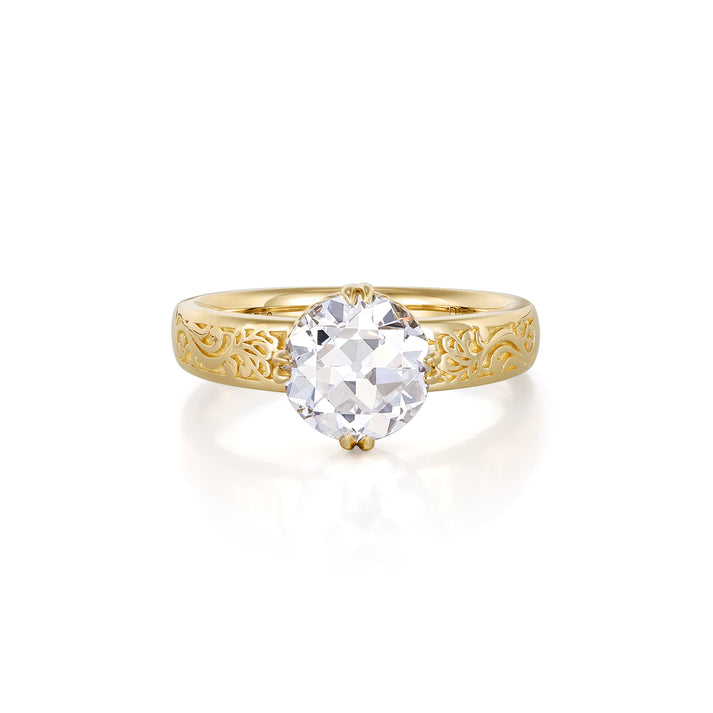
An Old European Cut diamond has broader, chunkier facets surrounding a smaller table, often with a visible culet at the center. A modern Round Brilliant has longer, narrower facets arranged in a tighter, more symmetrical pattern.
Viewed from the side, an OEC also tends to have a higher crown and deeper profile.
These structural differences are what give the two cuts their very different personalities when viewed face up.
2. Which Sparkles More: Old European Cut or Round Brilliant?
They don't necessarily sparkle more or less. They sparkle differently.
A well cut modern Round Brilliant produces strong overall brightness and frequent scintillation. As the diamond or viewer moves, many smaller facets rapidly switch between light and dark, creating crisp, lively sparkle.
An Old European Cut creates broader flashes. Its larger facet pattern produces bigger areas of light, color, and contrast that move across the diamond.
In simple terms:
- Round Brilliant: bright, crisp, faster sparkle.
- Old European Cut: broad, chunky, more dramatic flashes.
This difference also affects how you experience brilliance and fire. Brilliance refers primarily to white light returned from the diamond, while fire describes flashes of spectral color.
Modern Round Brilliants are designed to balance brightness, fire, and scintillation, while the broader facets of an OEC can make individual flashes of color and contrast especially noticeable.
If maximum brightness is your priority, you may prefer a Round Brilliant. If you enjoy seeing individual facets come alive with larger flashes of light and color, an OEC may be more appealing.
3. Which Looks Bigger: Old European Cut or Round Brilliant?
Face-Up Size Compared Carat weight tells you how much a diamond weighs, not how large it looks from the top.
Traditional Old European Cuts are often deeper and have higher crowns than modern Round Brilliants. This means more of their carat weight may be distributed vertically through the diamond rather than across its face up diameter.
As a result, an OEC can sometimes look slightly smaller than a modern Round Brilliant of the same carat weight.
This varies from stone to stone, particularly with newly cut OECs. When comparing diamonds, look at their actual millimeter dimensions as well as carat weight.
4. Does Diamond Color Look Different in an Old European Cut?
Color can appear differently depending on a diamond's proportions and facet pattern.
Modern Round Brilliants are highly efficient at returning light, which can sometimes make subtle body color less noticeable when viewed face up. With the broader facets and different light pattern of an OEC, warmth may be somewhat more visible.
But warmth isn't necessarily a disadvantage in an Old European Cut.
Slightly warm white and champagne tones can beautifully complement the depth and antique character of an OEC, creating a softer and richer appearance.
When choosing an OEC, we recommend evaluating color through actual photos and videos rather than relying on the certificate alone.
5. Which Is More Expensive: Old European Cut or Round Brilliant?
There is no universal answer.
For natural diamonds, genuine antique OECs occupy a specialized market. Their prices vary depending on rarity, condition, quality, provenance, and the individual character of the stone.
Lab grown diamonds offer another option. An Old European style diamond can be newly cut from lab grown rough, giving buyers greater flexibility in size, color, clarity, proportions, and budget while preserving the broad facet pattern that defines the antique inspired look.
For someone who loves OEC aesthetics but wants more control over the finished diamond, this can be an especially compelling alternative.
Antique Old European Cut vs. Modern Old European Cut
Not every Old European style diamond is an antique.
A genuine antique OEC was cut during an earlier period of diamond cutting, often by hand and according to the individual rough diamond. Slight variations in symmetry, culet size, proportions, and facet pattern are part of their character.
A modern OEC is a newly cut diamond designed to recreate the defining visual characteristics of the historical style, such as a higher crown, smaller table, broad facets, and visible culet.
Modern cutting also provides greater control over size, proportions, color, and facet character.
At Elora, our antique style lab grown diamonds can be custom cut to achieve a particular OEC look rather than being limited to the proportions of an existing antique stone.
Old European Cut vs. Round Brilliant: Which Is Better for an Engagement Ring?
Both cuts make beautiful engagement rings. The better choice depends less on technical specifications and more on what you want to see when you look at your diamond.
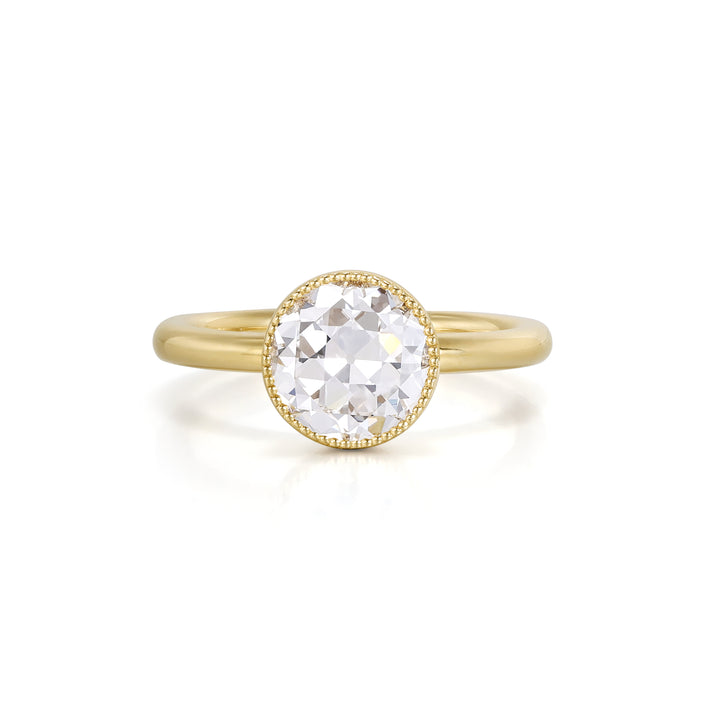
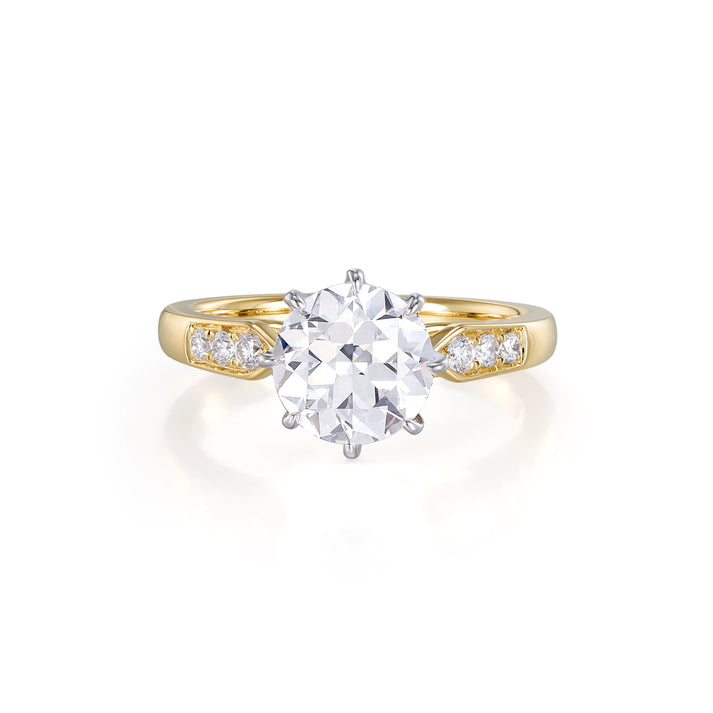
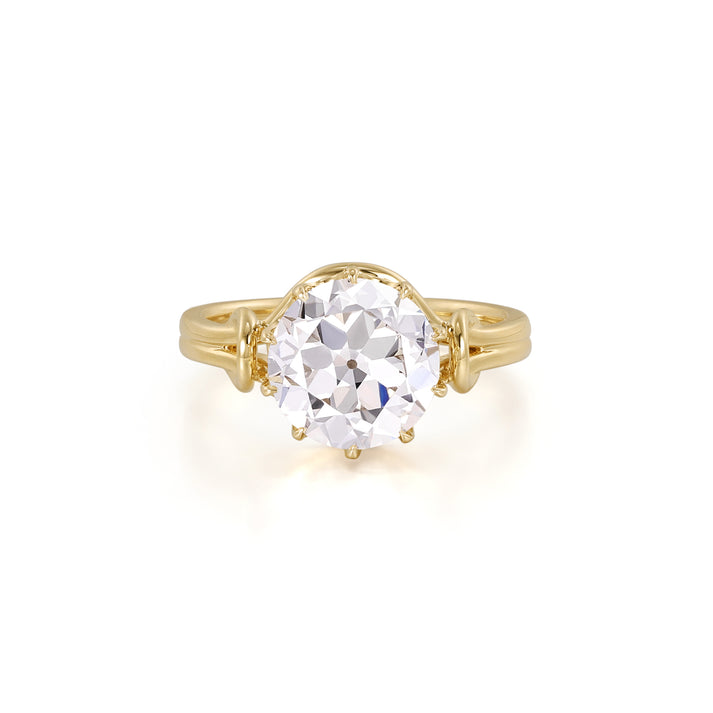
Choose an Old European Cut if you love:
- Broad, chunky facets
- Larger flashes of light and color
- Visible facet patterns and contrast
- Antique and vintage inspired jewelry
- A diamond with a more individual personality
- A softer, more romantic overall look
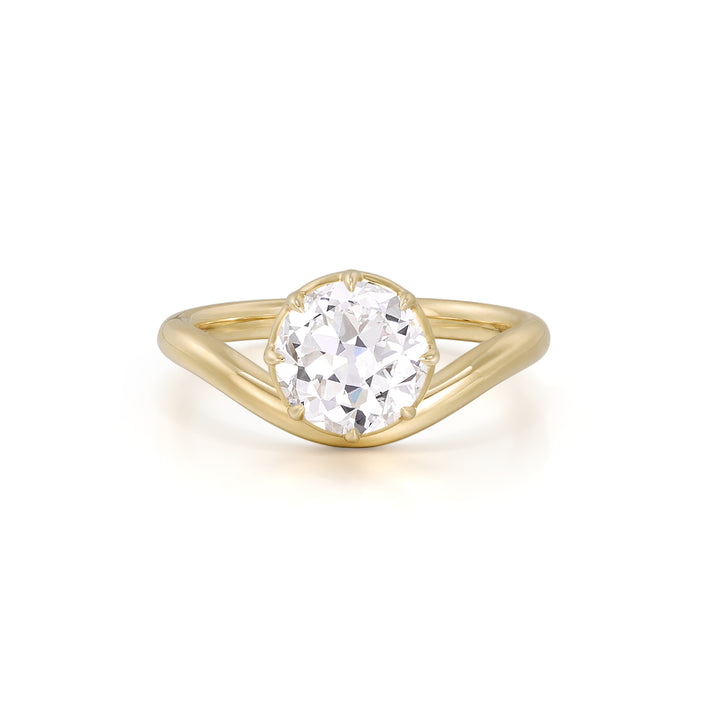
OECs pair especially well with antique inspired solitaires, Georgian style settings, bezels, collets, and designs with sculptural metalwork.
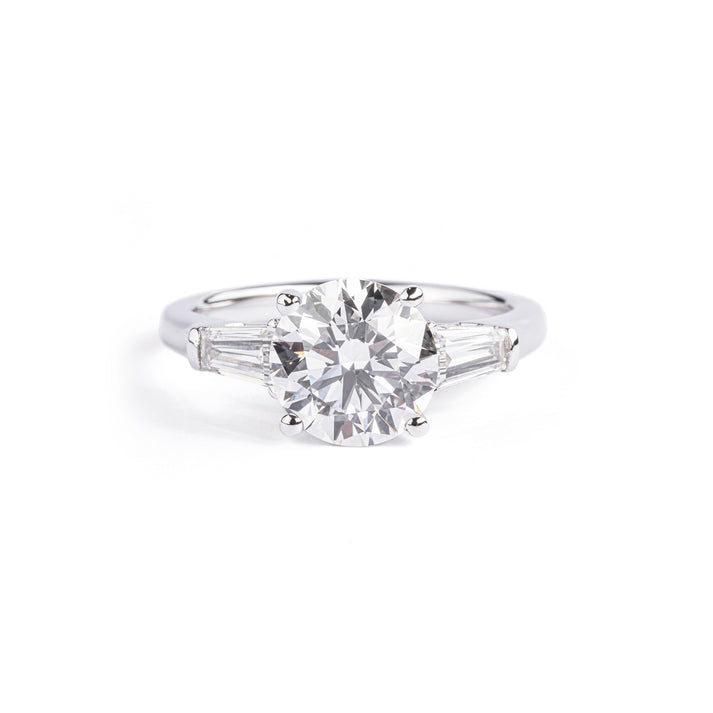
Choose a Round Brilliant if you love:
- Maximum brightness
- Crisp, lively sparkle
- Precise symmetry
- A clean, classic appearance
- A more standardized and predictable light pattern
- A versatile diamond that works with almost any setting
A Round Brilliant works beautifully in everything from a minimal solitaire to a pavé or halo engagement ring.
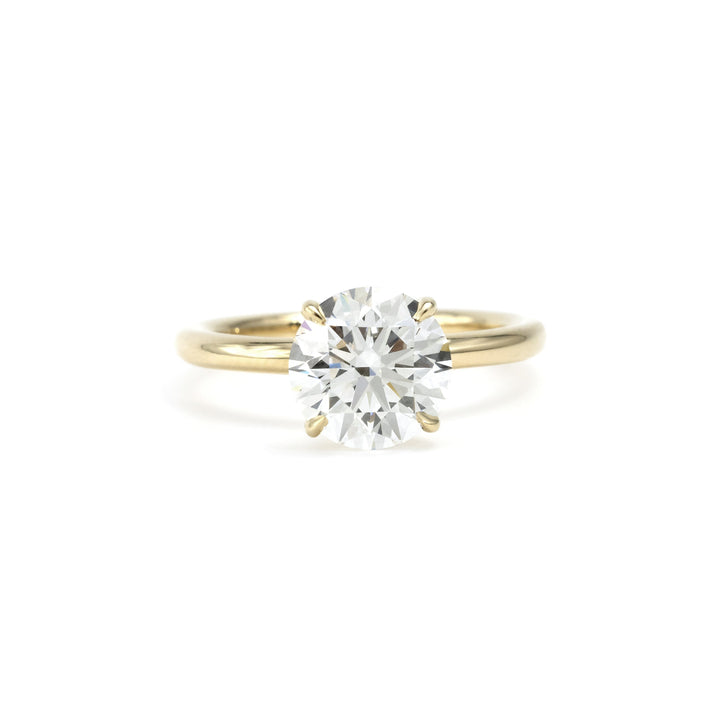
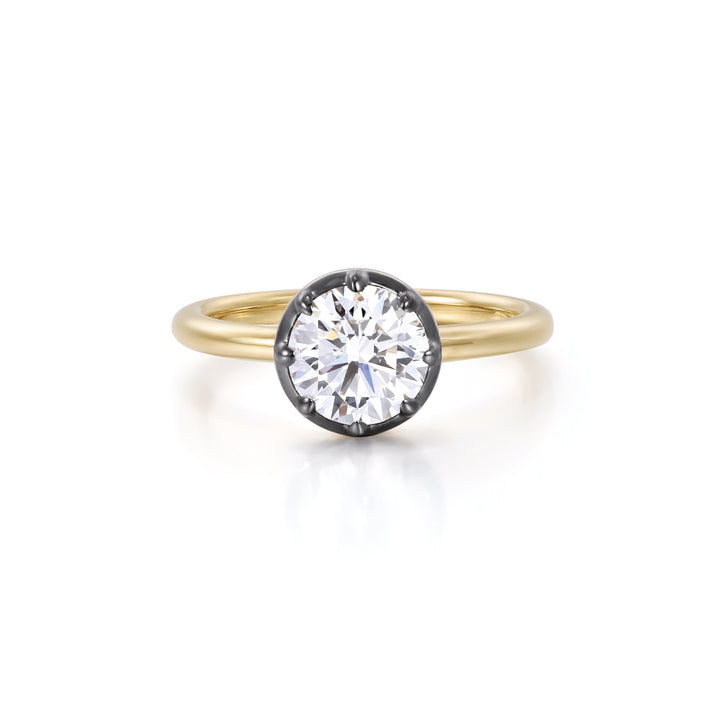
Neither is objectively better. They simply represent two different ideas of what makes a diamond beautiful.
A Round Brilliant catches the eye with brightness. An Old European Cut draws attention to its facets, depth, and movement.
The right choice is the one you want to keep looking at.
How to Choose a Good Old European Cut Diamond
Buying an OEC requires a slightly different mindset from buying a modern Round Brilliant.
Modern Round Brilliants benefit from established cut grading systems based on modern proportion and performance standards. Traditional Old European Cuts were not designed around those same standards, and GIA does not assign its modern cut grade to diamonds classified as Old European Cuts.
So don't judge an OEC by numbers alone.
Look at the overall facet pattern, light and dark contrast, culet, crown and table proportions, and face up dimensions. A good OEC should have character without appearing unbalanced or lifeless.
Most importantly, see the diamond in motion.
Photos are useful for understanding the facet pattern, but video shows how those broad facets actually interact with light. For antique style diamonds, this can tell you far more about the personality of a stone than a certificate alone.
Can You Get an Old European Cut Lab Grown Diamond?
Yes. Old European Cut refers to a cutting style, not a diamond's origin, so lab grown diamond rough can be cut into an OEC just like natural diamond rough.
This also makes customization much more accessible.
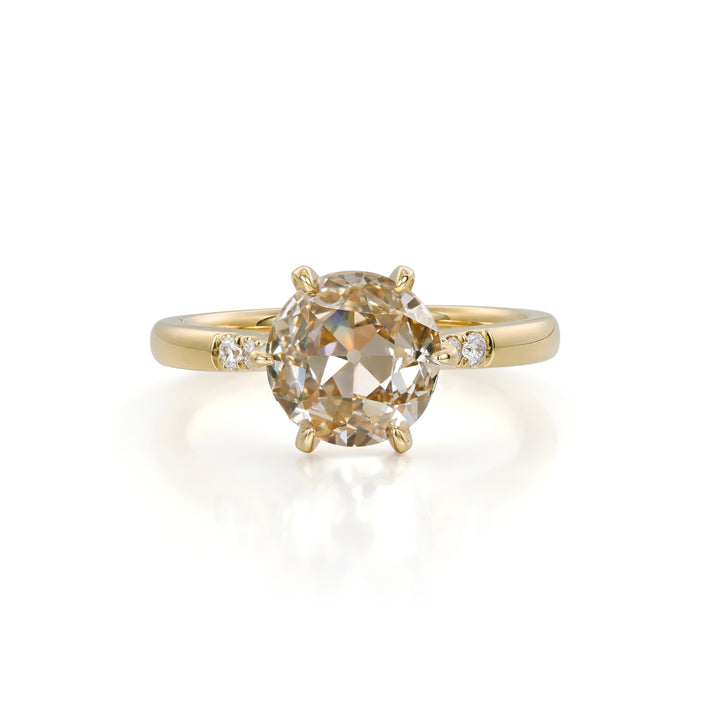
At Elora, we can custom cut Old European style lab grown diamonds based on your preferred size, proportions, culet, color, and overall facet character.
Photos and videos of the selected or custom cut diamond can be provided before production, allowing you to evaluate the stone itself rather than choosing from a certificate alone.
For buyers who love the individuality of antique diamonds but want greater flexibility in size, quality, and budget, a lab grown OEC offers a modern way to achieve that distinctive look.
Frequently Asked Questions
Q Is an Old European Cut the same as a Round Brilliant?
No. Both are round brilliant style diamonds, but their proportions and facet patterns differ. OECs typically have smaller tables, higher crowns, broader facets, and more visible culets, creating a distinctly different face up appearance.
Q Do Old European Cut diamonds sparkle less?
Not necessarily. They sparkle differently. Modern Round Brilliants tend to produce brighter, faster scintillation, while OECs produce broader, chunkier flashes with more visible contrast.
Q Why does an Old European Cut have a “hole” in the center?
What looks like a tiny hole is the culet, a small flat facet at the bottom of the diamond. Visible culets are characteristic of many antique cuts, while modern Round Brilliants usually have very small culets or come to a point.
Q Are lab grown Old European Cut diamonds real diamonds?
Yes. A lab grown Old European Cut is a real diamond with the same crystal structure and optical properties as a mined diamond. “Old European Cut” describes the faceting style, so it can be applied to either natural or lab grown diamond rough.


