Lab Grown Diamond vs Moissanite: Which Is Right for Your Engagement Ring?


You’ve planned the proposal. You know what you want to spend. Now comes a question many couples run into when choosing a ring: lab grown diamond or moissanite?
They can look similar at first, but they’re very different stones.
A lab grown diamond is a diamond, with the same chemical and physical properties as a mined one. Moissanite is a different gemstone altogether, with its own look, brilliance and price point.
Those differences matter more than they might seem. They affect how the stone catches the light, how it looks in different settings, how it wears over time and how much you’ll spend.
At Elora, we specialise in engagement rings made with lab grown diamonds, so naturally, we have a point of view. But moissanite has its advantages too. The better choice comes down to what you value most in a ring.
What Is a Lab Grown Diamond?
A lab grown diamond is a real diamond made of carbon with the same crystal structure as a mined diamond. It is created in a controlled laboratory environment using advanced processes that allow diamond crystal to grow over time. To the naked eye, a high quality lab grown diamond looks the same as a comparable mined diamond. Specialized gemological equipment can be used to identify how the diamond was formed.
Lab grown diamonds are graded by the same laboratories and against the same standards as natural diamonds. Every diamond of 1 carat or above set at Elora comes with an IGI certificate detailing its cut, color, clarity, carat weight, and other key characteristics, using the same grading standards applied to mined diamonds.
The fundamental difference is origin. One forms naturally within the earth, while the other is grown in a controlled laboratory environment. Both share the same fundamental chemical, physical, and optical properties of diamond.
What Is Moissanite?
Moissanite is a different gemstone entirely. It is silicon carbide, a compound discovered in 1893 by the French scientist Henri Moissan, who found microscopic crystals in a meteorite crater in Arizona. Natural moissanite is extremely rare, so nearly every moissanite on the market today is lab created.
Moissanite has its own beauty, and its own character. It is harder than most gemstones, it throws off more fire than a diamond, and it costs noticeably less. But it is not a diamond, and its optical properties give it a noticeably different appearance.
5 Key Differences Between Lab Grown Diamonds and Moissanite
| Lab Grown Diamond | Moissanite | |
| Material | Carbon | Silicon carbide |
| Gemstone | Diamond | Moissanite |
| Mohs hardness | 10 | About 9.25 |
| Sparkle | White brilliance with fire | More pronounced rainbow fire |
| Certification | IGI grading available | No equivalent universal grading system |
| Price | Generally higher | Generally lower |
| Best for | Buyers who want a diamond | Buyers who prioritize size, sparkle, or lower cost |
Composition and Origin
A lab grown diamond has the same chemical composition as a mined diamond: carbon. Moissanite is silicon carbide, making it an entirely different gemstone.
For some couples, that distinction matters. If you want your engagement ring to feature a diamond, regardless of whether it was grown in a lab or formed in the earth, lab grown is the clear choice.
Sparkle and Fire
This is where the difference becomes easy to see. Moissanite has a refractive index of 2.65, compared with 2.42 for diamond. Its dispersion is also much higher at 0.104, versus 0.044 for diamond. This gives moissanite more colorful flashes of light, especially in direct sunlight.
For some people, that extra fire is part of its appeal. For others, particularly with larger stones, the rainbow effect can feel a little too pronounced. Diamonds tend to have a more balanced sparkle, with more white brilliance and less visible color.
Ultimately, it comes down to the look you prefer. If you have the chance, see both stones in person and under different lighting before making your decision.
Durability
Both stones are tough enough for everyday wear. Diamond ranks 10 on the Mohs hardness scale, while moissanite ranks about 9.25.
Both are highly resistant to scratching and well suited to everyday wear, although diamond has the greater hardness of the two. The difference shows up in extreme conditions. Diamonds resist abrasion better and hold a polished edge longer.
Price
Price is one of the clearest differences between the two stones. Moissanite generally costs less than a lab grown diamond of comparable face up size. Lab grown diamonds, however, have become significantly more accessible in recent years, making larger sizes and higher color and clarity grades available at prices far below comparable mined diamonds.
Both are far more affordable than a natural diamond with similar specifications, which is why both have become popular alternatives for engagement rings.
For many couples, the choice comes down to priorities. Moissanite offers a lower price and a highly brilliant appearance, while a lab grown diamond offers the material, optical properties, and grading standards of diamond at a more accessible price than a comparable mined stone.
Certification and Grading
Lab grown diamonds can be graded and certified by independent gemological laboratories such as IGI and GIA. The grading report records details including carat weight, color, clarity and cut quality, giving you a clear record of the diamond you are purchasing.
Moissanite is sold differently. While retailers may describe its size using diamond equivalent weight and provide their own quality grades, there is no widely adopted independent grading system comparable to diamond certification.
If having independently verified details about your center stone is important to you, a certified lab grown diamond provides more standardized and independently documented information about the stone.
Which One Is Right for You?
Moissanite may be the better fit if your priorities are a larger look, a lower price, and strong rainbow fire.
A lab grown diamond may be the better fit if you specifically want a diamond, prefer the optical appearance of diamond, or value standardized grading and certification.

Why Elora Recommends Lab Grown Diamonds
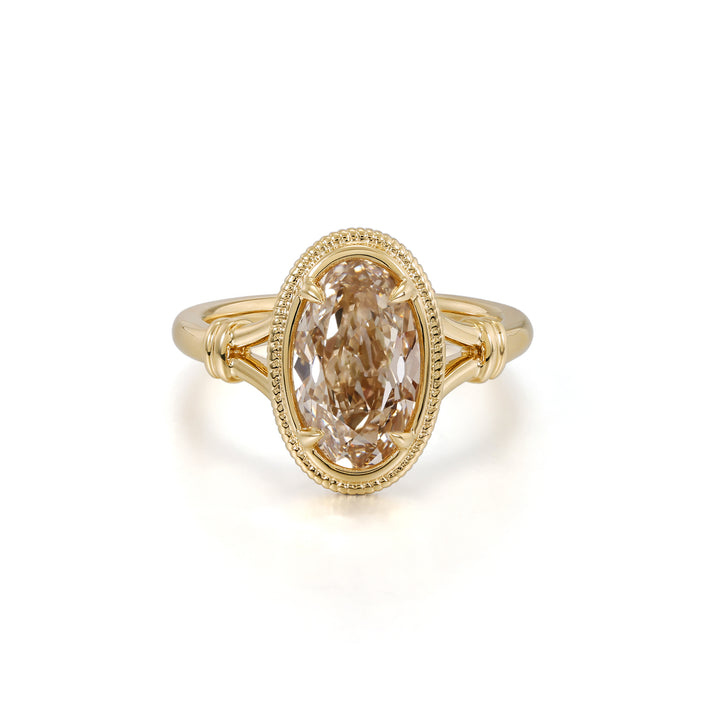
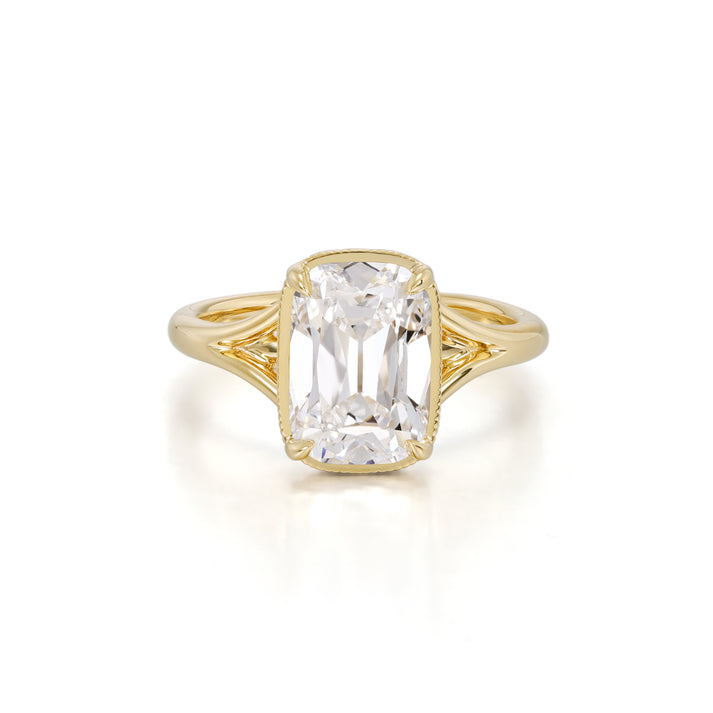
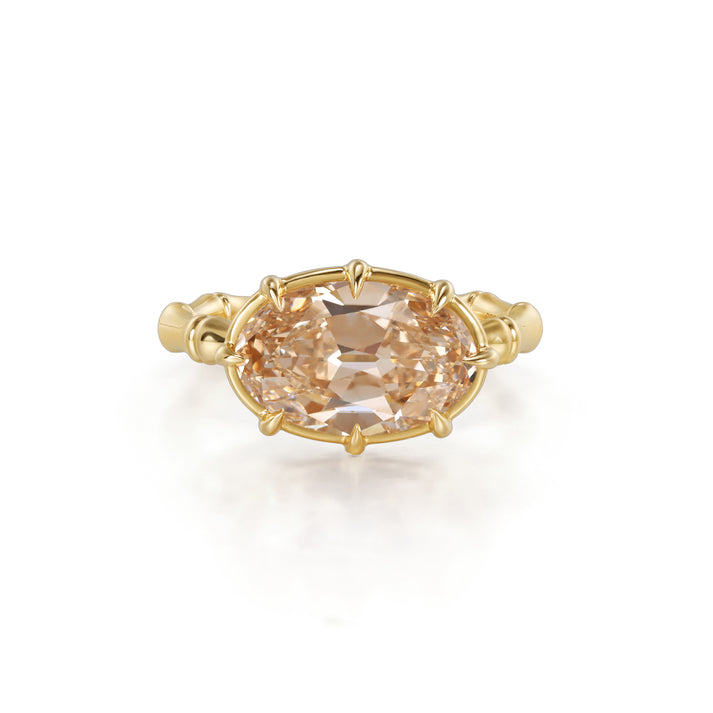
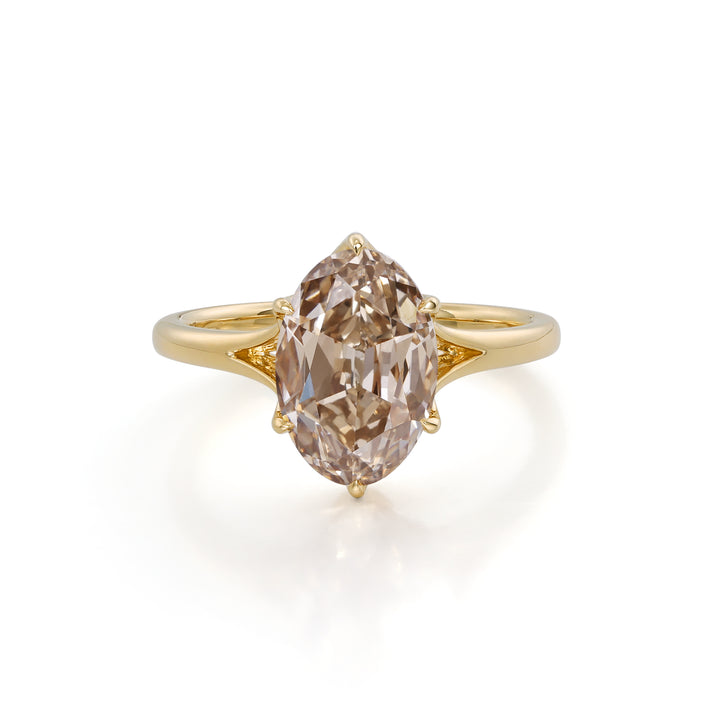
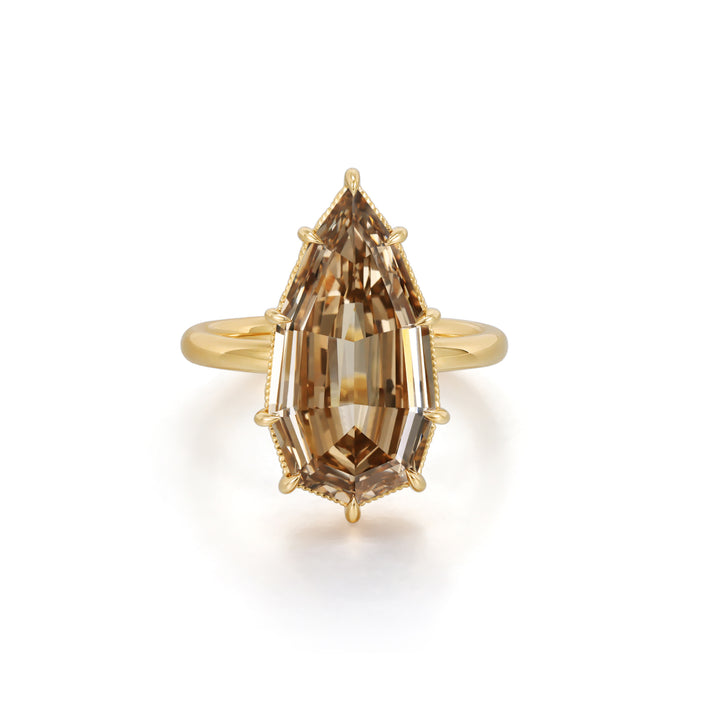
At Elora, we work with lab grown diamonds because they give us greater freedom in design. From custom cut champagne diamonds to elongated Old Mine Cuts and unusual antique inspired proportions, we can create stones around a design rather than limiting the design to what happens to be available.
That flexibility is especially important in custom engagement rings, where shape, ratio, color, and setting all contribute to the finished piece.
If you are deciding between moissanite and a lab grown diamond, think about what you want at the center of your ring. Moissanite is a beautiful gemstone with its own distinctive character. A lab grown diamond is a diamond, simply created by a different process.
Shop Lab Grown Diamond Engagement Rings
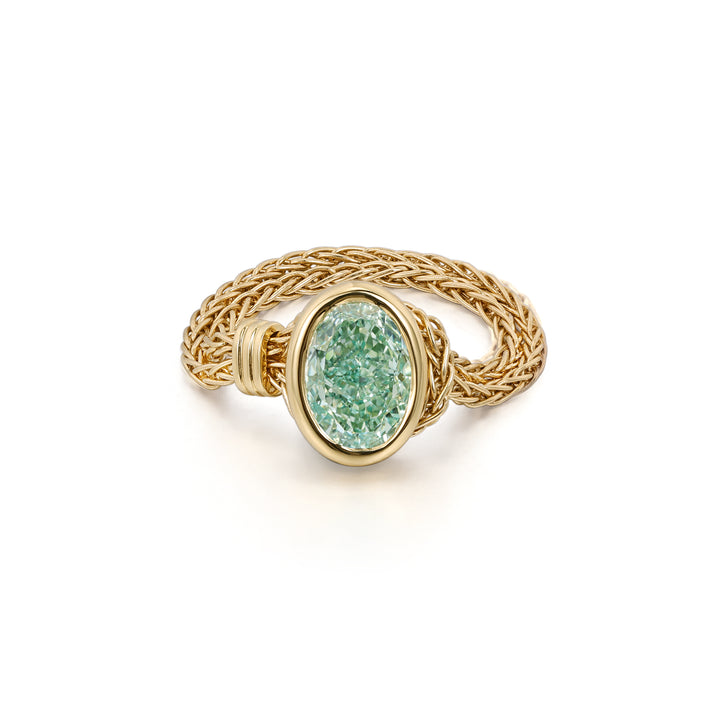
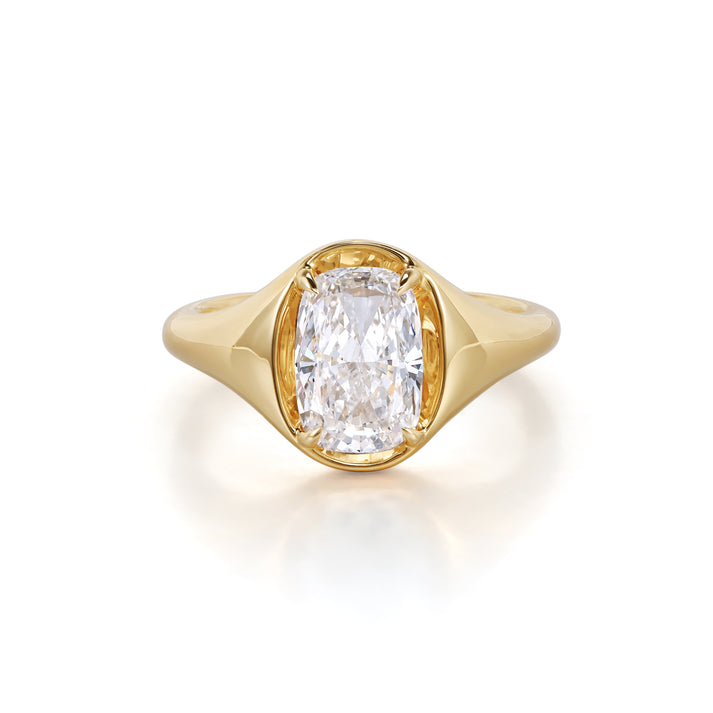
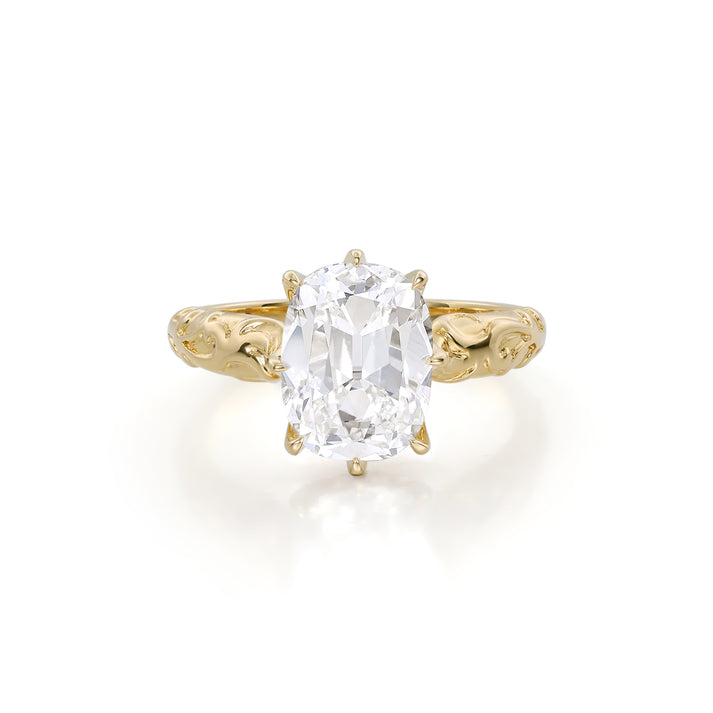
Every ring below is a real product in our collection, with its actual price and a link to the product page. Click the button to see it up close.
Conclusion
Lab grown diamonds and moissanite can both make beautiful engagement rings, but they offer different things. Moissanite stands out for its lower price and colorful fire, while lab grown diamonds offer the material and optical properties of diamond with independent grading available.
The right choice depends on what you want to see and value every day when you look at your ring. If you are drawn to the appearance of diamond, explore Elora's lab grown diamond engagement rings or work with our team to create a custom design around the shape, proportions, and setting you have in mind.
FAQ
Q Will a jeweler be able to tell it is a lab grown diamond?
A jeweler cannot tell by eye. Every Elora diamond of 1 carat or above comes with an IGI certificate that clearly identifies the stone as laboratory grown and documents its grading characteristics.
Q Is moissanite better value than a lab grown diamond?
Moissanite generally costs less, so it can be a strong choice if size and budget are the main priorities. A lab grown diamond costs more but offers the chemical, physical, and optical properties of diamond along with standardized grading from laboratories such as IGI or GIA. Which offers better value depends on what matters most to you.
Q Do lab grown diamonds hold their value?
Lab grown diamonds generally have limited resale value, and their secondary market prices can be significantly lower than their original retail prices. If resale value is an important part of your decision, it is worth considering this before purchasing. Most buyers choose lab grown diamonds for the design, quality, and upfront value they offer rather than as an investment.


