Cushion Cut Engagement Rings: What to Know Before You Buy


Cushion cut diamonds are known for their rounded corners, soft square or elongated outlines, and brilliant faceting. Their history reaches back to the old mine cuts of the 18th and 19th centuries, but today's cushions range from bright modern brilliant cuts to chunky antique inspired styles.
That variety is also what makes cushion cuts more complicated to shop for. Two diamonds with similar carat weights and grading can look surprisingly different depending on their proportions, facet pattern, and length to width ratio.
At Elora, cushion cuts are among the shapes our clients return to most often, particularly elongated proportions and antique inspired Old Mine Cuts. In this guide, we'll look at what makes one cushion different from another, which proportions and quality factors matter most, and how to choose a cushion cut engagement ring that suits your style.
What Is a Cushion Cut Diamond?
A cushion cut diamond is typically square or rectangular with gently rounded corners, creating the pillow shaped outline that gives the cut its name. It combines a softer silhouette with brilliant style faceting, offering plenty of sparkle without the sharp geometry of cuts such as the princess.
Unlike the round brilliant, there is no single visual formula for a cushion cut. The curvature of the sides and corners can vary, as can the facet pattern, depth, and overall proportions. Some cushions appear nearly square and softly rounded, while others are noticeably elongated. Some produce small, lively flashes of light, while antique inspired versions display broader, chunkier facets.
This variation is one of the reasons we recommend looking beyond the grading report when choosing a cushion. Measurements and grades provide useful information, but the actual appearance of the stone matters just as much.
Types of Cushion Cuts: Modern vs Old Mine Inspired
The cushion cut has a direct connection to some of the earliest diamond cutting styles.
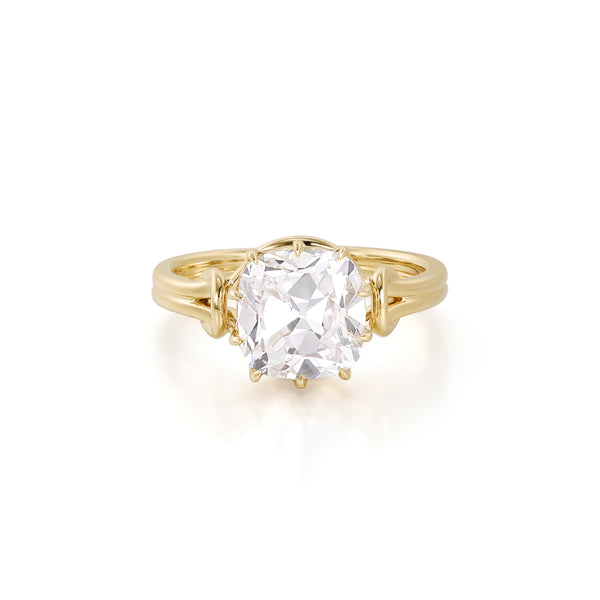
Old Mine Cut diamonds were common throughout the 18th and 19th centuries, when stones were shaped largely by hand and viewed in softer lighting. They typically featured smaller tables, higher crowns, deeper proportions, larger facets, and open culets. Instead of producing rapid, uniform sparkle, these facets created broader flashes of light.
Modern cushion cuts retain the rounded outline but are generally designed for a brighter, livelier appearance. Their facet patterns can produce more active brilliance across the face of the diamond, giving them a cleaner and more contemporary look.
Neither style is inherently better. The difference is largely visual.
A modern cushion works particularly well for someone who wants the softness of the cushion shape with more active sparkle. An Old Mine inspired cushion emphasizes larger facets, depth, and an antique appearance.
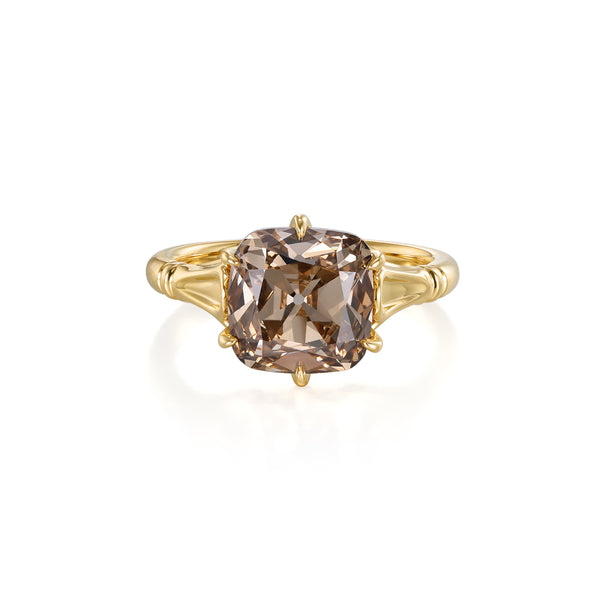
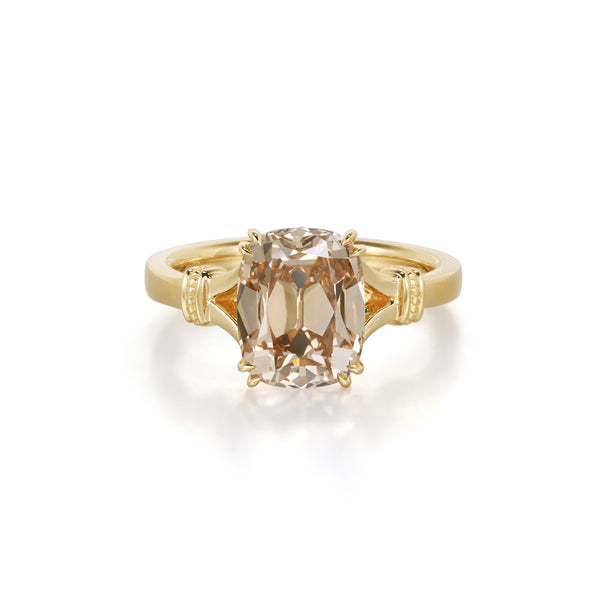
At Elora, we particularly like Old Mine inspired cushions for champagne diamonds. The broader facets bring out subtle variations in color and create the slower flashes of light associated with antique cut jewelry.
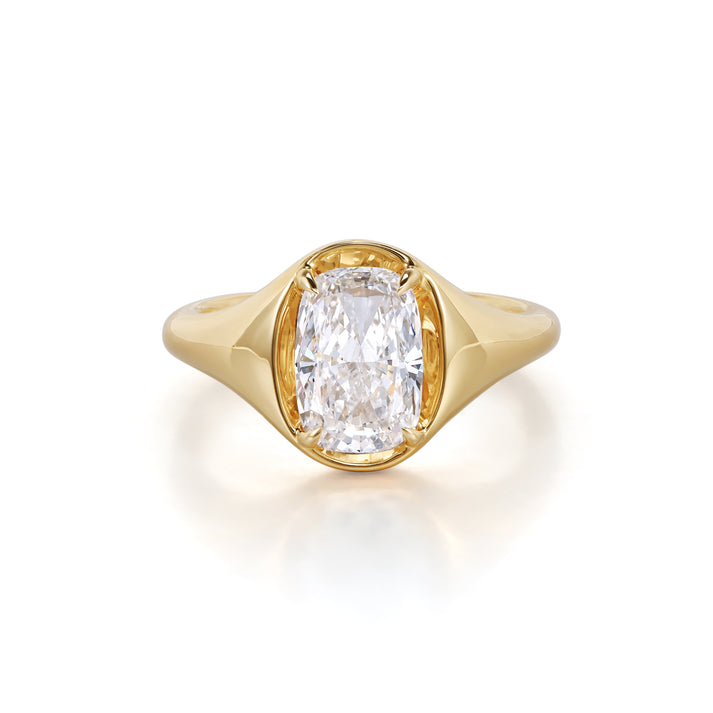
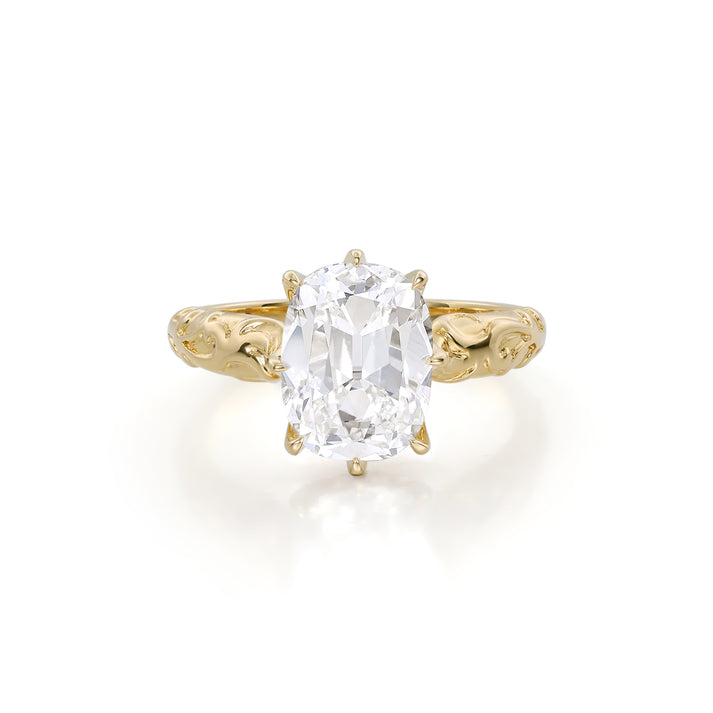
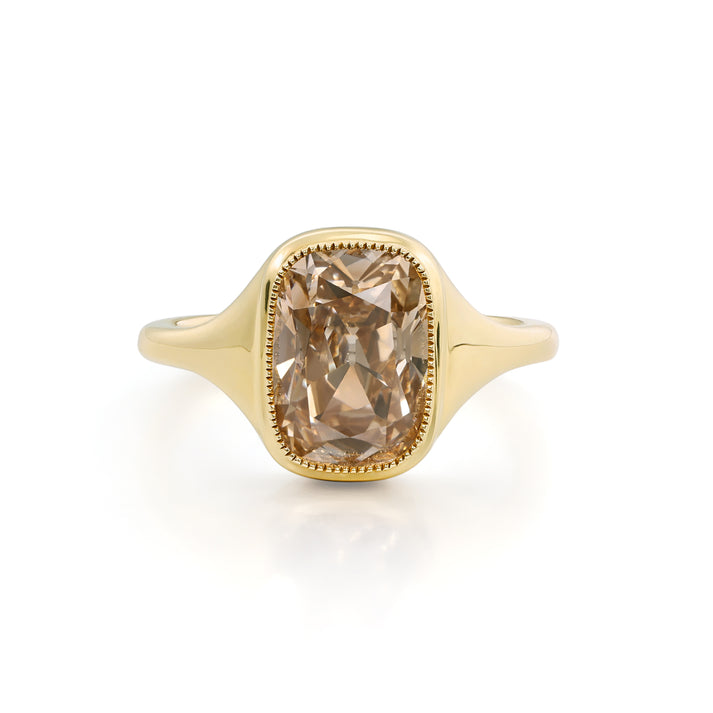
What to Look for When Buying a Cushion Cut Diamond
Because cushion cuts vary considerably from stone to stone, choosing one involves more than looking at carat weight and the grading report. Four characteristics are especially useful when comparing diamonds: length to width ratio, facet pattern, light performance, and color and clarity.

Length to Width Ratio
The length to width ratio describes how square or elongated a cushion appears.
Ratios around 1.00 to 1.05 generally create a traditional square appearance. As the ratio increases, the cushion becomes progressively more elongated.
Ratios around 1.15 to 1.30 are common among elongated cushion cuts, although there is no single ideal ratio. Some custom cut cushions extend beyond this range for an even longer silhouette.
Elongated cushions can create greater visual coverage across the finger because their length distributes the stone differently than a square cushion. Actual face up size, however, still depends on the diamond's individual dimensions and depth.
Ratio should therefore be treated as a starting point rather than a quality grade. Two cushions with the same length to width ratio can still look noticeably different depending on the curvature of their sides, the shape of their corners, and their overall outline.
If possible, compare several cushions side by side before deciding which proportions you prefer.
Cushion Facet Patterns
Facet pattern has a major influence on how a cushion diamond looks.
Some cushions have larger, more defined facets that produce broad flashes of light. Others use additional facets to create a finer, more splintered pattern of sparkle. Antique inspired cushions often sit at the opposite end of the spectrum, with chunky facets designed to recreate the visual character of historic Old Mine Cuts.
You may also see terms such as Cushion Brilliant and Cushion Modified Brilliant on grading reports. These descriptions provide information about the faceting structure, but they do not tell you everything about how the diamond will perform visually.
For that reason, photos and videos of the actual stone are particularly valuable when shopping for a cushion cut.
Cut Quality and Light Performance
Unlike round brilliant diamonds, cushion cuts can vary significantly in their proportions and facet arrangements. Numbers alone do not tell you whether a particular cushion will be visually appealing.
Look at how evenly the diamond returns light across its face. A strong cushion should have a balanced pattern of bright and darker facets that changes as the stone moves. Large areas that remain consistently dark, dull, or transparent can make the diamond appear less lively.
Pay particular attention to the center of the stone and how the facets behave when the diamond is tilted.
Whenever possible, view the actual cushion in motion and under more than one type of lighting. This often tells you more about the personality of the stone than a list of measurements alone.
Color and Clarity
Brilliant style cushion cuts can hide small inclusions relatively well because their numerous facets break up the view into the interior of the stone. Still, clarity should be evaluated stone by stone, particularly with larger diamonds.
At Elora, we typically work within VS2 to VVS1 clarity for white lab grown diamonds, balancing a clean appearance with strong overall quality.
For buyers who want a bright white appearance, D to F color offers a colorless look. Cushion cuts also lend themselves particularly well to intentional color. Champagne diamonds can range from subtle beige and honey tones to deeper brown shades, and those colors can become especially expressive when combined with antique inspired faceting.

Cushion Cut vs Other Diamond Shapes
Understanding how the cushion compares with other popular cuts can make it easier to decide whether its combination of shape and sparkle is right for you.
Cushion vs Round
Round brilliant diamonds are designed to maximize brilliance and generally produce a more consistent pattern of sparkle. Cushion cuts retain plenty of brilliance but introduce rounded corners and a square or elongated silhouette.
The difference is especially noticeable in the outline and facet pattern. A round has a highly standardized circular shape, while cushions can vary considerably in their proportions, corner shape, and faceting, giving each stone a more individual appearance.
Cushion vs Princess
Both cuts can create a square appearance, but their outlines are very different.
A princess cut has sharp corners and a more geometric profile. A cushion softens those corners into a rounded outline, giving the stone a gentler appearance while retaining brilliant style faceting.
Cushion vs Emerald
The difference here goes beyond shape.
Emerald cuts use long, parallel step facets that produce broad flashes of light and emphasize the interior of the diamond. Cushion cuts use brilliant style faceting and generally create more active sparkle across the stone.
Emerald cuts emphasize clean geometry and structured light patterns, while cushions combine a softer outline with greater scintillation.
Best Settings for Cushion Cut Engagement Rings
One advantage of the cushion cut is how easily it adapts to different engagement ring styles. The best setting depends on whether you want to emphasize the diamond's outline, create additional visual presence, or bring out its antique influence.
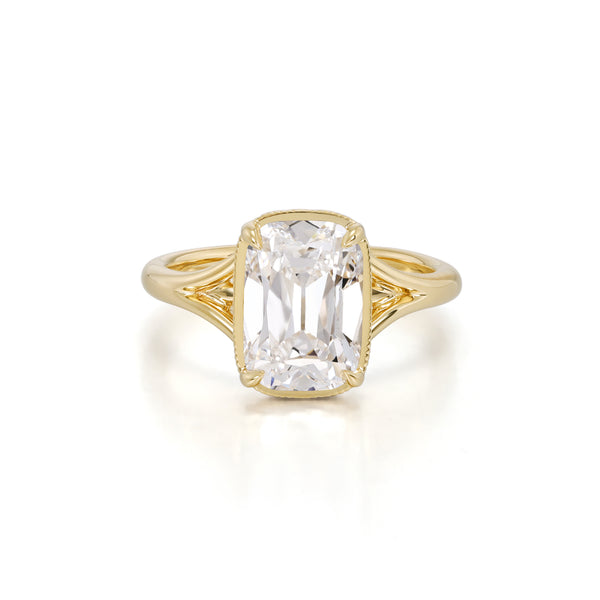
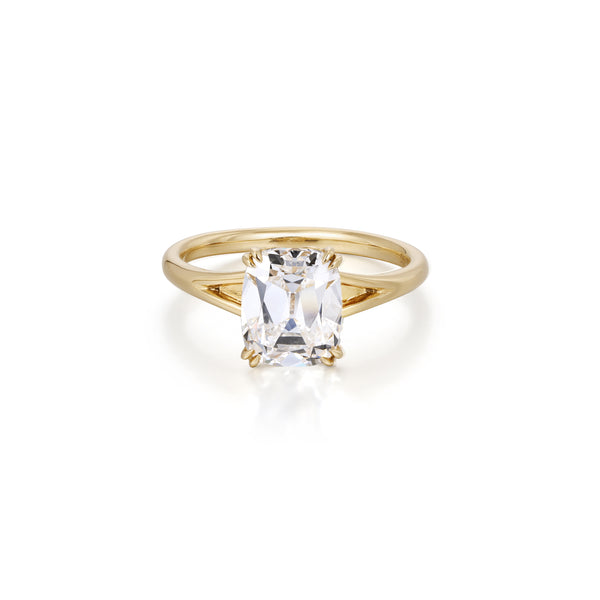
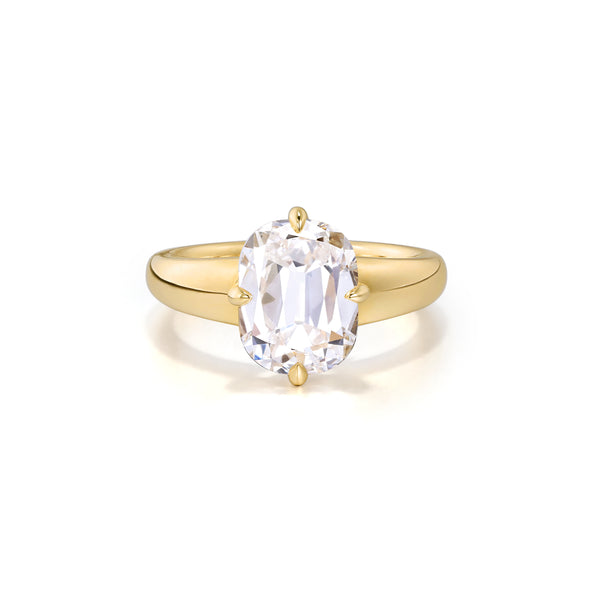
SolitaireA solitaire keeps attention on the shape and proportions of the cushion itself. It works particularly well with elongated cushions, where the outline becomes a major part of the design. A simple band can make a larger cushion feel especially prominent without adding additional visual elements around the center stone. |
|
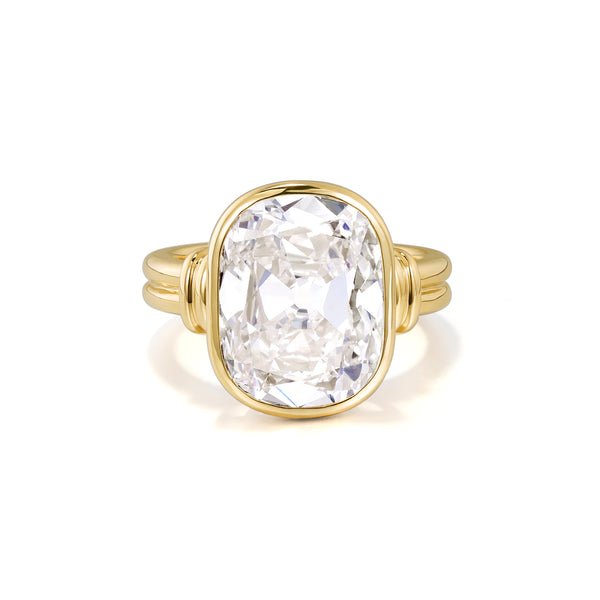
BezelA bezel surrounds all or part of the diamond with metal, creating a clean and sculptural appearance. It can give a cushion cut a distinctly contemporary look while emphasizing its rounded outline. Bezel settings also work particularly well with East West orientations and other less traditional cushion designs. |
|
Three StoneA three-stone setting can introduce contrast through different diamond shapes. Tapered baguettes, trapezoids, Cadillac cuts, pears, and other side stones can be used to frame a cushion center stone. The proportions of the side stones can either reinforce the cushion's width or make an elongated center appear even longer. |
|
HaloA halo follows the rounded outline of the cushion and adds smaller diamonds around the center stone. This can increase visual presence while reinforcing the cushion's soft corners. Halos can range from delicate contemporary designs to more detailed vintage inspired settings. |
|
Antique Inspired SettingsOld Mine inspired cushions work especially well with settings that reference historical jewelry construction. Milgrain, engraving, cut down collets, and detailed galleries can complement the broader facets of an antique style cushion without requiring the ring itself to be an antique. For larger center stones, band width and setting construction should be considered together so the ring provides adequate support while remaining visually balanced. |
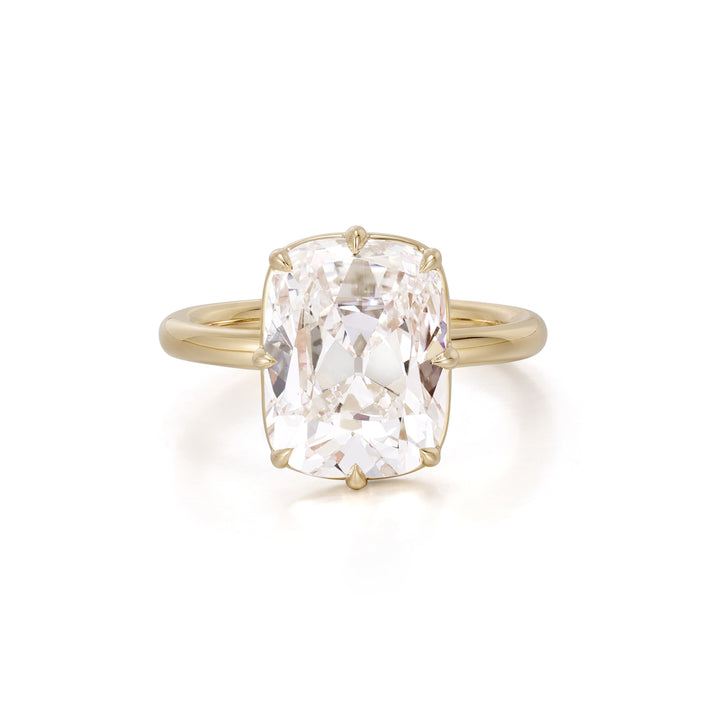


Lab Grown vs Natural Cushion Cut Diamonds
Lab grown and mined cushion cut diamonds share the same chemical, physical, and optical properties. The main differences are origin, availability, and price. Lab grown diamonds are generally priced significantly below mined diamonds with comparable specifications, making larger carat weights and higher color and clarity grades more accessible.
For cushion cuts, the advantage also extends to design flexibility. Lab grown diamonds allow us to work with less common proportions and facet patterns, particularly elongated cushions and antique inspired Old Mine Cuts.
At Elora, with more than 20 years of experience in jewelry design and diamond cutting, we can custom cut cushions around specific ratios, facet patterns, and even champagne color tones to suit the finished design.
Every Elora diamond of 1 carat or above comes with an IGI certificate detailing its cut, color, clarity, carat weight, and other key characteristics, using the same grading standards applied to mined diamonds.
Cushion Cut Engagement Rings at Elora
Cushion cuts are an important part of Elora's engagement ring collection, ranging from clean modern designs to champagne Old Mine Cuts with antique inspired proportions.
Frequently Asked Questions
Q What is the best ratio for a cushion cut diamond?
There is no single ideal ratio. Ratios around 1.00 to 1.05 generally appear square, while ratios around 1.15 to 1.30 create a more elongated silhouette. Some custom cut cushions extend beyond this range. The best ratio depends on the outline and proportions you prefer, so it is useful to compare actual diamonds rather than choosing by the number alone.
Q Do cushion cut diamonds look bigger than round diamonds?
Not necessarily. Face up size depends on the diamond's dimensions, depth, and how its carat weight is distributed. Elongated cushions can create greater visual coverage along the finger, but two diamonds of the same carat weight can still appear noticeably different in size.
Q Do cushion cut diamonds sparkle as much as round diamonds?
Cushion cuts can produce strong brilliance and fire, but their light pattern is different from a round brilliant. Modern cushions often have lively, active sparkle, while antique inspired cushions use larger facets to create broader and slower flashes of light.
Q What is the difference between a cushion cut and an Old Mine Cut?
Cushion describes the general rounded square or rectangular outline, while Old Mine Cut refers to an antique cutting style. Old Mine diamonds typically feature higher crowns, smaller tables, larger facets, and open culets. Modern cushions generally use different facet arrangements to produce a brighter and more contemporary appearance.
Q What setting is best for a cushion cut engagement ring?
Cushion cuts work well in solitaire, bezel, three stone, halo, and antique inspired settings. A solitaire emphasizes the diamond's outline, while a bezel creates a cleaner contemporary look. Halos and detailed antique inspired settings can complement the softer shape of the cushion and add more visual detail.
Final Thoughts
The appeal of a cushion cut lies in how much variety can exist within one shape. Square or elongated, modern brilliant or antique inspired, two cushions with similar specifications can look remarkably different once you see them in motion.
That is why choosing a cushion should go beyond the certificate. Compare proportions, facet patterns, actual dimensions, and videos of the stones you are considering. The best cushion is ultimately the one whose outline and light pattern work together in the way you prefer.
Explore Elora's cushion cut engagement rings, or work with our team to create a custom cut around the shape, ratio, color, and proportions you have in mind.


