Kategorie: Edelstein Aquamarin
Entdecken Sie die heitere Eleganz des Aquamarins, eines Edelsteins, der für seine klaren blauen Farbtöne und seinen beruhigenden Charme geschätzt wird. Eloras Aquamarinringe und feiner Schmuck werden gefertigt, um die natürliche Ausstrahlung und beruhigende Schönheit des Steins hervorzuheben. Perfekt für alltägliche Anmut oder bedeutungsvolle Geschenke, verbindet jedes Stück ozeaninspirierte Farbe mit zeitlosem Design.

-
Anbieter:Elora Fine Jewelry
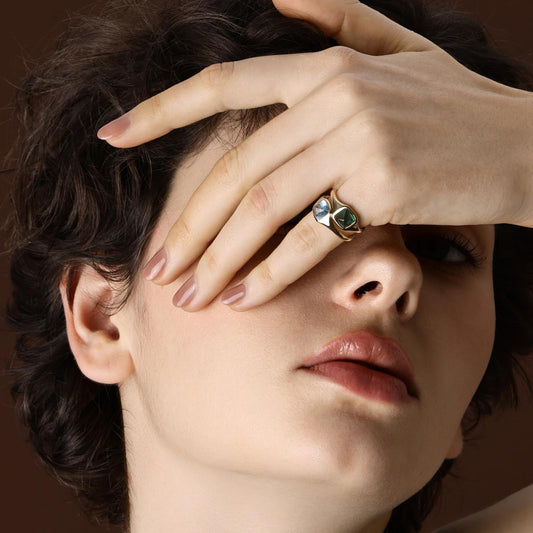
Sarah-Sugarloaf Cabochon Himmelblauer Aquamarin Edelsteinring
Normaler Preis $1,199.00$1,199.00 Normaler PreisStückpreis pro

Why Aquamarine Works Better as a Cabochon
Aquamarine is a stone that rewards restraint. Its color is soft and even, sitting in a narrow range between pale blue and blue-green. Unlike darker stones where faceting creates contrast and drama, aquamarine's transparency means that a smooth domed surface often shows the color more honestly. The sugarloaf cabochon cut we use here has no facets. Light enters the stone and moves through it without being broken up, which gives the gem a quiet, almost liquid quality that suits the stone well.
About This Piece
The Sarah Sugarloaf Cabochon Aquamarine Ring is set with a 1.48ct aquamarine in a sky blue tone. The stone sits in a 14K yellow gold setting with a slim band. The warmth of the gold works as a contrast to the cool blue of the stone rather than competing with it. The Sarah setting is designed to keep the stone visible from multiple angles, which matters more with a cabochon than with a faceted stone.
Wearing Aquamarine
Aquamarine has a Mohs hardness of 7.5 to 8, which makes it a practical choice for daily wear. It is not as hard as sapphire or spinel, but it holds up well with reasonable care. The color is stable and does not fade with light exposure. It is the March birthstone, which makes it a considered gift for anyone born in that month, though the stone works across any season.
Frequently Asked Questions
Aquamarine ranges from a very pale, almost colorless blue to a medium blue-green. The most valued stones tend toward a clear, medium blue without grey or green undertones. The stone in this collection is a sky blue tone, which sits in the lighter and cleaner part of that range.
Yes. With a hardness of 7.5 to 8 on the Mohs scale, aquamarine is suitable for daily wear. It is harder than most gemstones used in jewelry and resists surface scratching well. Clean it with warm water and a soft brush and store it away from harder stones.
A sugarloaf cabochon is a domed cut with a flat base and no facets. The name comes from the traditional cone shape of refined sugar loaves. It is used for stones where a smooth surface shows the color or optical character better than faceting would.
Yes. Aquamarine is the primary birthstone for March. It has held that designation for over a century and is one of the more widely recognized birthstone associations in fine jewelry.