Kategorie: Lila Edelstein
Lila Edelsteinringe bieten eine verträumte Mischung aus Flieder- und tiefen Violetttönen. Von Spinell bis Saphir verleiht jedes Stück mystischen Charme und Eleganz.

-
Anbieter:Elora Fine Jewelry
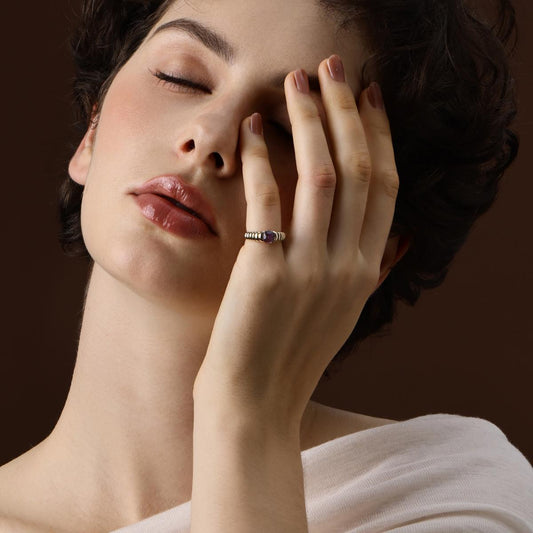
Marquiseschliff Amethyst Edelstein Ewigkeitsring
Normaler Preis $1,299.00$1,299.00 Normaler PreisStückpreis pro -
Anbieter:Elora Fine Jewelry
Raelynn-Kissenschliff-Ring mit tiefviolettem Spinell
Normaler Preis $1,399.00$1,399.00 Normaler PreisStückpreis pro -
Anbieter:Elora Fine Jewelry
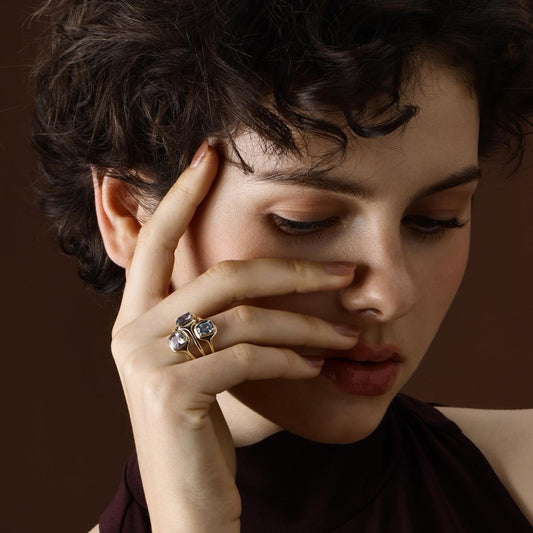
Ellie-Kissen-Schliff Hellvioletter Spinell Edelsteinring
Normaler Preis $1,099.00$1,099.00 Normaler PreisStückpreis pro -
Anbieter:Elora Fine Jewelry
Raelynn-Kissenschliff Lila Spinell Edelsteinring
Normaler Preis $1,299.00$1,299.00 Normaler PreisStückpreis pro -
Anbieter:Elora Fine Jewelry
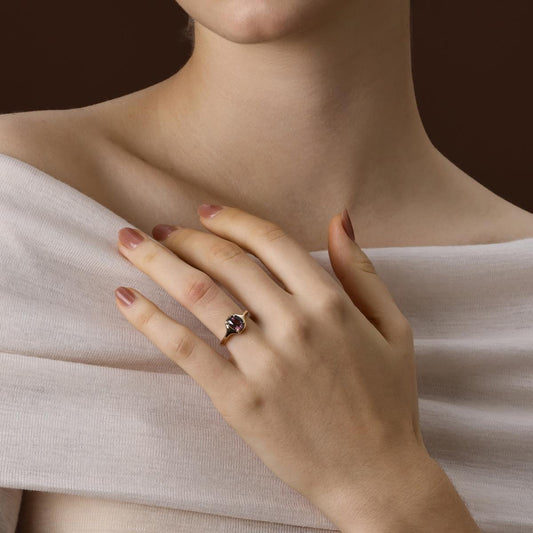
Ellie-Ring mit kissenförmigem, tiefviolettem Spinell
Normaler Preis $999.00$999.00 Normaler PreisStückpreis pro





Two Purples: What Amethyst and Spinel Each Bring to the Color
Purple is not a single thing in gemstones. The purple of amethyst and the purple of spinel are related but distinct, and understanding the difference helps in choosing between them. Amethyst is quartz, and its purple comes from iron and natural irradiation. The color tends toward the warmer end of the purple spectrum, with a reddish or pinkish undertone that is most visible in lighter tones. At its deepest, amethyst approaches a rich violet. At its lightest, it reads as lavender. The transparency of quartz means light passes through the stone, giving amethyst a glowing quality in the right conditions.
Purple spinel sits differently. Its color comes from a different set of trace elements within a cubic crystal structure, and the result is a purple that is cooler and more purely violet. Spinel also has higher refractive properties than quartz, which means it returns more light and has a stronger surface brilliance. Deep purple spinel can appear almost inky in low light, while lighter purple spinel reads as a clear, cool lavender that is distinct from the warmer lavender of pale amethyst.
Light and Deep: Choosing Within the Purple Range
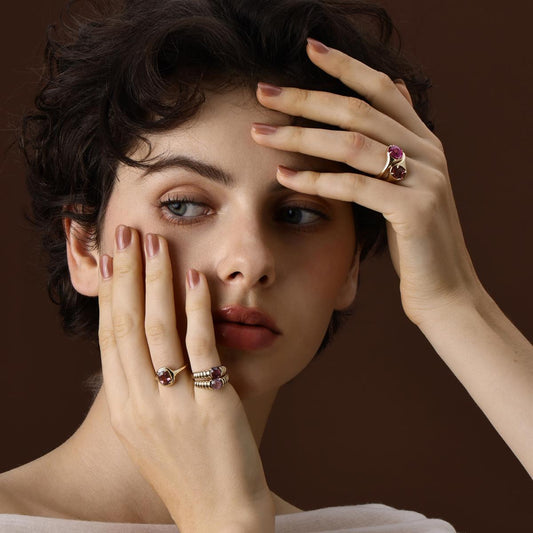
The five pieces in this collection span the full range from light to deep purple. Light purple spinel and pale amethyst are versatile and wear easily alongside other jewelry. Deep purple spinel makes a stronger statement and suits occasions where the ring is meant to be noticed. The depth of color also affects how the stone reads in different lighting: lighter stones are more consistent across environments, while deeper stones shift more noticeably between daylight and artificial light.
Frequently Asked Questions
Amethyst is purple quartz, with a warm, slightly reddish purple and a transparent quality that lets light pass through. Purple spinel is a different mineral with a cooler, more purely violet tone and stronger surface brilliance. Both are genuine purple gemstones but they have a different visual character.
Spinel is more durable. It has a Mohs hardness of 8 compared to amethyst's 7, and unlike topaz, spinel has no cleavage, making it resistant to splitting from impact. Both are suitable for rings with reasonable care, but spinel holds up better over time in daily wear.
Generally yes, for spinel. Deeply saturated purple spinel is less common than lighter tones and commands higher prices in the collector market. For amethyst, the relationship between depth and price is less straightforward because deeply saturated amethyst is more widely available than deeply saturated spinel.